Writing a Letter to Your Children to Open Later in Life
A guide to writing a meaningful letter your children will open years from now, backed by research on family storytelling, emotional connection, and legacy.
Writing a Letter to Your Children to Open Later in Life
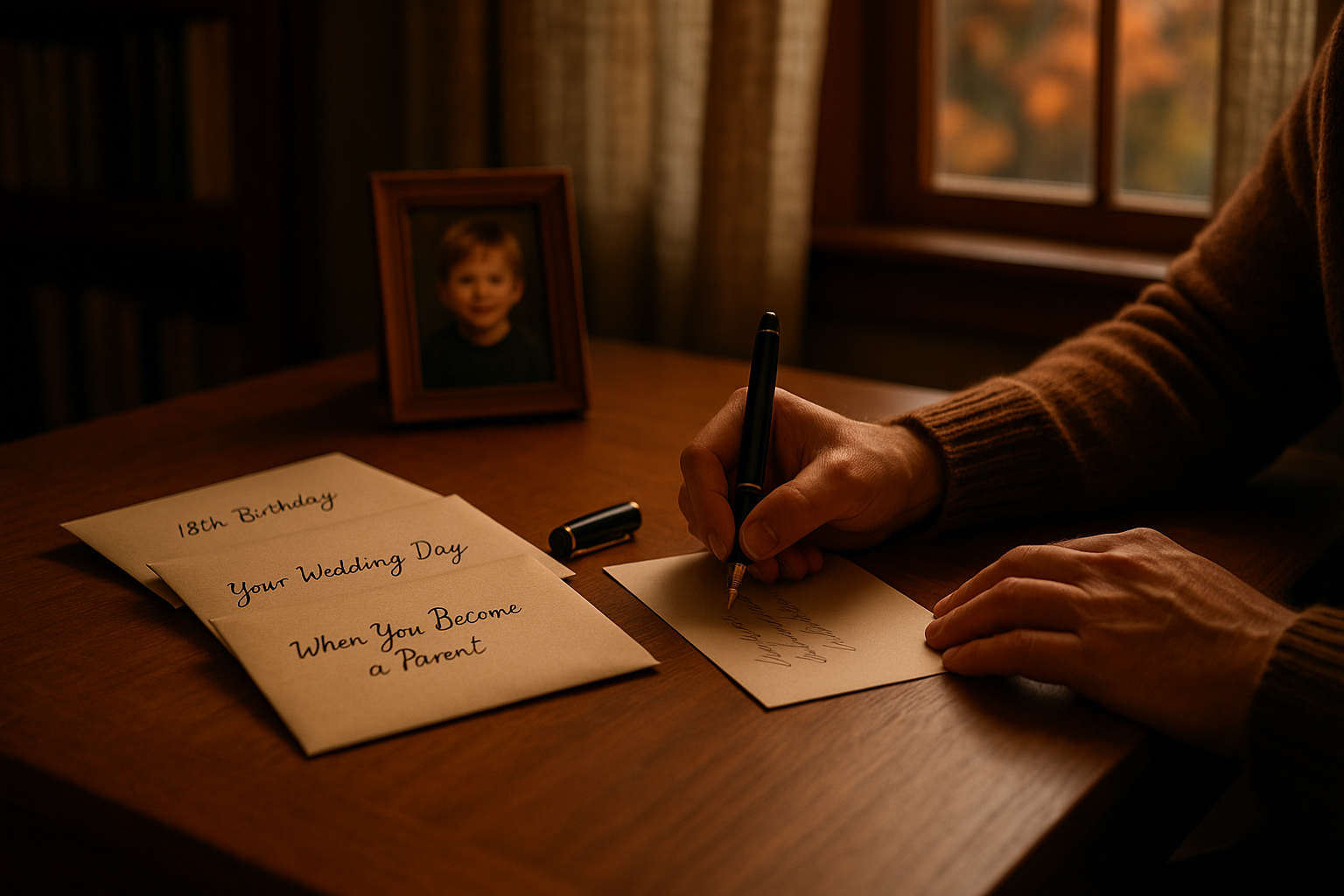
There is something quietly powerful about writing words meant to be read years, even decades, from now. A letter tucked away for a child's eighteenth birthday, wedding day, or the day they become a parent themselves carries a kind of weight that a text message or phone call never can. It waits patiently, unchanged, until the moment your child is ready to hear it.
Many parents who begin this practice find they aren't sure where to start, how personal to get, or how to make sure the letter actually survives long enough to be opened when it matters. Guidance and gentle prompts for exactly this kind of writing can be found at Voice After Life.com, which is built around helping families put these words into a lasting form. Before you sit down to write, it helps to understand why this simple act matters so much — and what the research actually says about it.
Why a Letter Matters More Than You Might Think
It's easy to assume a letter is a nice gesture but a minor one. The research suggests otherwise. Studies done by the Journal of Family Psychology show that children who feel loved and supported by their parents have higher self-esteem and a better sense of self-worth. A letter is one of the most concrete, revisitable ways to communicate that support, precisely because it can be read again and again, long after the moment it was written has passed.
There is also a deeper, identity-shaping effect. A study from Emory University's Family Narratives Lab found that children who know their family stories and have a strong sense of their family narrative show greater resilience, better self-identity, and lower anxiety.
Written legacies contribute significantly to this "intergenerational self" that helps children contextualize their own lives within a larger family story. In other words, a letter doesn't just express love in the moment — it becomes part of the scaffolding a child uses to understand who they are and where they came from.
The Difference Between a Legal Will and a Letter Like This
It helps to separate what you're writing from your legal estate documents. The clearest reason is this: a legal will tells your children what you owned. A legacy letter tells them who you were. Those are very different gifts. This kind of letter is sometimes called a legacy letter or, in older tradition, an ethical will. Unlike traditional legal wills, ethical wills are not enforceable and focus more on imparting life lessons, memories, and personal philosophies rather than distributing assets or detailing end-of-life care.
The practice has deep roots. This concept has its roots in ancient Jewish culture, evolving from oral traditions into written forms over centuries, and has since been embraced by various cultures, including Christian and Muslim communities. Because these letters carry no legal weight, you're free from the formal language and structure a will requires — this is a space for honesty, warmth, and your own voice.
When to Write, and When to Let It Be Opened
There's no single right moment to begin, but many parents find it easier to write in connection with a milestone. Parents most often write legacy letters at natural turning points. The birth of a grandchild, a serious illness, a child's wedding, retirement, or a milestone birthday all tend to prompt reflection. Some choose to write once and revisit the letter over the years; others prefer a fresh letter for each stage. Some parents write one letter and update it every few years. Others write a fresh letter at each major life event.
As for when your child should open it — that's entirely your call. Some parents specify an age, like eighteen or twenty-one. Others tie it to a life event: a first heartbreak, a wedding day, the birth of their own first child, or simply "whenever you need to hear from me most." Writing that instruction clearly, whether on the envelope or in the letter's opening lines, removes any guesswork for whoever eventually hands it over.
What to Actually Say
If you're staring at a blank page, start smaller than you think you need to. A letter doesn't have to cover your entire life philosophy in one sitting. Consider including:
Who You Were Before They Knew You
Children rarely get a clear picture of their parent as a young person. Share your past experiences with your child. Explain your life as a teenager and young adult. Since your child didn't know you at that age, it's great to give them an insight into who you were before starting a family.
The Values You Hope They Carry Forward
This is the heart of what separates a legacy letter from an ordinary note. The content is entirely personal, reflecting the creator's unique values and experiences, and can encompass anything from practical advice and family history to expressions of love and pride.
Specific Memories, Not Just General Sentiment
Vague affection is easy to forget; specific memories are not. Naming a particular afternoon, a joke only the two of you share, or a moment you were proud of them gives the letter texture and makes it unmistakably yours.
Hope, Not Instruction
It's tempting to use a letter like this to steer your child's choices. Most guidance suggests holding that impulse loosely. Express your hopes for your children's futures. Share what you wish for them in terms of happiness, success, and fulfilment. Avoid being too prescriptive and let them stay open to pursue different paths if they wish to.
The Writing Process Itself Has Value
Even before your child ever reads a word, the act of writing does something for you. Research indicates that expressive writing is linked to reduced anxiety levels and improved emotional processing, further highlighting the therapeutic benefits of this practice. Reflecting on your own life, your regrets, your proudest moments, and your hopes tends to bring a surprising sense of order and peace, regardless of when the letter is finally opened.
Making Sure It Survives to Be Opened
A letter is only as good as its chance of reaching the person it was written for, years or decades later. Paper gets lost, boxes get sorted through in a move, and instructions get forgotten. Many families now choose to preserve these letters digitally alongside a scheduled delivery date or milestone trigger, so the words find their way to the right person at the right time. If you're weighing how to keep a letter safe for the long haul, you can explore options for securely preserving a letter until the day it's meant to be opened as part of planning the letter itself, not as an afterthought.
Starting Is the Hardest Part
You don't need perfect prose or a finished philosophy of life to begin. A single honest paragraph, written today, is worth more to your child in twenty years than a polished letter you never got around to writing. Start with one memory, one hope, one thing you've never quite said out loud — and let the rest follow.
- Voice After Life.com
Sources
- The Art of Writing Love Letters to Your Kids — ParentCo.
- Ethical Wills (Legacy letters) — EBSCO Research Starters
- Ethical Will vs Legacy Letter: Explained — Evaheld
- Legacy Letters for Children: A Parent's Complete Guide — SSL Law
- Writing Letters to Your Child That They Can Read as Future Adults — La Paloma Academy
- An Ethical Will - Legacy and Memories for Our Children — Smeaky
- 10 Ethical Will Examples to Inspire Your Family Legacy — Bright Advisers
- What's your legacy? How to write your ethical will or legacy letter — Minnesota Star Tribune