Writing a Letter to Your Children to Open Later in Life
A simple letter written today can become one of the most treasured things your child ever owns. Here's how to write one, and how to make sure it survives to be opened.
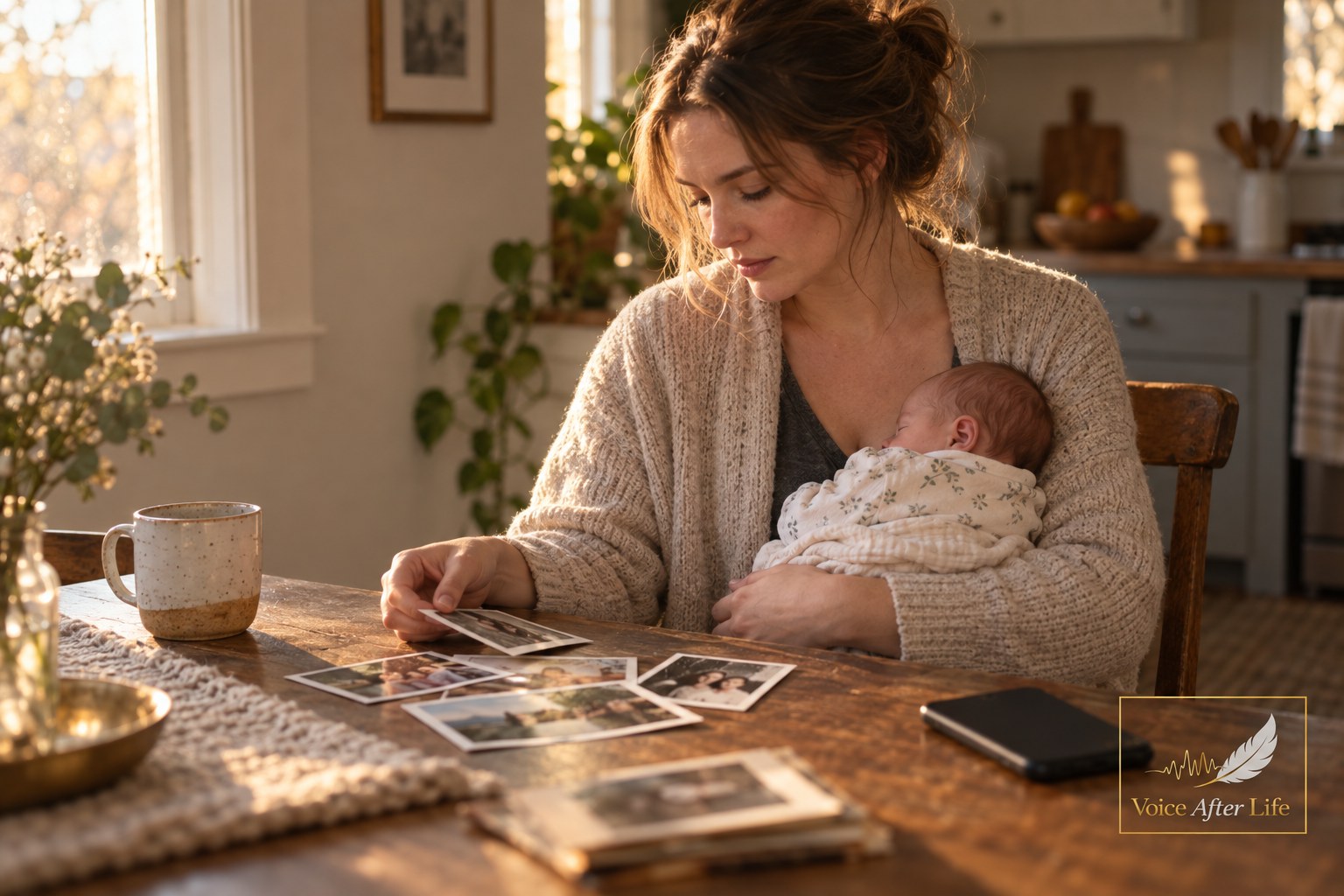
It is two in the morning, and a young mother is sitting in the nursery with her newborn finally asleep against her shoulder. Her mind does what new parents' minds do at that hour: it races years ahead. She pictures this same baby at eighteen, or standing at the front of a room on a wedding day, and she wonders what she would want to say to that grown person if she could speak to them right now, before sleep deprivation and school pickups and ordinary life crowd out the thought.
That middle-of-the-night impulse is exactly why so many parents decide to write a letter today for a child who won't read it for years. Some write it by hand and tuck it into a drawer; others prefer somewhere more permanent, which is part of why families have started using Voice After Life.com to hold letters like this safely until the day their child is finally ready to open them. Either way, the idea is the same: capture something true about who you are and how you feel, right now, and let your child receive it later.
Why a Letter Written Today Matters Years From Now
It can feel strange to write to someone who is still learning to hold their own head up, or who is years away from being able to read at all. But research on family connection suggests the effort is worth it. Children who have what is called an intergenerational identity feel more in control of their lives, according to research by Dr. Marshall Duke and Dr. Robyn Fivush from Emory University. Knowing where they fit in a story also seems to paint a rosier view of the family overall, since children in the study who knew the most about their families viewed their family units in a more positive light.
There is also a simpler, more immediate reason to write: it tends to help the writer as much as the eventual reader. Research from psychologists James Pennebaker of the University of Texas at Austin and Joshua Smyth of Syracuse University suggests that writing about emotions and stress can boost immune functioning in people navigating difficult seasons of life. Putting feelings into words, even words meant for someone who won't read them for a decade or more, has a way of settling a busy mind.
And the letter itself becomes something rare in a family's life. Studies done by the Journal of Family Psychology show that children who feel loved and supported by their parents have higher self-esteem and a better sense of self-worth. A letter is a slow, deliberate way of saying that, one that doesn't disappear into a phone or get lost in a busy week.
Choosing the Moment It Will Be Opened
One of the first decisions is also one of the hardest: when should this letter actually be opened? There's no single right answer, but a few natural moments tend to come up again and again for families thinking this through. Parents most often write these letters at natural turning points — the birth of a grandchild, a serious illness, a child's wedding, retirement, or a milestone birthday all tend to prompt reflection.
For a letter written to a newborn, common choices include a specific age (eighteen is popular, since it often marks the edge of adulthood), a graduation, a wedding day, or the birth of the child's own first baby. Some parents write one letter for a happy milestone and a second, separate one meant only "for a hard day," so their child has words to reach for during a season that isn't easy to predict.
What to Actually Say
It is tempting, when you sit down to write, to reach for the voice of the responsible adult you are trying to be — the planner, the protector, the person doing everything correctly. Try to resist that. The letter isn't for that voice; it's for your child, on a specific day, looking for you. A few things worth including:
A moment from right now
What does an ordinary day actually look like at this stage? What do they do that makes you laugh? What do they smell like after a bath? These small, specific details are the ones that vanish first from memory and mean the most later.
What you hope for them, not just from them
It's natural to want to pass along advice, but a letter that only lists lessons can start to feel like a to-do list. Core values land better with specific examples — not "I value honesty," but the time it cost you something real to tell the truth. A story does more work than a rule.
The truth about how you feel
You don't need polished sentences. Research suggests handwritten messages with imperfect grammar can carry more emotional weight than polished documents — authenticity tends to matter more than craft.
Keeping the Letter Safe Until It's Time
A letter that never gets found is a letter that never gets read, so where you keep it matters almost as much as what you write. Estate planning professionals generally recommend storing important personal documents somewhere both secure and locatable: a fireproof safe is often better for documents you might need to access quickly, and storing copies in an alternate location — such as with your executor or an adult child — can save a lot of heartache should you lose access to the originals. The same logic applies to a letter meant for your child; it should live somewhere a trusted person knows to look, with clear instructions about when it's meant to be opened.
This is also the practical hurdle that stops many parents from ever finishing the project. Paper gets lost in moves. Files get orphaned on old devices no one remembers the password to. For families who want a letter — or a recorded voice reading it aloud — to reliably reach a child decades from now, some choose to preserve their letters and their voice at Voice After Life, where the message can wait safely until the milestone it was written for finally arrives.
A Small Act With a Long Reach
Back in that nursery, the letter doesn't need to be finished tonight. It might take shape over a single evening, or grow slowly across a few sittings once the initial exhaustion passes. What matters is that it exists at all — one honest page, written in a real voice, for a child who is, for now, still small enough to sleep through the whole thing being written.
- Voice After Life.com
Sources
- The Importance of Offering Children an Intergenerational Identity — ParentCo.
- The Art of Writing Love Letters to Your Kids — ParentCo.
- Writing to heal — American Psychological Association
- Legacy Letters for Children: A Parent's Complete Guide — SSL Law
- How to Write a Legacy Letter to Grandchildren (That They'll Actually Treasure) — Second Wind Movement
- How to Store Estate Planning Documents — Charles Schwab