Writing a Letter to Your Children to Open Later in Life
A guide to writing a letter your child will open years from now—what to include, when to time it, and why the practice has mattered to families for millennia.
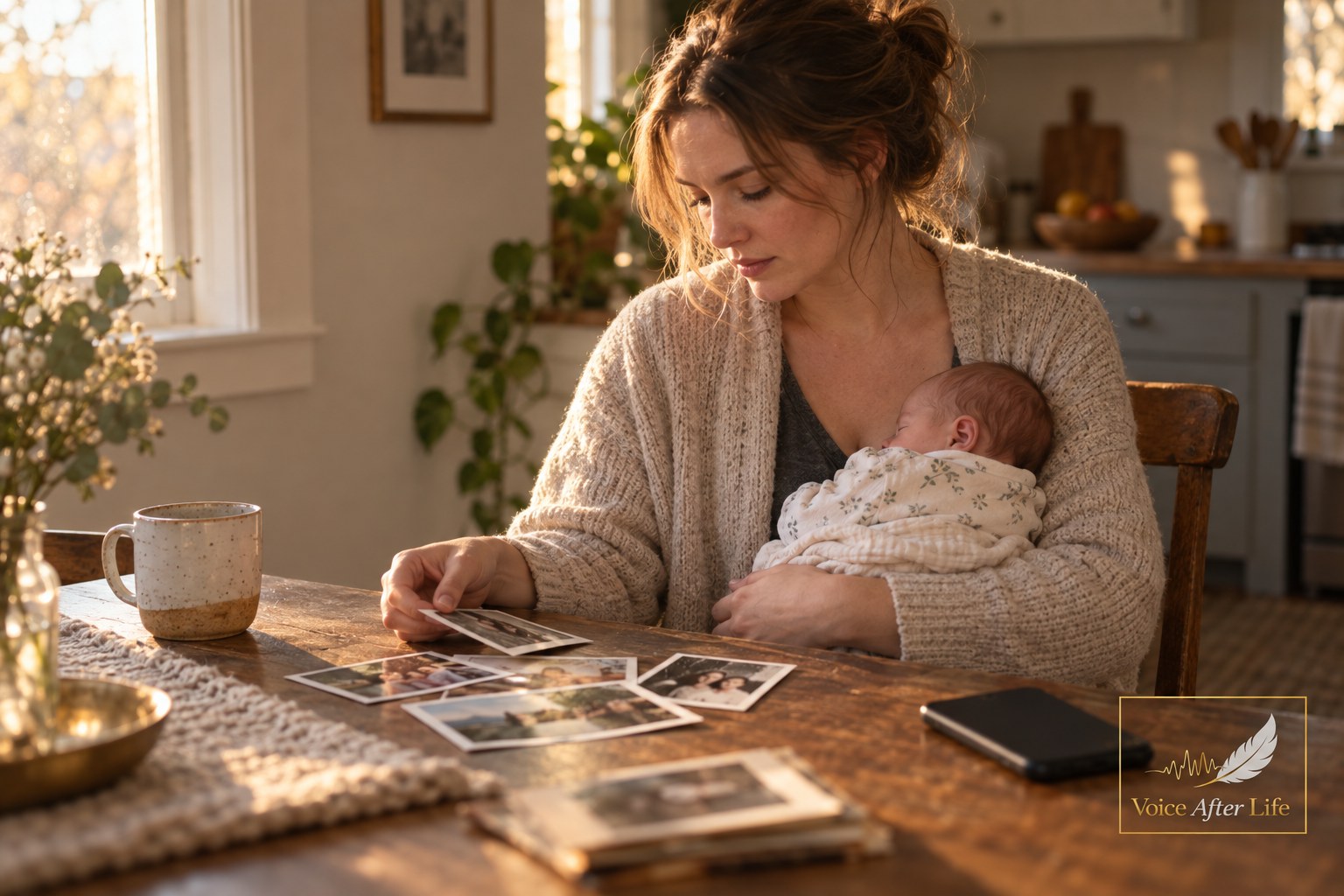
There is something quietly powerful about writing words your child won't read for years. A letter tucked away for an eighteenth birthday, a wedding day, or simply "whenever you need me" becomes a small time machine—carrying your voice forward to a moment you can only imagine. For families thinking through how to prepare and safely store letters like these until the right day arrives, Voice After Life.com offers a place to organize exactly that kind of future delivery.
This isn't a new idea. It's a very old one, dressed in modern paper and envelopes.
An Ancient Practice With a New Name
Long before anyone called it a "letter to open later," families were doing something remarkably similar. The ethical will or legacy letter originated in the ancient Middle East as an oral tradition, popular among the Jewish peoples of the region, and is thought to have primarily taken the form of deathbed conversations. The ethical will is an ancient and sacred tradition that started in the Book of Genesis when Jacob was dying and he called together his 12 sons, blessed them, and died.
Today's version doesn't require deathbed drama. Ethical wills, also known as legacy letters, are personal documents through which individuals convey their ethical values, wisdom, and heartfelt messages to their heirs, and unlike traditional legal wills, they are not enforceable and focus more on imparting life lessons, memories, and personal philosophies rather than distributing assets. A letter to your child that waits patiently in a drawer for their eighteenth birthday, graduation, or wedding day fits comfortably into this same lineage—just written on your own timeline, in your own voice.
Why This Kind of Letter Matters
It's tempting to think of a future-dated letter as sentimental extra credit—nice, but not necessary. Research on family storytelling suggests otherwise. Psychologists Marshall Duke and Robyn Fivush at Emory University developed a measure called the "Do You Know?" scale that asked children to answer 20 questions, including whether they knew where their grandparents grew up. Dr. Duke found that the children who knew more about their families proved to be more resilient, meaning they could moderate the effects of stress, because the answers have to do with a child's sense of being part of a larger family.
A letter written now and opened later gives your child exactly that kind of anchor—not just a fact about the family tree, but your actual voice, in a moment of your actual life, telling them something true.
There's a second, quieter benefit that belongs to you as the writer. Research on expressive writing confirms that the psychological benefit of writing about difficult relationships comes from the act of writing itself, not from the recipient ever reading the words, and organizing the thought and getting it out of your body and onto a page produces measurable relief. Even before your child ever opens the envelope, the writing has already done some good.
Choosing the Right Moment to Open It
One of the first decisions is timing. A letter dated to a specific birthday is simple and reliable. But some of the most treasured letters are tied to a moment rather than a date—open on your wedding day, open the night before you move out, open when you become a parent yourself. According to guidance on milestone letter timing, writing to your toddler or young child right now, telling them about who they are at this age—their favorite word, the way they laugh, the song that makes them dance—and scheduling it for their 18th birthday gives them a piece of their childhood they could never have remembered on their own.
Some parents choose a single letter for a single milestone. Others build a small collection over the years—one per birthday, one per big transition—so that by adulthood, their child has a shelf of your handwriting spanning decades. Either approach is valid. What matters more than the schedule is that the letter eventually reaches them, intact, at the moment you intended.
A Few Prompts to Get Started
If you're staring at a blank page, you don't need a grand theme. Start smaller:
- What do you want them to know about who you were at this point in your life?
- What is a specific memory—not a lesson, a memory—that captures how you feel about them right now?
- What do you hope is true about their life when they finally read this?
- What family story do you want to make sure they've heard, in your words, at least once?
Write it the way you'd talk, not the way you'd give a speech. You may share it while you are alive, or leave it to be read when you are gone, and it can be as short as one page or as long as a full memoir or family history.
Making Sure the Letter Actually Arrives
A letter written today is only useful if it survives to the day it's meant for. Paper gets lost in moves, boxes get donated by mistake, and "I'll give it to them someday" has a way of slipping. This is the practical half of the project: deciding not just what to write, but how it will actually reach your child on the day you intend, whether that's a birthday twelve years from now or a wedding you may not be there to see. Because that logistical question matters as much as the writing itself, some families choose to record their letters—by voice, by video, or in writing—somewhere designed to hold and deliver them on schedule. When you're thinking through how to make certain a message finds its way to your child at exactly the right chapter of their life, you can preserve and schedule your letter through Voice After Life rather than leaving it to a drawer and good intentions.
It Doesn't Need to Be Perfect
One last reassurance, especially for anyone who keeps postponing this because they're not sure what to say: write exactly how you speak, using simple language, contractions, and natural vocabulary—legacy letters require authenticity, not writing skill, and research shows handwritten messages with imperfect grammar carry more emotional weight than polished documents. The letter your child will treasure most isn't the one with the best sentences. It's the one that sounds like you.
- Voice After Life.com
Sources
- Ethical Wills (Legacy letters) — EBSCO Research Starters
- What's your legacy? How to write your ethical will or legacy letter — Star Tribune
- The Stories That Bind Us — National Storytelling Network
- How to Write a Legacy Letter — Memorial Merits
- 30+ Time Capsule Letter Ideas & Prompts for Your Future Self — FuturePost
- Pat McNees - What is an ethical will? What is a legacy letter? — Pat McNees
- How to Write a Legacy Letter to Grandchildren — Second Wind Movement