What to Say to Your Children in a Recording They Will Hear Years From Now
Guidance on choosing words for a voice recording your children will hear years later—grounded in research on memory, resilience, and connection.
Why a Recorded Message Matters More Than You Might Think
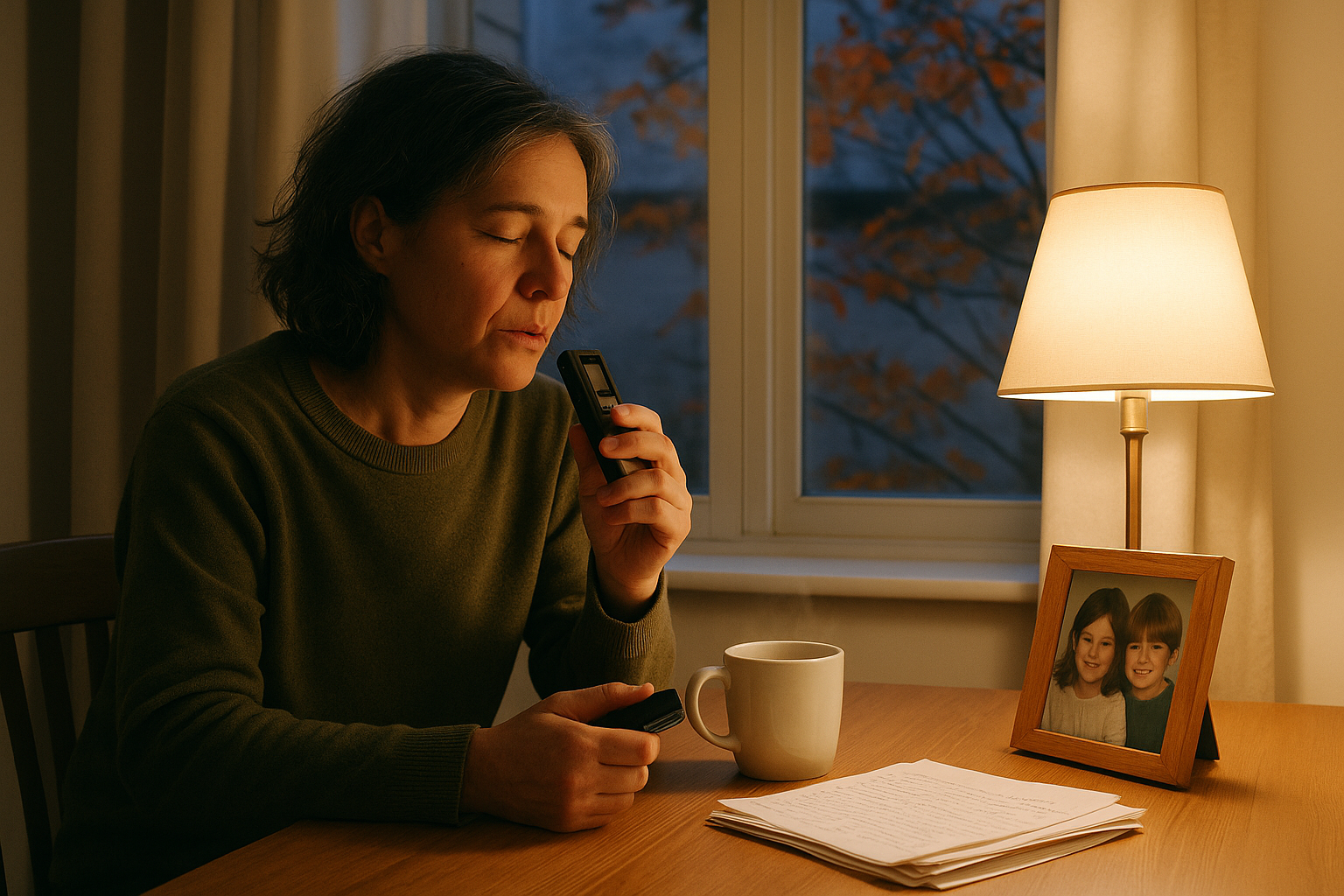
There's a particular kind of pause that happens when a parent first considers recording a message for their children to hear someday—maybe on a wedding day, maybe after a hard year, maybe simply "whenever they need it." The pause comes from not knowing where to start. Do you talk about values? Tell a story? Just say I love you, on repeat, in every way you can think of?
The truth is there's no single right answer, but there is a growing body of research on what makes these messages meaningful—and lasting. For families who want to make sure a voice, not just words on a page, survives the years, Voice After Life.com exists specifically to help parents record and preserve messages like these for their children to hear long into the future.
The Science Behind Why Voice Resonates
There's a reason a recorded voice tends to land differently than a written letter or a photograph. Research on the science of human connection has found that hearing the voice of someone we love can trigger physiological responses far beyond simple recognition. Research has found that talking to mothers activated the same parts of the brain that hugging them did, meaning hearing the voice of someone you love generates the same effect as physically touching them. In one striking example, researcher Theresa Pape at Northwestern University found that when patients in comas had the voice of someone they loved piped into the hospital room, they came out of the coma more quickly than patients who did not hear their loved ones' voices.
This is part of why grief researchers increasingly view ongoing connection to a loved one's voice, memory, and presence as healthy rather than something to avoid. Continuing bonds theory, introduced by researchers Klass, Silverman, and Nickman in 1996, proposes that instead of detaching from a lost loved one, the bereaved maintain a connection in new ways—shifting grief support away from a "letting go" mindset toward one that acknowledges an ongoing relationship. A recording made years in advance becomes a tool for exactly that kind of continued connection.
What to Actually Say
Most parents overthink the content and underthink the tone. Here is where research and practical guidance tend to agree.
Start With Who You Are, Not What You Did
Resumes and accomplishments fade in memory. Character doesn't. Consider naming the core values and beliefs that have guided your life, and how you came to hold them. Children remember the shape of a person more than the facts of a career.
Tell One Real Story
Abstract advice is forgettable; specific memory is not. The goal is honest and specific, not polished and general—a letter that reads like a greeting card will not be remembered, but one that names a real moment, admits a real struggle, or expresses a specific hope will stay with a child for decades. The same holds true for a spoken recording, arguably more so, because tone of voice carries emotion that text cannot and you can leave that recording to be delivered to your loved ones at VoiceAfterLife.com.
Say What You Love About Who They Are
It is tempting to praise achievements, name character—curiosity, kindness, persistence—gives a child something to hold onto regardless of what their life looks like when they hear your voice days or years from now. What better way lift your childs spirits.
Leave Room for Hard Days
Some recordings are meant for milestones; others are meant for the quiet, difficult moments no one can predict. A short, simple line acknowledging that life will include hard days, and that they are not alone in them, can matter more than any single piece of advice.
Let Your Real Voice Come Through
Don't script every word. Just talk in your natural voice, your natural speech. You might simply record yourself talking about memories and have it transcribed later, or ask a family member to interview you and help organize your thoughts. But it's much easier than that just open up the Voice After Life app or visit the Voice After Life webiste and begin. Imperfection is not a flaw here—it's evidence that the message is really you.
The Family-Story Research Worth Knowing
One of the more compelling findings in family psychology comes from Emory University. Researchers found that in families that talked in more coherent and emotionally open ways about challenging family events, children coped better over time, and standardized measures showed those children had better self-esteem, higher levels of social competence, higher quality friendships, and less anxiety and stress. In other words, the stories parents choose to share—including the hard ones—actively shape a child's resilience. A recorded message is, in many ways, a distilled version of this same practice: one more chance to hand a child the family narrative that helps them make sense of who they are.
What to Leave Out
A legacy recording is not the place for legal or financial instructions although you can record whatever it is you want to leave behind. At a dedicated voice-legacy service we do not judge neither do we view or hear your recordings. It is always good to keep logistical notes in a separate document or reference your estate plan, since mixing financial details into a personal message can blur the emotional tone and create confusion about what is legally binding. Record legal and financial messages separately based on the subject matter. Keep the recording about connection, not instructions.
It's also worth resisting the urge to record everything at once. A single, honest recording beats an exhaustive one that never gets finished. You can always make more than one, for different ages or different milestones.
When and How Often to Record
There is no required schedule. Some parents record around a birthday, a new baby, or a health scare; others simply set aside a quiet afternoon. What matters more than timing is starting. A single ten-minute recording made today is worth more than a perfect one that never gets made.
Preserving the Message So It's Ready When They Need It
Once a message exists, the next question is how to make sure it survives—technically and emotionally—long enough to reach a child at the moment they need it, whether that's next year or in three decades. Families who want a secure, organized way to store and eventually deliver these recordings can turn to a dedicated voice-legacy service built specifically for keeping a parent's recorded words safe and accessible for the people they were made for.
Whatever words you choose, the recording itself is the gift. Your children won't remember it for its polish. They'll remember it because it was, unmistakably, you.
- Voice After Life.com
Sources
- How to Write a Legacy Letter — Children's Hospital Colorado Foundation
- Legacy Letters for Children: A Parent's Complete Guide — SSL Law
- How to Write a Legacy Letter to Grandchildren — Second Wind Movement
- How family stories help children weather hard times — Emory News Center
- Continuing Bonds Theory in Grief Counselling — The Loss Foundation
- The Human Voice Is Medicine. So Why Aren't We Talking? — Psychology Today