What to Say to Your Children in a Recording They Will Hear Years From Now
Guidance on what to include in a recorded message for your children, grounded in family-narrative research, palliative care findings, and simple structure.
What to Say to Your Children in a Recording They Will Hear Years From Now
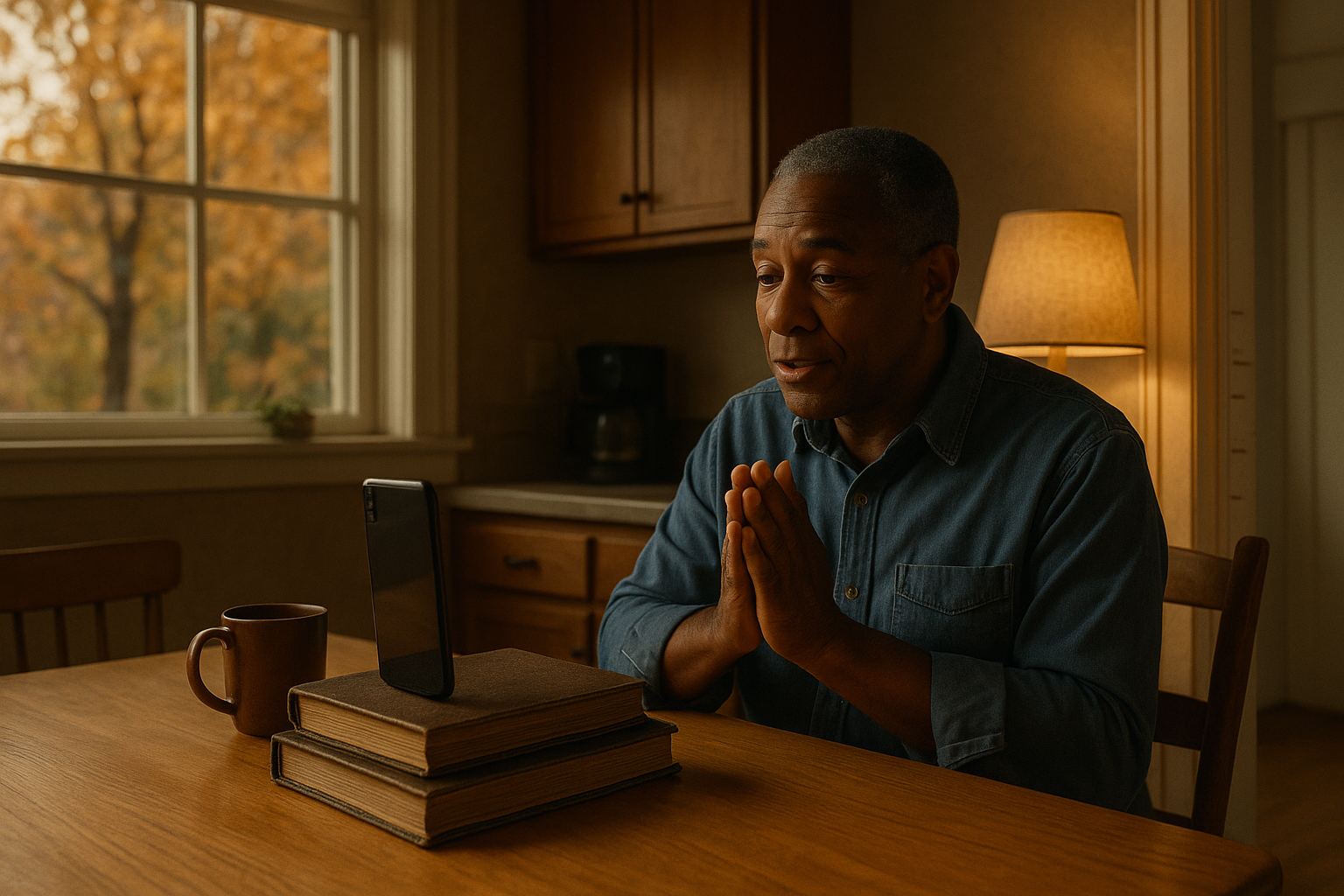
There is a particular kind of stage fright that sets in the moment you press record and realize you're not talking to a camera — you're talking to your child, possibly at an age and in a life you cannot picture yet. It's tempting to wait for the "right" words to arrive. They rarely do on schedule, which is exactly why so many people never make the recording at all.
If you're standing at that threshold, it helps to know you're not improvising blind. Researchers who study family communication, palliative care, and grief have spent years asking what actually helps children years and decades later — and their findings can shape a recording like this one at Voice After Life.com, where families are working through exactly this question. The good news: you don't need a script written by a professional. You need a structure loose enough to hold your real voice. Record your messages uninterrupted, at your own pace, record and re-record however many times it takes to get it right. Your children, grandchildren and other loved ones may hear these messages one day at Voice After Life.com.
Why a Recorded Message Matters More Than You Might Expect
This isn't just sentimental instinct. Emory University psychologists Marshall Duke and Robyn Fivush found that children who know their family stories show higher self-esteem, stronger sense of control over their lives, and better ability to cope with stress and difficult times. Dr. Duke's own summary of the research points to a specific kind of story that helps most: "The most healthful family narrative is the oscillating family narrative: 'We've had ups and downs but we'" — the honest version, not the highlight reel.
The medical world has reached a similar conclusion from a different direction. Dignity Therapy, a structured approach used in palliative care, focuses on dignity conservation tasks such as settling relationships, sharing words of love, and preparing a legacy document for loved ones. Reviews of this research have found that patients who receive it report high satisfaction and benefits for themselves and their families, including increased sense of meaning and purpose. In other words, the act of speaking these things aloud does real work — for the person recording it and for the person who will eventually listen.
Building Blocks for What to Say
You don't need all of the following in one recording. Think of them as ingredients you can use in whatever combination feels honest.
Name Who They Are to You
Start simply. Say their name, say why you're making this, and say it in your own words. The Stanford Letter Project's "Who Matters Most" framework, built from clinical work with seriously ill patients, opens with exactly this step: acknowledging the important people in your life and taking the time to express your pride in their achievements.
Tell a Story Instead of Listing a Value
It's more natural — and more memorable — to show than to tell. Instead of stating a principle outright, illustrate it: instead of writing "I value honesty," tell the story about the time you told the truth even when it cost you something. A specific memory does more work than a general statement ever will.
Say the Things That Are Easy to Leave Unsaid
The same Stanford research identified recurring tasks people wish they'd completed: acknowledging loved ones, recalling treasured moments, and offering apology or forgiveness where it's needed. As one description of the framework puts it, many patients worry about specific past instances when they have hurt the people they love, and doing a life review means taking a moment to ask forgiveness from those you have hurt. A recording gives you room to say these things gently, in your own time, without the pressure of a face-to-face conversation.
Speak to the Age They'll Be, Not Just the Age They Are Now
One of the strangest and most useful things about a recorded message is that it doesn't have just one listener. What a 10-year-old reads as simple reassurance, a 25-year-old may read as profound guidance, and a 40-year-old may read as a mirror of their own parenting journey. For younger children especially, video carries something a letter can't: for young children who may not yet read, a video becomes especially precious — they can watch a parent or grandparent speaking directly to them, year after year, as they grow.
A Few Cautions Worth Knowing
Hospice educators who help families create these messages flag one pitfall in particular: resist the urge to script your child's future for them. Guidance from hospice-based legacy programs warns that when writing milestone notes, it is important not to focus only on the success of the recipient, since phrases like hoping they became a doctor or are married with children by a certain point could inflict a sense of failure if they've chosen a different life path. Speak to who they are, not to a version of them you're imagining.
It's also worth remembering that a recording like this is not a legal document. If you have instructions about property, guardianship, or finances, those belong in a will or trust prepared with an attorney — a personal message and an estate plan serve different purposes and shouldn't be confused for one another.
Letting Go of Perfect
Most people stall out chasing a polished, final-feeling version. It isn't necessary. Grief and legacy researchers who study these projects consistently note that perfectionism is the enemy of completion, and loved ones will treasure an authentic voice and genuine reflection far more than perfectly polished prose. A pause, a laugh, a moment where you lose your train of thought — these are not flaws in a recording meant to be heard years from now. They're proof it was really you.
If it helps, record in short pieces rather than one long take: a few minutes about a memory today, a few minutes of advice next week, a simple "I love you" whenever it comes to mind. Over time those pieces become something whole. For families who want a private, organized place to build that collection at their own pace, voiceafterlife.com offers a way to gather these messages so they're ready whenever your children need to hear them.
Closing Thought
You are not trying to write the perfect final word. You're trying to leave behind a voice your children can return to — one that sounds like you, tells the truth about your life, ups and downs included, and says plainly what mattered most. That's a gift no one else can give them.
- Voice After Life.com
Sources
- How to Write a Legacy Letter to Grandchildren — Second Wind Movement
- Ethical Will vs Legacy Letter: Explained — Eva Held
- What Is a Legacy Letter? (And How to Write One) — LastWithYou
- Creating Legacy Projects with Children — Funeralocity Hospice Portal
- Legacy Letters for Children: A Parent's Complete Guide — SSL Law
- Who Matters Most | Letter Project — Stanford Medicine
- Complete the seven tasks of life review in minutes — Stanford Medicine
- Care of the human spirit and the role of dignity therapy: a systematic review — BMC Palliative Care