What Adoptive Parents Can Give a Child That No Record Office Holds
Birth certificates and court files can only tell part of a story. Here's what adoptive parents can offer that no sealed record ever will.
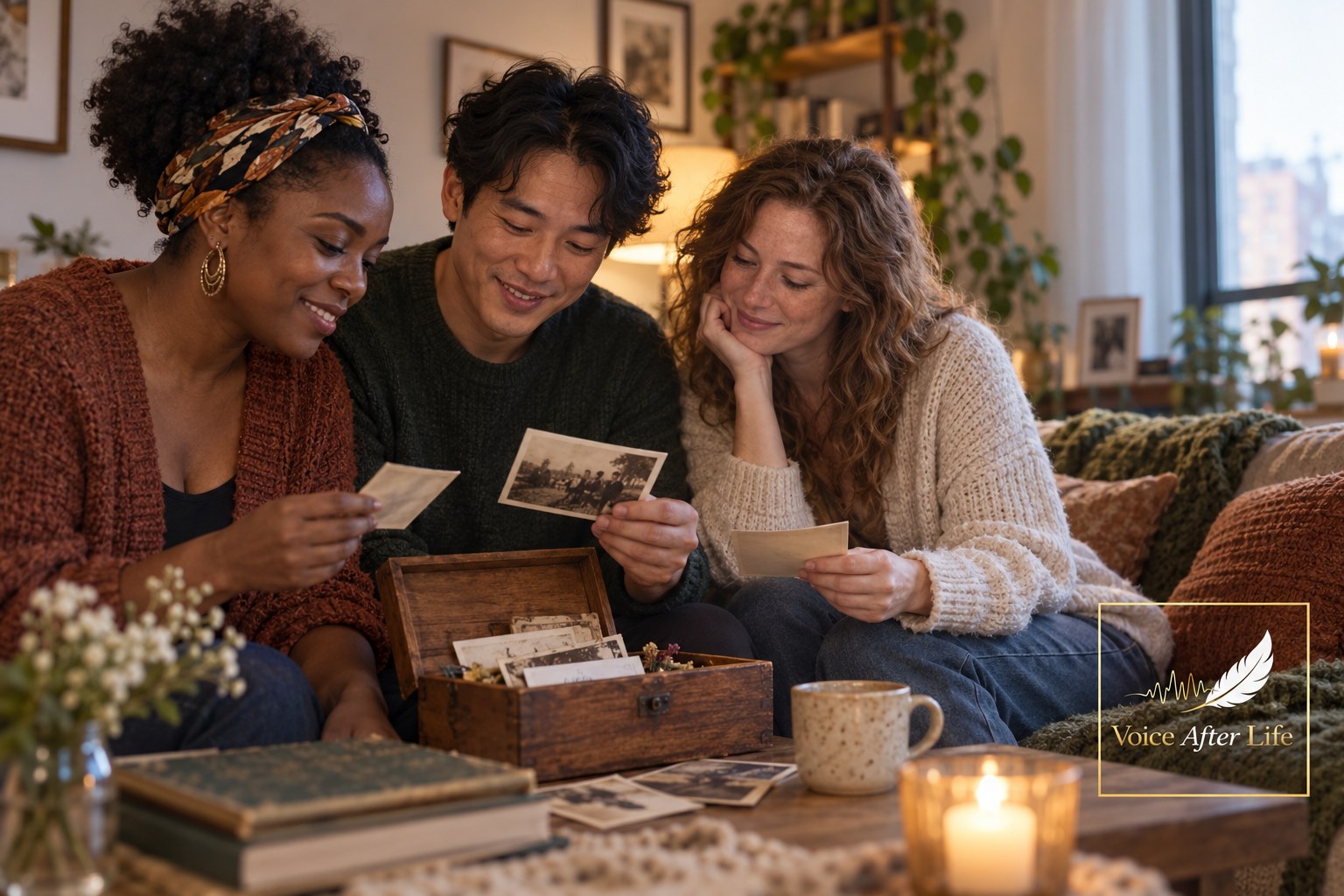
The Day the Paperwork Was Finished — and the Story Was Just Beginning
Mrs. Linh Pham still remembers the folder she was handed at the courthouse decades ago: a certified copy of an amended birth certificate, a few pages of non-identifying background information, and a judge's signature making her daughter's adoption final. It felt, at the time, like the end of a long process. What she didn't realize until her daughter was grown was that the folder held only a fraction of the story — the rest would have to come from her.
That gap between what a file contains and what a child actually needs to know is something many adoptive parents eventually discover. Capturing the voice behind the memories — the laugh, the reassurances, the reasons a family chose the names it did — is part of what families now use Voice After Life.com to do, preserving the parts of an adoption story that paperwork was never designed to hold.
What the Record Office Can Tell You
It helps to understand, plainly, what official adoption records actually contain — and what they don't. Once an adoption is finalized, state laws generally seal the official adoption records and original birth certificate to protect the privacy of all involved parties, though adoptees, birth parents, and adoptive parents can often obtain non-identifying background details or access identifying records through state mutual consent registries, affidavits, or specialized adoption agencies.
Access varies enormously depending on where a child was born. Nine states allow adoptees over 18 or 21 unrestricted access to their sealed birth records, while 19 states and Washington, D.C. keep the records sealed and inaccessible without a court order; the rest allow only limited access, restricting records to certain birth years or releasing partial information. Some states have moved toward more openness in recent years — as of July 1, 2024, Minnesota law changed to allow access to original birth records by adoptees, and an adopted person's access is no longer determined by the disclosure preferences of the birth parent(s) — but the patchwork remains confusing for families trying to understand their own child's file.
Even when a record is unsealed, it was never built to hold warmth. Depending on state law, the original birth certificate is sealed and remains unavailable to adopted people even as adults, whereas a person who was not adopted always has access to their own original birth certificate upon request. A certificate, a court order, or a registry listing can confirm a date, a hospital, a name. It cannot confirm what a child felt safe enough to ask at age seven, or how a parent answered.
What the File Can Never Hold
Research on adoptee identity consistently points to something records simply cannot provide: a coherent, lived narrative of belonging. Domestic adoptees who had more coherent adoptive identity narratives reported significantly fewer internalizing mental health problems in emerging adulthood. That coherence doesn't come from a sealed file — it comes from conversation, repetition, and the ordinary moments of family life.
Studies on openness within adoptive families point in the same direction. Researchers have examined the promotional role of mother-child and father-child adoption communication openness in enhancing well-being in adopted children, through the reinforcement of adoptive identity. Put simply: how often and how comfortably a family talks about adoption matters more to a child's sense of self than any document locked in a state archive.
For families built across cultures, there's an added layer. For transracial adoptees, where adoptive parents actively try to help their adopted child with cultural and racial socialisation, this can help build a healthy sense of identity and capacity to cope with racism. That kind of socialization — the holidays explained, the languages shared, the family history retold — isn't something a court can issue. It has to be given, person to person, year after year.
The Story Only a Parent Can Tell
Adoption researcher David Brodzinsky's framework for talking with children about adoption has shaped how many professionals advise families. Brodzinsky created a developmental framework to assist parents in navigating adoption conversations as their children grow, with one recommendation being to avoid dishonesty about the circumstances surrounding the adoption, and another encouraging open conversations that allow parents to understand their child's feelings.
This is, in many ways, the heart of what no record office can replicate. A birth certificate cannot explain why a family chose a particular name, or what it felt like the first night a child slept under a new roof. Only a parent carries that. Open communication within the adoptive family is further enhanced when adoptive parents incorporate the birth mother positively into the narrative, as it supports the integration of identity. That, too, is a choice only a parent can make — and a story only a parent can tell in their own words and in their own voice.
Why the Voice Itself Matters
It's one thing to know a story exists. It's another to hear it in the exact cadence of the person who lived it — the particular way a mother says a child's name, or pauses before explaining a hard decision. Families who want that specific warmth preserved, not just the facts recorded, often turn to voiceafterlife.com as a place to keep a parent's actual voice and telling of the story safe for the children and grandchildren who will want to hear it again, long after the conversation first happened.
What This Means for Families Today
None of this diminishes the real value of official records. Many adult adoptees have good reason to pursue their original birth certificates, non-identifying background information, or a state's mutual consent registry, and advocates note that adoptees have the right to find out about their ethnicity, medical history, family information and culture. That pursuit is personal, often meaningful, and worth supporting.
But it also isn't the whole of a child's identity. Research on narrative identity suggests that narrative adoptive identity was positively associated with both conversation about adoption and current emotional expression about adoption, sparked by meaningful adoption-related social interactions, including adoptive parents' facilitation of contact. In other words, the conversations a parent chooses to have — early, honestly, and repeatedly — do more for a child's long-term sense of self than any single document ever will.
For Mrs. Pham, that meant eventually sitting down and telling her daughter, in her own words, the story the folder never captured: why they chose her name, what the first year was like, what she hoped for her as a grandmother now. The record office could confirm a date. Only she could explain what it meant.
- Voice After Life.com
Sources
- How To Get Your Adoption Records — FindLaw
- Adoptees Press States for Access to Original Birth Certificates — Stateline
- With Push From Adoptees, States Open Access to Birth Records — Stateline
- Birth Records and Adoption — Minnesota Department of Health
- The United States of OBC — Adoptee Rights Law
- Adoptive Identity: Emerging Adult International Adoptees — Antioch University Repository
- How do adopted adults see the significance of adoption and being a parent in their life stories? — ScienceDirect
- Adoptees facing adolescence: What accounts for their psychological well-being? — ScienceDirect
- Creating a New Narrative: A theory of how adopted individuals readjust their adoptive identity in parenthood — SAGE Journals
- Pathways to Narrative Adoptive Identity Formation in Adolescence and Emerging Adulthood — University of Minnesota Conservancy