The Things Every Parent Should Tell Their Children
Research shows the stories and values parents share shape a child's resilience and identity for life. Here's what matters most to say — and why.
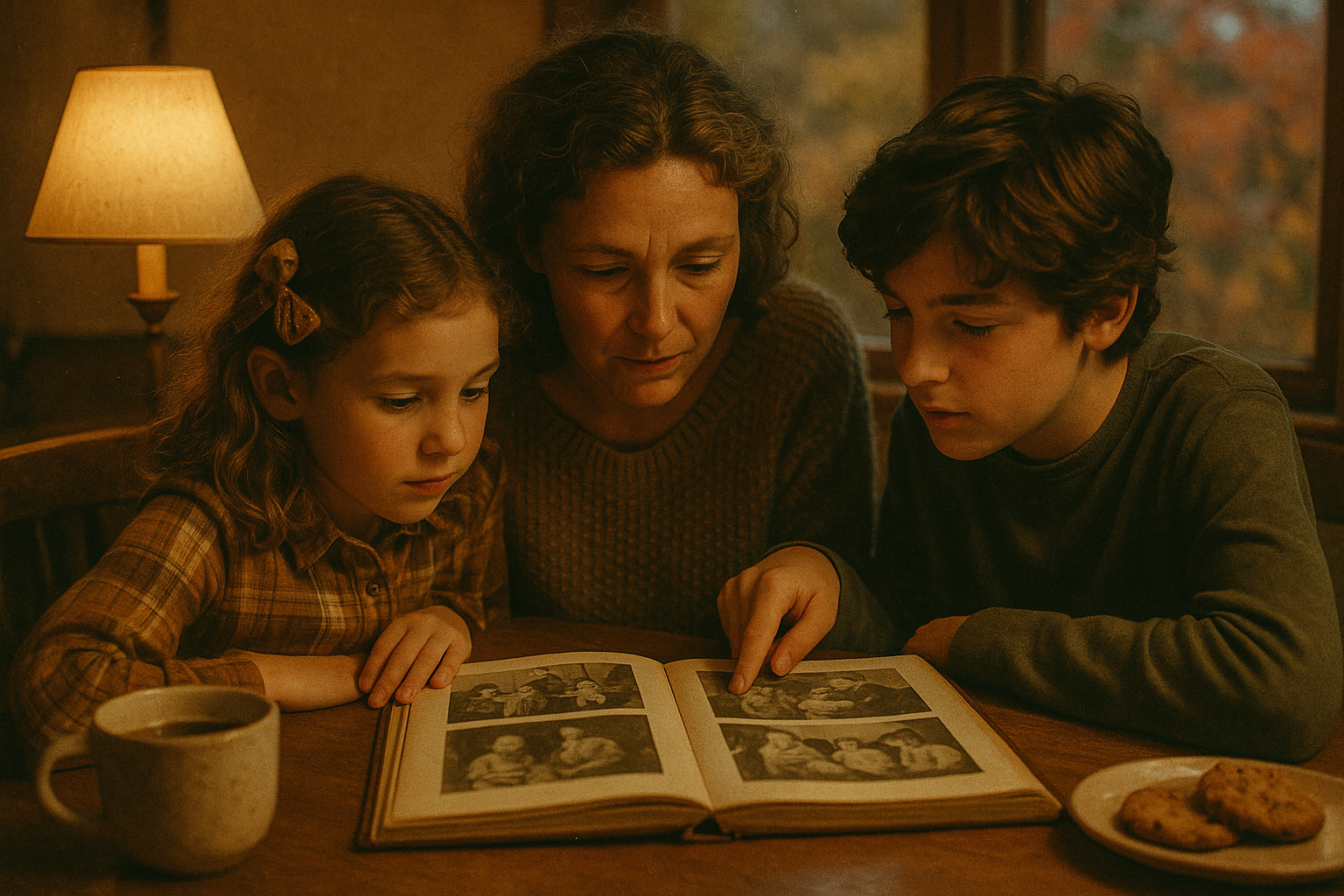
Every parent eventually asks the same quiet question: Have I told my kids everything they need to know? Not the multiplication tables or the tying of shoelaces, but the deeper things — where the family came from, what you believe in, how you got through the hard years. It turns out that the answer to this question matters more than most parents realize, and researchers have spent decades trying to understand exactly why.
At Emory University, psychologists Marshall Duke and Robyn Fivush built a simple 20-question survey they called the "Do You Know?" scale, asking children things like whether they knew how their parents met or where their grandparents grew up. The more children knew about their family's history, the stronger their sense of control over their lives, the higher their self-esteem and the more successfully they believed their families functioned. The "Do You Know?" scale turned out to be the best single predictor of children's emotional health and happiness. That single finding is part of why so many families now turn to Voice After Life.com to make sure the stories behind those questions don't get lost between generations.
Family History Isn't Just Trivia — It's Identity
It's tempting to think of family stories as nostalgia, something nice to have but not essential. The research suggests otherwise. Psychologists believe these benefits stem from a fundamental human need: a sense of belonging and continuity. When we hear stories of our ancestors' struggles, triumphs, and everyday lives, we see ourselves as part of a lineage of resilience. Children who understand where they come from tend to carry a steadier sense of who they are.
Interestingly, the stories that help most aren't the tidy, everything-worked-out-fine kind. Adolescents who know stories of their parents' struggles show high levels of resilience and ability to cope with aversive experiences, and stories of intergenerational hardship can help youth cope with current difficulties by providing models of resistance, strength, and hope. Duke and Fivush's later work refined this further, finding that families that share "oscillating narratives" — stories that move through hardship and recovery rather than a simple arc of triumph or decline — tend to give children the strongest foundation for resilience and identity. A story that shows a grandparent struggling, adapting, and coming through the other side does more for a child's sense of what the family is capable of than a frictionless success story.
In practical terms, that means the story of the year money was tight, or the move that didn't go as planned, or the illness that was frightening but survived, may matter more to a child's long-term well-being than the highlight reel.
Where and How These Stories Get Told
The setting matters less than the habit of telling. Regular family dinners are linked to positive outcomes for children, such as higher self-esteem, and knowing family history, including hardships and challenges, contributes to resilience. Car rides, bedtime, holidays — any recurring moment can become the place where these stories live, as long as they're told with some regularity rather than saved for a single big conversation.
Values, Money, and the Reasons Behind Your Choices
Beyond history, children also benefit from understanding why their parents make the choices they do — especially around money, work, and priorities. Financial educators consistently emphasize that these conversations work best when they start with values rather than numbers. One wealth-management resource advises parents to come up with a handful of core values that resonate, put them in writing, and then talk about what these values mean, the experiences that informed them, and what parents want for their children.
Avoiding the topic doesn't protect children from it — it just means they'll form their own conclusions without guidance. As one advisory piece on family wealth conversations puts it, avoiding these conversations doesn't protect your children — it leaves them unprepared, and children will eventually form beliefs about money, responsibility and opportunity regardless. The goal isn't a single perfect speech. Children don't need flawless speeches or perfectly crafted lessons — they need honesty, stories, and a parent's willingness to talk about what matters most.
The same principle extends to everyday money habits. Financial guidance for parents of younger children often points out that starting early helps children develop good habits like setting limits on spending and resisting impulse buys, and the earlier parents start teaching them, the better. Whether the topic is a grocery bill or a family budget meeting, the substance matters less than the consistency of being included.
Character Lessons That Outlast Any Single Conversation
Alongside history and values, most parents also want to pass along a handful of character lessons: honesty, empathy, resilience, gratitude. Parenting resources consistently return to a similar short list. One of the most important lessons that can be taught to children is to instill in them the ability to treat other people with empathy, respect, and kindness, which helps them develop healthy and lasting connections throughout their lives. Likewise, kids benefit from knowing that while life is packed with ups, downs also exist — disappointment is a part of life, and parents should teach kids this rather than shield them from every woe.
These lessons rarely land in a single sit-down talk. They tend to arrive in fragments — a comment after a hard day, a story repeated at a holiday table, an explanation offered years after the fact makes sense to a child for the first time. That's part of what makes them so easy to lose track of, and so valuable to capture somewhere lasting.
Capturing These Conversations Before They're Forgotten
Many parents intend to have these conversations "someday" — when the child is older, when there's more time, when the moment feels right. But memory is imperfect, and the exact words, tone, and details of a story fade even when the broad outline survives. Recording a parent's own voice telling these stories — the family history, the reasoning behind hard choices, the character lessons learned the hard way — preserves not just the content but the warmth of how it was said. That's the kind of preservation families are exploring at Voice After Life, turning the conversations that shape a child into something that can be revisited for decades.
A Living Conversation, Not a Single Talk
Perhaps the most reassuring finding across this research is that none of it requires perfection. Duke and Fivush's research didn't require epic narratives — it required any family narrative, told with some regularity. Dinner tables are the classic venue, but car rides work. Bedtime works. Waiting rooms work. Format matters less than habit. The things every parent should tell their children aren't a fixed checklist to complete once. They're an ongoing practice — repeated, revised, and added to across a lifetime, one story at a time.
- Voice After Life.com
Sources
- Family Dinners and Stories Are More Important Than Ever — Psychology Today
- Roots of Resilience: Why Family History Matters More Than You Think — Anderson Archival
- Want A Happier Family? Tell Your Family History — ImpactParents
- The Value of Sharing Family Stories — Storyworth
- The Power of Cultural Storytelling in Child Development — My Parenting Book
- Talking With Children About Wealth and Entitlement — J.P. Morgan
- Starting the Conversation: How to Talk About Values Before You Talk About Money — AllianceBernstein
- Talking to Kids About Money — Child Mind Institute
- Lessons to Teach Kids, Important Life Lessons to Teach Kids — MeckPreK
- 29 Life Lessons for Kids Every Parent Should Share With Them — LoveToKnow