Telling Your Children Where Their Name Came From
A name carries a story. Here's why sharing the history behind a name matters, and how to pass that story on before it's forgotten.
A Name Is Never Just a Name
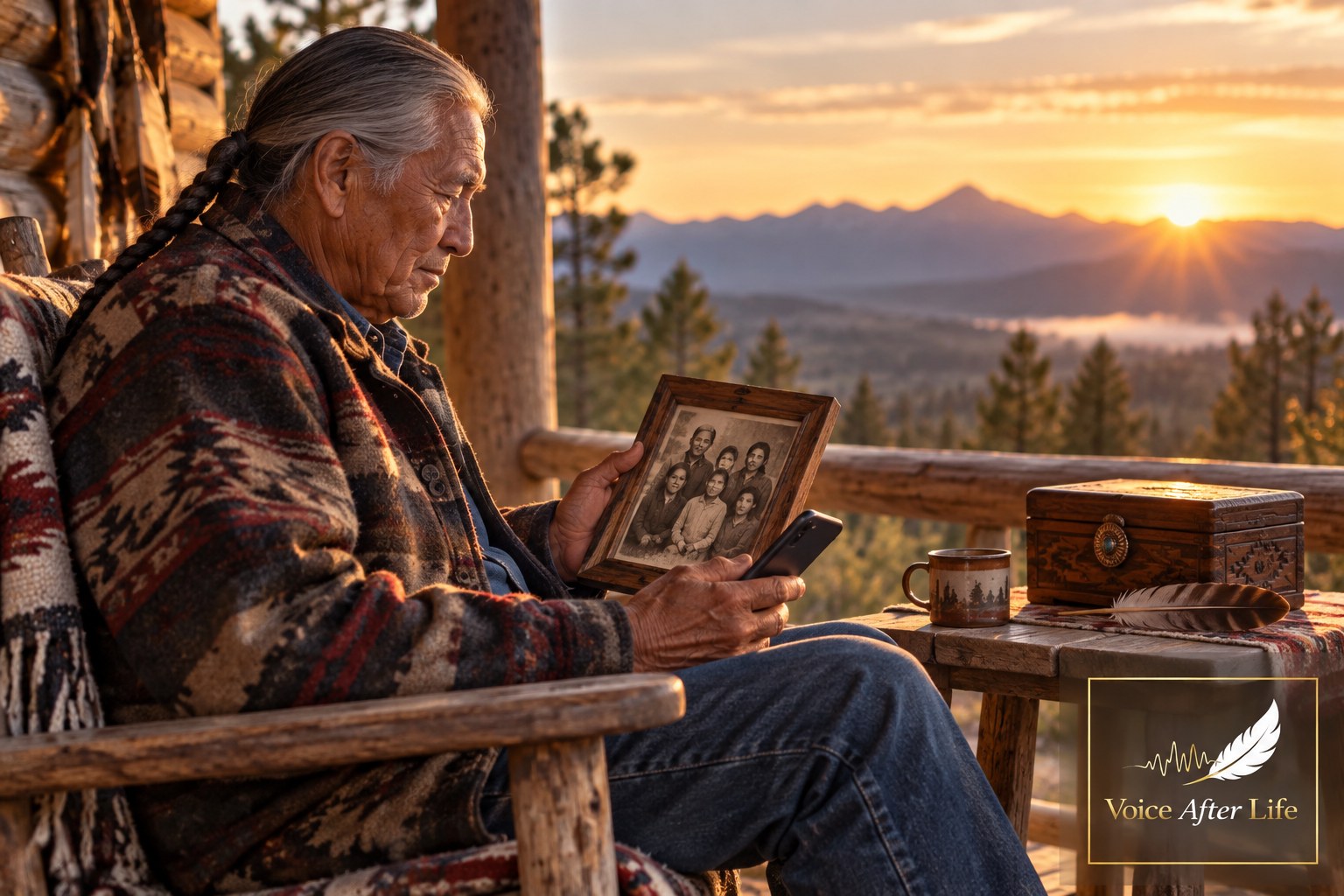
Walter had always assumed his grandchildren knew why he was named Walter. It wasn't until his granddaughter asked him point-blank at a birthday dinner — "Grandpa, who were you named after?" — that he realized he'd never actually told her. He explained that he carried his own grandfather's name, a man who had come home from the war and started a small hardware business, a man Walter had loved and admired as a boy. His granddaughter sat up a little straighter after that. Suddenly her own middle name, which echoed his, meant something different to her. Stories like this — the small, specific history behind a name — are exactly the kind of family memory that Voice After Life.com helps families record and keep, so that a name's meaning doesn't quietly disappear with the person who could explain it.
Most of us carry a name we did not choose, given to us for reasons we may only half understand. Was it a grandmother's name? A saint's day? A family tradition that skipped a generation and then came back? For children, learning the answer can be a small but meaningful piece of knowing who they are and where they come from.
Why the Story Behind a Name Matters
Researchers who study identity have long pointed to a close relationship between a person's name and their sense of self. One line of psychological research has examined the notion that a close connection exists between an individual's name and their personal identity and sense of self, with psychologists proposing that the name given to a person influences the identity they develop. A name is often the first word a child learns to recognize, and it stays bound up with their sense of who they are for the rest of their life.
There's also growing evidence that knowing family history more broadly — not just names, but the stories, struggles, and triumphs that surround them — has a measurable effect on children's wellbeing. Psychologists Marshall Duke and Robyn Fivush at Emory University developed a set of questions, now known as the "Do You Know?" scale, to test whether children who knew more about their family's history handled stress and challenges better. They created the scale in 2001 to ask children questions about their family in order to test the hypothesis that children who know more about their families are more resilient and can handle challenges better than children who have limited knowledge about their families.
They concluded that the more children knew about their family's history, the stronger their sense of control over their own lives, the higher their self-esteem, and the more successful they believed their families to be.
The story behind a child's own name is one of the most personal and accessible pieces of that larger family history. It doesn't require a genealogy chart or a trip to the archives — just a willingness to tell it.
Where Naming Traditions Come From
Many of the naming customs families still half-follow today — without always knowing why — trace back generations. In English and Irish families, for instance, there was once a fairly rigid pattern: the first son was named after the father's father, the second son after the mother's father, the third son after the father, and the daughters followed a similar pattern through the mothers' and fathers' lines. Similar structures appear across many cultures. Not that long ago, parents routinely followed patterns for passing on given names from generations past, and the traditions varied by country.
In some families, a name honored someone who had died. In eras of high infant mortality, babies were often named after earlier siblings who had died in infancy — a practice that can be startling for descendants to discover, but one rooted in grief and remembrance rather than coincidence. Other traditions carried different meaning entirely: in Ashkenazic Jewish families, children were never named for a living ancestor, but might be given a name that honors a recently deceased ancestor, often with a similar but not identical name.
Even families with no formal "system" often carry quiet patterns — a mother's maiden name tucked into a middle name, a grandfather's first name passed to a grandson two generations later. The reasons behind these choices are rarely written down anywhere. They live only in memory, which is exactly why they're worth telling before they're lost.
How to Start the Conversation
For a grandfather like Walter, or for any parent or grandparent, the hardest part is often simply starting. A few starting points can help:
- Ask yourself first. Who were you named for, and what do you know about that person? Even a fragment — a profession, a personality trait, a single story — is worth passing along.
- Separate the name from the meaning. A name might have a literal meaning (its origin in another language) and a family meaning (who it honors). Both are worth sharing.
- Don't wait for a milestone. These conversations often happen naturally — at a birthday, during a family drive, while looking at old photographs — rather than as a formal sit-down.
- Write it down or record it. Memory fades, and details get softened or lost with retelling. A name's story, told once in a grandparent's own voice, can become something a family returns to for generations.
That last point is often where families run into trouble — not because they don't want to preserve these stories, but because life gets busy and the moment passes. Recording a grandparent explaining, in their own words, why a grandchild carries the name they do is one of the simpler ways Voice After Life supports families working through this kind of legacy project, turning a kitchen-table conversation into something that can be revisited long after it was first spoken.
A Small Story With Lasting Weight
Not every family will have a dramatic naming story. Some names were chosen simply because the parents liked the sound of them, and that's a perfectly fine story too. What matters most isn't the drama of the explanation — it's the act of explaining. A child who hears, directly from a parent or grandparent, this is why you're named what you're named, gains a small but durable thread connecting them to people and decisions that came before them.
For Walter, that birthday dinner conversation didn't just answer a question. It gave his granddaughter a clearer sense of where she fits into a family story that started before she was born — and it reminded Walter that some of the most important things he knows are the ones he's never actually said out loud.
- Voice After Life.com
Sources
- English naming traditions — English Ancestors Blog
- Naming Traditions Across Multiple Cultures — Family Tree Magazine
- Names, Identity, and Self — ResearchGate / American Name Society
- The "Do You Know" Scale — Seattle Foundation
- The Power of Family Stories — Big Ocean Women