Starting the Conversation with Aging Parents About Their Wishes
A practical, compassionate guide to opening up conversations with aging parents about their wishes—before a crisis forces the issue.
Why This Conversation Matters Now
Sarah is folding laundry while her two kids nap, and her phone buzzes with a text from her mom about a doctor's appointment. It's a small moment, but it's the kind of moment that makes Sarah realize she doesn't actually know what her parents want if something bigger happens—a fall, a diagnosis, a hospital stay. Like many adults balancing young children and aging parents, she keeps meaning to ask, but the right moment never seems to arrive.
That hesitation is common, but the payoff for pushing through it is real. Families who take time to talk about medical wishes, living arrangements, and what should happen to treasured belongings often find that a parent's own voice—recorded in their words, in their own tone—becomes something the whole family can return to for comfort and guidance, which is part of why more people are turning to resources like Voice After Life.com to help capture those conversations for the future.
The Data Behind the Discomfort
It can help to know that this hesitation is nearly universal—and that most families eventually do have these talks. According to a 2025 Pew Research Center survey, most parents ages 65 and older say they have talked to their adult children about their end-of-life preferences, with 68% discussing burial or funeral preferences, 66% sharing wishes for medical care, and 61% discussing what to do with their belongings after they die. Interestingly, fewer parents—only 44%—have discussed their preference for living arrangements if they couldn't live independently.
The research also shows who tends to initiate these conversations. Parents ages 75 and older are more likely than those ages 65 to 74 to say they have discussed end-of-life preferences with their adult children, and mothers are more likely than fathers to have had these conversations. That means if a parent hasn't brought it up yet, an adult child stepping in gently is often exactly what's needed.
Finding the Right Moment
There's no perfect script, but there are natural doorways into the topic. Health experts at UPMC note that everyday moments can serve as openings: conversation starters like articles, TV shows, movies, or current events, along with triggers such as sermons, funerals, and medical checkups, can help get you started—even talking about the death of someone you know can help.
Life transitions work especially well, too. As one geriatric expert quoted by WebMD explains, plans for the future—such as a loved one's retirement, a move to assisted living, or the writing or updating of a will—are natural ways to open the conversation, since any kind of life event can be a trigger for these discussions.
For Sarah, the opening came during a weekend visit, when her mother mentioned updating her will after a friend's unexpected diagnosis. It was a small comment, but it was the door Sarah had been waiting for.
Start Small, Then Build
One of the most reassuring pieces of guidance comes from the National Institute on Aging, which encourages families not to treat this as a single, heavy conversation. Start small—for example, try simply talking with your loved ones about what you appreciate and enjoy most about life, since values, treatment preferences, and even the people involved in a plan may change over time. The NIA also recommends revisiting the topic regularly: continue to talk about your wishes and update your forms at least once each year or after major life changes.
This matches advice from estate professionals, too. According to Heritage Elder Law, it often helps to introduce the topic gracefully, perhaps through a description of someone else's recent experience, a story seen on the news, or an upcoming life transition, and to consider sharing your own concerns first.
What to Actually Ask
Once the door is open, specifics matter more than a single grand question. Estate-planning resource FreeWill suggests breaking the conversation into a few short, focused talks rather than one marathon session: you don't have to sit down for one big, serious talk—it's often better to have a few short, thoughtful conversations over time. A simple way in might sound like asking what kind of care a parent would want in a medical emergency, or who they'd want making decisions on their behalf.
These conversations tend to cover a few recurring areas:
Medical Care and Decision-Making
Who should speak for a parent if they can't speak for themselves, and what kind of treatment they would or wouldn't want. The National Institute on Aging notes that this is typically your spouse, your parents if they are available, or your children if they are adults.
Living Arrangements
Where a parent hopes to live if independent living is no longer possible—a topic Pew's research shows is still under-discussed compared to medical and financial wishes.
Personal Belongings and Keepsakes
What matters to them, and who they'd want to have it—not just financially, but sentimentally.
Their Own Story, In Their Own Words
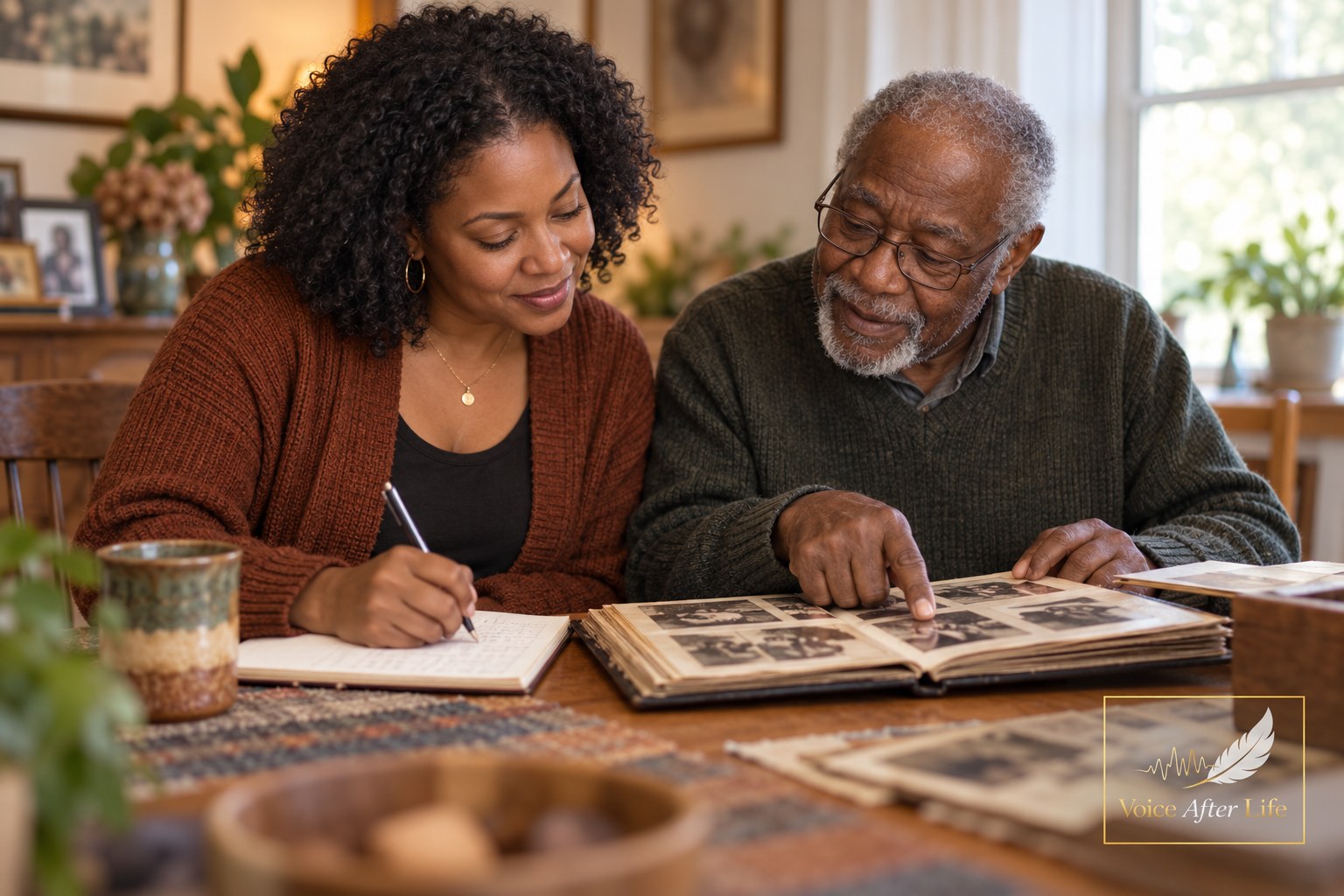
Beyond paperwork, many families find value in preserving a parent's voice, stories, and reflections directly—something that written directives alone can't capture. Setting aside time to simply listen, and even to record a parent talking through memories or advice for grandchildren, is a gift that grows more meaningful with each passing year, which is why some families choose to preserve those recordings through Voice After Life as part of their planning process.
When a Parent Resists
Not every parent is ready to talk right away, and that's worth respecting rather than pushing against. Health system HealthPartners points out that resistance is common and often rooted in fear rather than stubbornness, so patience—paired with gentle persistence—tends to work better than pressure. Returning to the subject later, after acknowledging discomfort, is far more effective than forcing a single conversation to cover everything.
A Gift for the Whole Family
Ultimately, these conversations aren't about dwelling on worst-case scenarios. They're about making sure a parent's voice and wishes are honored—now, and in whatever comes next. Families who start early often find the process brings them closer, not further apart, as they come to understand not just the logistics of a parent's wishes, but the values and life experiences behind them.
Sarah didn't get every answer in one afternoon. But she left that visit with a clearer sense of what her mother wanted, and a plan to keep talking—one small conversation at a time.
- Voice After Life.com
Sources
- Experiences with estate planning and discussing end-of-life preferences — Pew Research Center
- Advance Care Planning: Advance Directives for Health Care — National Institute on Aging
- How to Start the Conversation about Advance Directives — UPMC
- Advance Directives: Having the Talk — WebMD
- Talking to Parents About End-of-Life Care and Medical Decisions — FreeWill
- How to talk to your parent about advance directives — Heritage Elder Law
- How to talk to a loved one about advance care directives — HealthPartners