How to Start New Family Traditions That Last for Generations
Discover research-backed ideas for creating family traditions—and simple, practical steps to help them stick for generations to come.
Why Family Traditions Matter More Than We Realize
Family traditions often feel like small, ordinary moments—Sunday pancakes, a bedtime song, a particular way of celebrating a birthday. But behind these simple rituals is something psychologists have studied for decades, and the findings are consistent: traditions matter, and they matter a lot.
A landmark review published in the American Psychological Association's Journal of Family Psychology found that family routines and rituals are powerful organizers of family life that offer stability during times of stress and transition. Researchers examining decades of studies concluded that family rituals "related to parenting competence, child adjustment, and marital satisfaction."
The benefits aren't only emotional. Children who grow up with consistent family traditions often feel more secure, have stronger emotional regulation, and even demonstrate better academic outcomes. Traditions also do something subtler but equally important: they help family members understand who they are together. As one review put it, family rituals--from daily dinners around the table to annual road trips--can help families bond and form a strong group identity, increasing each individual member's sense of belonging to the family unit and their culture at large.
It helps to understand what separates a tradition from a routine. Rituals are different from routines. While routines are regular activities that we do without much thought, rituals are more intentional and meaningful. That intentionality—the sense that this moment matters—is what transforms an ordinary Tuesday dinner into something a child will remember decades later.
Where to Find Tradition Ideas Hiding in Plain Sight
The best new traditions rarely require elaborate planning. In fact, for traditions to stick they should reflect your family's interests and values; start slow and begin with one or two. Here are a few starting points, drawn from families who've made traditions stick.
Anchor to something you already do. One of the simplest approaches is to choose something already built into your week or month: Friday dinner, Sunday morning, payday pizza, first day of school, first beach day, or birthday breakfast. Building on an existing rhythm removes the friction of adding something entirely new to a busy calendar.
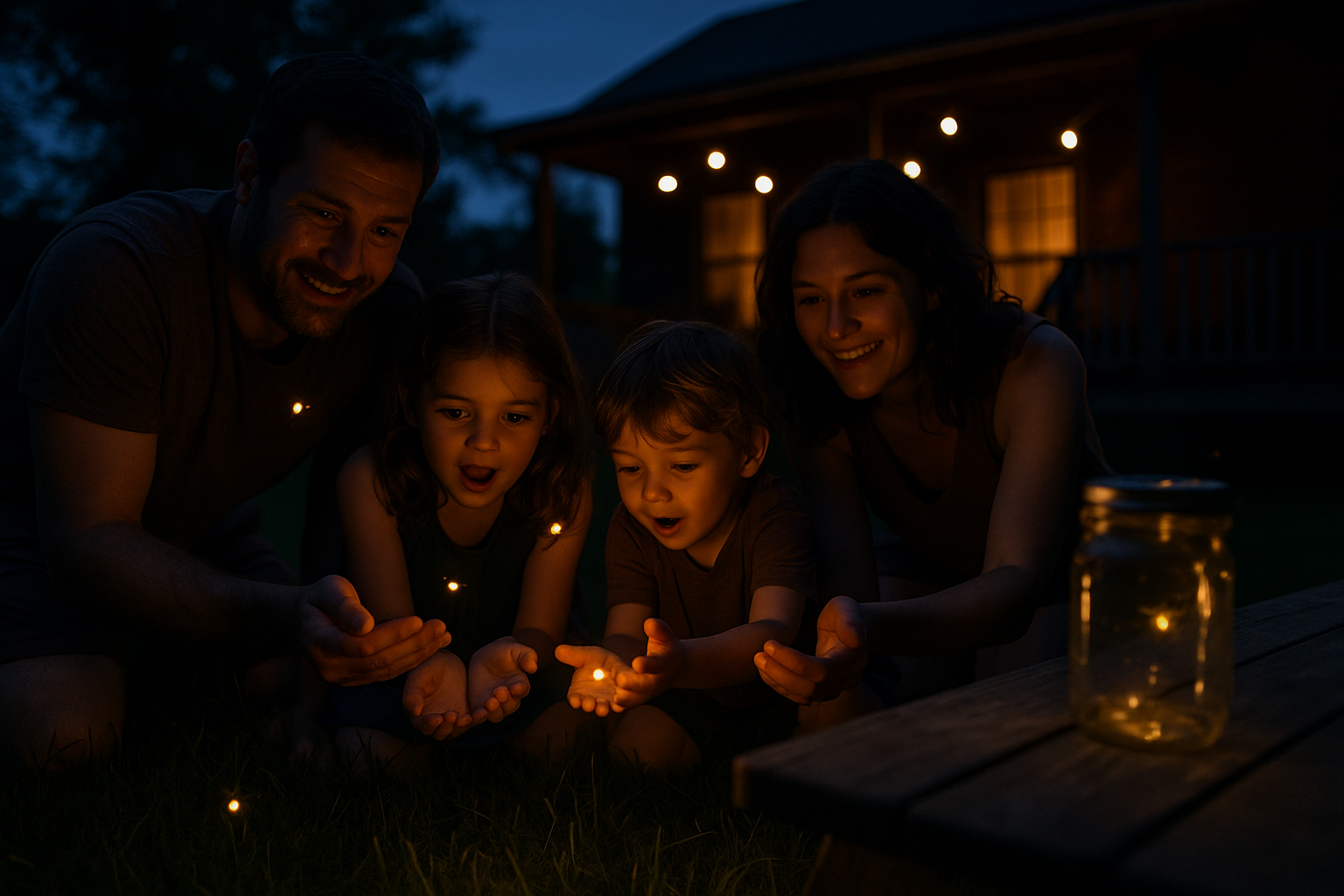
Let nature or the calendar set the cue. Some of the most enduring traditions are tied to something predictable outside the home. Consider how one family builds a summer ritual: fireflies may mark the beginning of summer. They arrive and depart with reliability at the same time each year. Their appearance is fleeting and children are drawn to their slow movement and irresistible light. Each year see who spots the first firefly, and then join in with your children and chase them around your yard or park.
Turn an in-joke into a ritual. Not every tradition needs to be planned in advance. Sometimes the best ones start by accident. Ideas for family traditions can come from unexpected places: a recurring in-joke, a memorable phrase your child once uttered or a spontaneous activity you enjoyed together and would love to repeat.
Consider a legacy-style tradition. Some traditions are less about weekly rituals and more about long-term storytelling. Writing a letter to your child once a month, but not giving it to him yet, is a long-term family tradition you'll thank yourself for starting—you can write it like a diary entry highlighting what you did together or note a milestone achievement. Traditions like this become treasured artifacts precisely because they accumulate meaning over years, not weeks.
Preserve the story alongside the tradition. As families create new customs, many also want a way to capture the voices and memories behind them—the reason Grandpa started the pancake tradition, or the story behind a recipe passed down for three generations. Platforms like Voice After Life exist for exactly this purpose: helping families record voices, stories, and reflections so that the meaning behind a tradition isn't lost even as the people who started it are no longer around to explain it.
How to Make a New Tradition Actually Stick
Coming up with an idea is the easy part. Making it last for years—or generations—requires a few deliberate habits.
Start small and simple
Elaborate plans often collapse under their own weight. Pick a few simple ideas to get started with and see what sticks, giving yourself time to see which activities your family naturally gravitates towards. Simplicity isn't a compromise—it's often the reason a tradition survives. Simple is usually best — even small things can make great memories and are easier to budget for and schedule.
Repetition matters more than perfection
It's tempting to think a tradition needs to feel magical every single time. It doesn't. What makes a tradition stick is not money, perfection, or Pinterest-level execution. It is repetition with warmth. The second and third time you do something matters more than how spectacular the first time was—repetition matters more than emotional intensity, and the second time is what starts turning a nice idea into a family custom.
Give it a name
A simple label can do a surprising amount of work to cement a tradition in a family's shared vocabulary. Make it specific enough to remember—not "have fun together," but "pancakes shaped like initials," or "a family question jar at dinner"—and give it a simple label like "This is our Friday floor picnic." Naming helps it stick.
Let everyone participate—and choose their role
Traditions feel more meaningful when they're not imposed from the top down. Traditions are more meaningful if everyone participates, but you can't just dole out chores and expect people to help cheerfully—as much as possible, allow people to choose their own tasks: cook a signature dish, put up decorations, run errands, deal with the grill or fireplace.
Expect—and allow—evolution
A tradition that never changes eventually becomes brittle. Families grow, children age, and interests shift, so it's wonderful to carry traditions through generations, but remember, traditions must evolve. Likewise, your traditions might need to change as your family changes and grows, and that's okay.
Watch for the real signals of "stickiness"
How do you know a new tradition is actually taking root? Look for small cues rather than grand declarations. Ask yourself: Did they talk about it later? Ask for it again? Try to add their own detail? Those are clues.
Traditions During Times of Change
One of the most powerful roles traditions play is helping families navigate transition—a move, a new school, a loss, or any period of upheaval. Researchers note that maintaining a ritual like Friday movie nights during a move to a new city can help family members cope with the upheaval, as the familiarity of the ritual provides a comforting sense of normalcy. This is one of the quiet gifts of tradition: it gives children (and adults) something steady to hold onto when everything else feels uncertain.
Starting Today
You don't need a holiday, a milestone, or a fresh calendar year to begin. The research is clear that the substance of a tradition matters less than its consistency and warmth. It is predictability and consistency that transform a single event into a family tradition—find what is meaningful to your family to instill warm memories for years to come.
Whether it's a Sunday breakfast, a firefly hunt, or a letter written once a month and tucked away for later, the traditions that last aren't the ones that are the most elaborate. They're the ones repeated often enough, and with enough genuine warmth, that they quietly become part of a family's story.
Sources
- Family Traditions as Anchors: Why Rituals Matter for Emotional Security — Institute of Child Psychology
- Family routines and rituals may improve family relationships and health — American Psychological Association
- The Power of Family Traditions: Count the Ways — Psychology Today
- The Psychology and Science of Tradition & Ritual — Argosy University
- Beyond Tradition: How Family Rituals Enhance Health and Connection — Sam Goldstein, Ph.D.
- Ideas for Starting Fun Family Traditions — Bright Horizons
- 8 Tips for Starting Meaningful Family Traditions — Gretchen Rubin, LinkedIn
- 70+ New Family Tradition Ideas for January 2026 — Storyworth
- Our Guide to Creating Unique Family Traditions — Popsa
- Why Family Traditions Are Important - And How to Start Your Own — Garden Grove Strawberry Festival
- Family Traditions Worth Starting — The Tale
- Family Traditions You'll Thank Yourself for Starting Now — iMOM
- 35 Creative Ideas for New Family Traditions — Ocean City Vacation