Remembrance Days Around the World and What They Ask of Families
From tomb-sweeping in China to yahrzeit candles at home, remembrance traditions around the world share one quiet request: don't let the stories stop.
A New Father Notices the Calendar Differently
Somewhere in the first year of fatherhood, a man starts noticing the calendar differently. Holidays that once meant a day off now come with a quieter question underneath: what will my child know about the people who came before us? A young father rocking his daughter to sleep in late autumn might find himself thinking about his own grandfather for the first time in years, simply because November has a way of turning attention toward the dead — Remembrance Day poppies in shop windows, All Souls' Day candles in the news, the first frost that makes cemeteries feel closer than usual.
It turns out nearly every culture on earth has built a day, or a season, around exactly that question. Families who want a steady place to keep the stories that these traditions ask them to tell can begin, gently and without pressure, at Voice After Life.com, which exists for the ordinary work of holding on to a voice, a memory, or a message before time makes that harder to do. The traditions themselves, though, are older than any platform — and worth understanding on their own terms.
The Autumn Cluster: All Souls', Day of the Dead, and Remembrance Day
In much of Catholic Europe and Latin America, early November is remembrance season. All Saints' Day on November 1 and All Souls' Day on November 2 form a powerful remembrance period, with families visiting cemeteries to clean graves, light candles, and place fresh flowers. In Mexico, this same window carries the more widely known Día de los Muertos, where celebrants typically approach the day joyfully, with an emphasis on honoring the lives of the deceased and celebrating the continuation of life, rather than a mood of mourning.
A week or so later, the tone shifts from personal grief to national memory. The poppy is worn from All Souls' Day until Remembrance Day on November 11, or if later until Remembrance Sunday in the United Kingdom. In the United States, the comparable civic day falls in spring: Memorial Day is a federal holiday that honors the men and women who died while serving in the U.S. military, observed on the last Monday of May and originally called Decoration Day for the tradition of placing flowers at gravesites.
Today, many Americans observe it by visiting cemeteries or memorials, holding family gatherings, and participating in parades.
What these autumn and spring observances ask of families is simple but not always easy: show up, physically, at a place connected to the dead, and bring something — a flower, a flag, a candle — as proof that someone still remembers.
Spring Cleaning of a Different Kind: Qingming and Obon
In Chinese tradition, spring itself is the remembrance season. The Qingming Festival, or Tomb-Sweeping Day, is celebrated on the fifteenth day after the spring equinox, usually in early April, and its main activity is the cleaning or sweeping of ancestral tombs, with families also leaving offerings, burning incense, and enjoying a "spring outing" that includes a walk in nature and a picnic.
Families gather to visit and clean their relatives' gravesites, sweeping the tombs, removing weeds, and adding fresh soil if needed, then burn incense and leave flowers and offerings of the deceased's favorite food or wine — sometimes including joss paper made to resemble money.
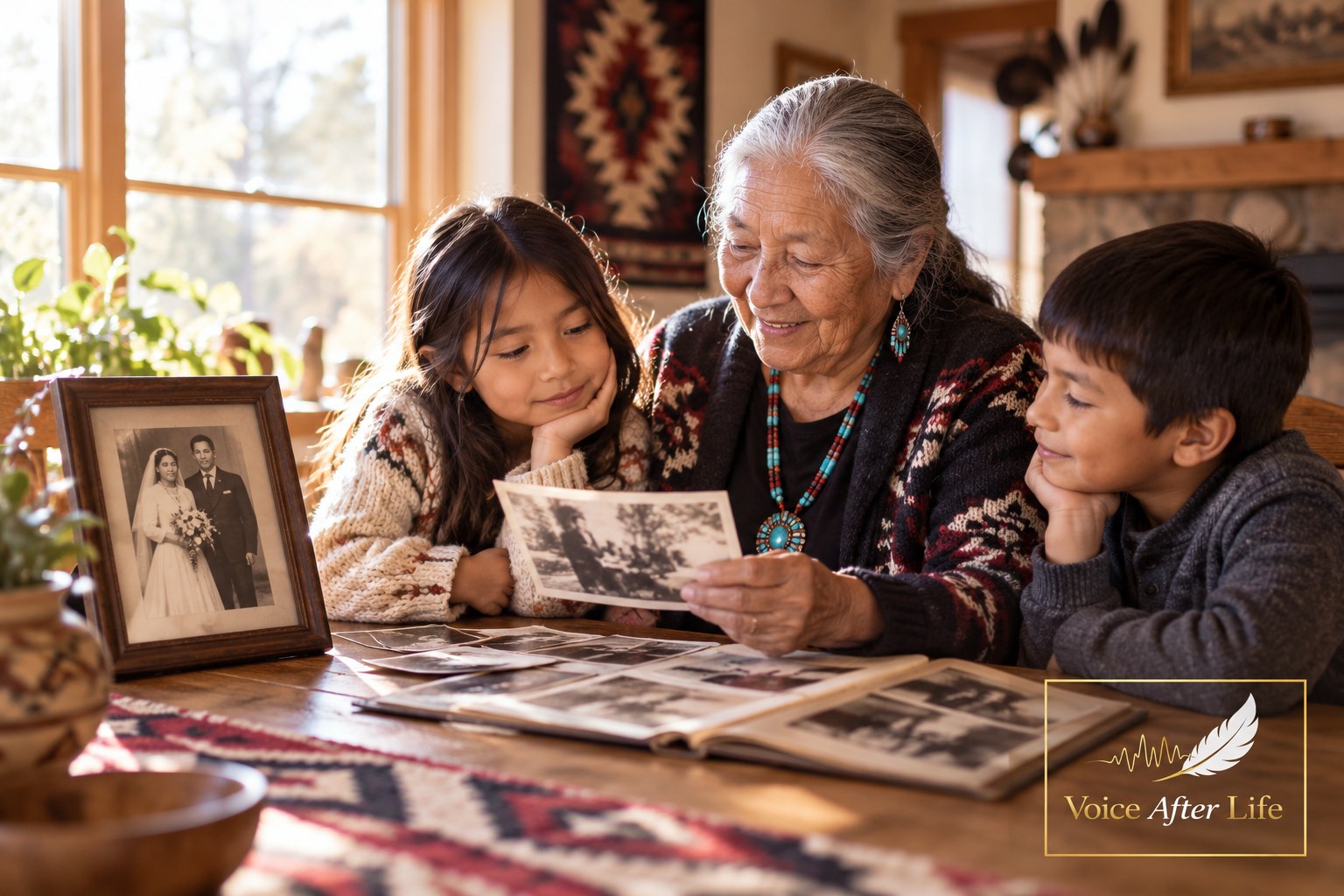
One detail from Qingming tradition speaks directly to what new parents are already doing without realizing it: reviewing family photos and sharing stories of the deceased is considered a way to honor ancestors, strengthening bonds with living relatives while spending the day together and reminiscing about family memories.
Japan observes something similar in high summer. In the height of summer, as lanterns glow softly across towns and villages, Japan enters a season of quiet remembrance known as Obon, which invites families to return home, honor their ancestors, and spend a few fleeting days reconnecting across time.
Every summer, Japanese families welcome the spirits of ancestors back home during Obon, when lanterns guide spirits, dances are performed, and offerings of food and incense are made — both a family reunion and a sacred remembrance.
A Private Calendar: The Jewish Yahrzeit
Not every remembrance tradition depends on a shared calendar date. In Judaism, each family keeps its own. Yahrzeit is the anniversary of a death in Judaism, traditionally commemorated by reciting the Mourner's Kaddish during prayer services and by lighting a 24-hour yahrzeit candle in the synagogue and/or at home.
In Jewish tradition, a candle is often believed to be a symbol of the soul, and the observance is deeply personal rather than public. Many families use the day for prayer, charity, learning, and reflection, while others keep it quiet — a few words spoken at the kitchen table, a favorite photo brought out, a story told again.
What yahrzeit makes explicit, and what every remembrance tradition implies, is that memory needs a repeated action to stay alive. A date on a calendar. A candle. A grave that gets swept. A flag that gets placed. Without the action, the date passes unmarked and the memory quietly thins.
What These Traditions Actually Ask of a Family
Strip away the specific customs — the willow branches of Qingming, the poppies of Remembrance Day, the marigolds of Día de los Muertos — and a common structure appears. Each tradition asks a family to do three things on a recurring basis: return to a place or object connected to the dead, bring something physical as an offering, and say something out loud, whether that's a prayer, a name, or a story told to a child who never met the person being remembered.
That third element is often the hardest for modern families to sustain, especially across long distances or generations who never lived in the same country as their ancestors. That continuity matters especially for families living far from ancestral hometowns, where the observance becomes a bridge between languages, between generations, and between old ways and new life. For a father whose own children may grow up far from where his parents or grandparents are buried, the question isn't whether to adopt someone else's tradition wholesale, but how to keep the storytelling part alive even when the geography doesn't cooperate. Recording a grandparent's voice answering simple questions, or saving a message meant to be heard on a future birthday, is one modest way families are choosing to give a distant or distracted future something to hold onto, a use some turn to Voice After Life for preserving a message across generations when a physical grave visit isn't possible every year.
Building a Small Tradition of Your Own
None of this requires choosing a single culture's customs or getting the theology right. A family can build something modest and sincere: a yearly date marked on the kitchen calendar, a specific photo brought out, a specific story told to a child who's just old enough to ask questions. The traditions surveyed here differ enormously in ritual and belief, but they agree on the underlying task — that remembrance is not a feeling that happens to you, but a practice you choose to repeat.
For a new father, that repetition might start small: telling his daughter, every year on a particular date, one true thing about the grandfather she'll never meet. That's not a lesser version of Qingming or yahrzeit. It's the same instinct, scaled to one family's ordinary life.
- Voice After Life.com
Sources
- All Souls' Day — Wikipedia
- Day of the Dead — New World Encyclopedia
- Remembrance Day — Wikipedia
- What Is Memorial Day? History and Traditions — FamilySearch
- Memorial Day: History & Origins — HISTORY
- Qingming Festival | Traditions, Food, Meaning — Encyclopaedia Britannica
- Qingming festival (Tomb-Sweeping Day) — EBSCO Research Starters
- Qingming Festival: Chinese Traditions from Tomb-Sweeping Day — FamilySearch
- Qingming Festival (Tomb Sweeping Day): History, Rituals, and Modern Ways Families Observe It — Funeral.com
- Obon: Japan's Summer Festival of Remembrance — Musubi Kiln
- Death Anniversaries and Mourning Holidays — Beyond Grief
- Yahrzeit — Wikipedia
- Yahrzeit Observance — Dignity Memorial
- Yahrzeit Candles: When to Light Them, How Long They Burn, and What the Ritual Means — Funeral.com