Recording Your Story When You Barely Have a Free Evening
Working parents rarely have a spare hour, but preserving your voice and family stories doesn't require one—just a few honest, unhurried minutes here and there.
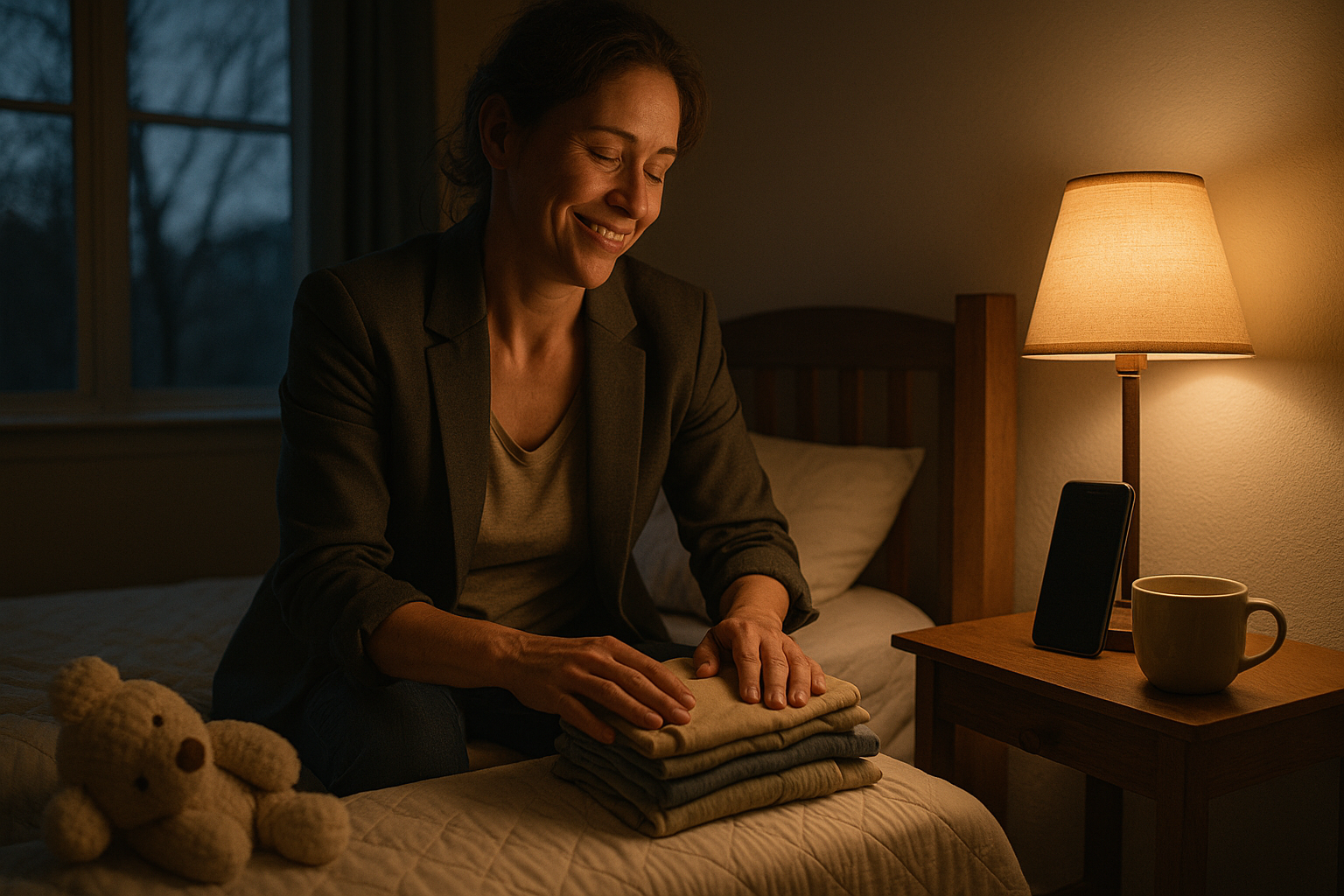
The Real Math on a Working Parent's Evening
If you're a working parent, you already know the feeling: the workday ends, but the second shift begins the moment you walk through the door. Dinner, homework, baths, lunches for tomorrow—by the time the house is quiet, you're too tired to do anything but collapse. Research bears this out. Analysis from the Gender Equity Policy Institute using federal time-use data found that on average, mothers have 17% less free time than fathers, and the gap is widest during the exact years when kids are young and demands are highest. Even parents who technically have some downtime often report it in scraps, not stretches.
That scarcity is precisely why so many parents put off recording their stories, thinking they need a quiet weekend that never seems to arrive. It's worth reframing the task: instead of one big project, think of it as the same kind of small, everyday snapshot you might jot in a journal—the kind of moment you can preserve for the people who'll want to hear your voice long after this busy season has passed, using a resource built for exactly that purpose at Voice After Life.com.
Why "Someday I'll Sit Down and Record Everything" Rarely Happens
Most parents don't lack the desire to preserve their story—they lack a block of uninterrupted time that feels big enough to "do it right." But that block rarely materializes. A YouGov survey on parental free time found that free time in general is scarce for individuals with young children or teenagers, with only 16% reporting that they have over five hours to spare daily during the week, and the most common amount of free time for a parent to have is between one and two hours daily. Waiting for a wide-open evening to record your life story is, for most working parents, waiting for something that may not come until the kids are grown—and by then, some of the small daily details you meant to capture will have quietly faded.
The good news is that meaningful recordings don't require hours. A two-minute voice memo about how you met your spouse, or what your own mother used to say at bedtime, is still a complete, usable piece of your story. The goal isn't a polished autobiography; it's an honest archive built in installments.
Why Your Voice Matters More Than a Highlight Reel
It can feel indulgent to spend even five minutes talking about yourself when there's laundry to fold. But the research on family storytelling suggests this time is not wasted—it's protective. Psychologists Robyn Fivush and Marshall Duke at Emory University have spent decades studying how family narratives shape children's development, and their work shows that such narratives help build a shared capacity for resilience. In one long-running study, they found that in families that talked in more coherent and emotionally open ways about challenging family events with 10- to 12-year-olds, the children coped better over the two-year period, and standardized measures showed those children had better self-esteem, higher levels of social competence, higher quality friendships, and less anxiety and stress.
In other words, the stories you tell your kids—about hard times you got through, decisions you made, people who shaped you—aren't just nostalgia. They're part of how children learn who they are and what they're capable of. A recorded version of those stories means your children (and someday their children) can return to your actual voice, not just a secondhand retelling.
Finding the Minutes You Already Have
You don't need a new hour in your day; you need to notice the minutes already hiding in your routine:
While You're Waiting
Carpool lines, pediatrician waiting rooms, the ten minutes before a Zoom call starts—these are dead time you can turn into recording time with nothing more than the voice memo app already on your phone.
During Repetitive Tasks
Folding laundry, prepping lunches, or driving a familiar route are moments when your hands are busy but your mind can wander to a memory worth saying out loud.
Right Before Lights Out
Many parents find that the few minutes after kids are finally asleep—before exhaustion fully sets in—are enough for one short recording, especially if you've already decided what you'll talk about.
In the Car, Alone
A solo commute or a quiet drive to pick up groceries is private, low-pressure, and easy to talk through without an audience.
What to Say When You Only Have Five Minutes
Open-ended prompts like "tell your life story" are paralyzing when you're tired. Narrow prompts work better:
- What did a typical Tuesday look like in your childhood home?
- What's a piece of advice you didn't appreciate until you became a parent?
- Describe the day your child was born, in as much detail as you can remember.
- What's something your own parent or grandparent used to say that you still think about?
- What do you want your kids to know about who you were before you became "Mom" or "Dad"?
Answering just one of these in a single sitting is a complete recording. You're not behind if you haven't done all of them—you're simply building a collection one honest fragment at a time.
Making It Sustainable as Life Stays Busy
The families who actually finish these kinds of projects rarely do it in one sitting. They do it the way most things get done during the parenting years: in short, repeatable bursts that don't depend on a rare free evening. Setting a recurring reminder—once a week, once a month, whatever is realistic—can matter more than any single long session. Over a year, even ten five-minute recordings add up to nearly an hour of your voice, your memories, and your reasoning, saved in your own words rather than reconstructed by someone else later.
Once you have a small library of these recordings, the next question is simply where they'll live so they're not lost on an old phone or a cloud account no one remembers the password to. That's the practical side of preserving these recordings for your children, and it's worth giving it the same intentional attention you gave the recording itself. Voice After Life exists as a place for families to keep these voice recordings organized and accessible for the people meant to receive them, long after the busy season that produced them has passed.
You don't need a free evening to start. You need one small, specific memory and a few unhurried minutes to say it out loud.
- Voice After Life.com
Sources
- Working Parents Have Plenty of Free Time — CBS News
- The Free-Time Gender Gap — Gender Equity Policy Institute
- Free time is scarce for parents of children under 18 — YouGov
- How family stories help children weather hard times — Emory News Center