Preserving Your Love Story: Anniversary and Keepsake Ideas for Every Chapter of Marriage
From wedding time capsules to recorded voices, discover meaningful ways to capture your marriage's milestones so your love story lasts for generations.
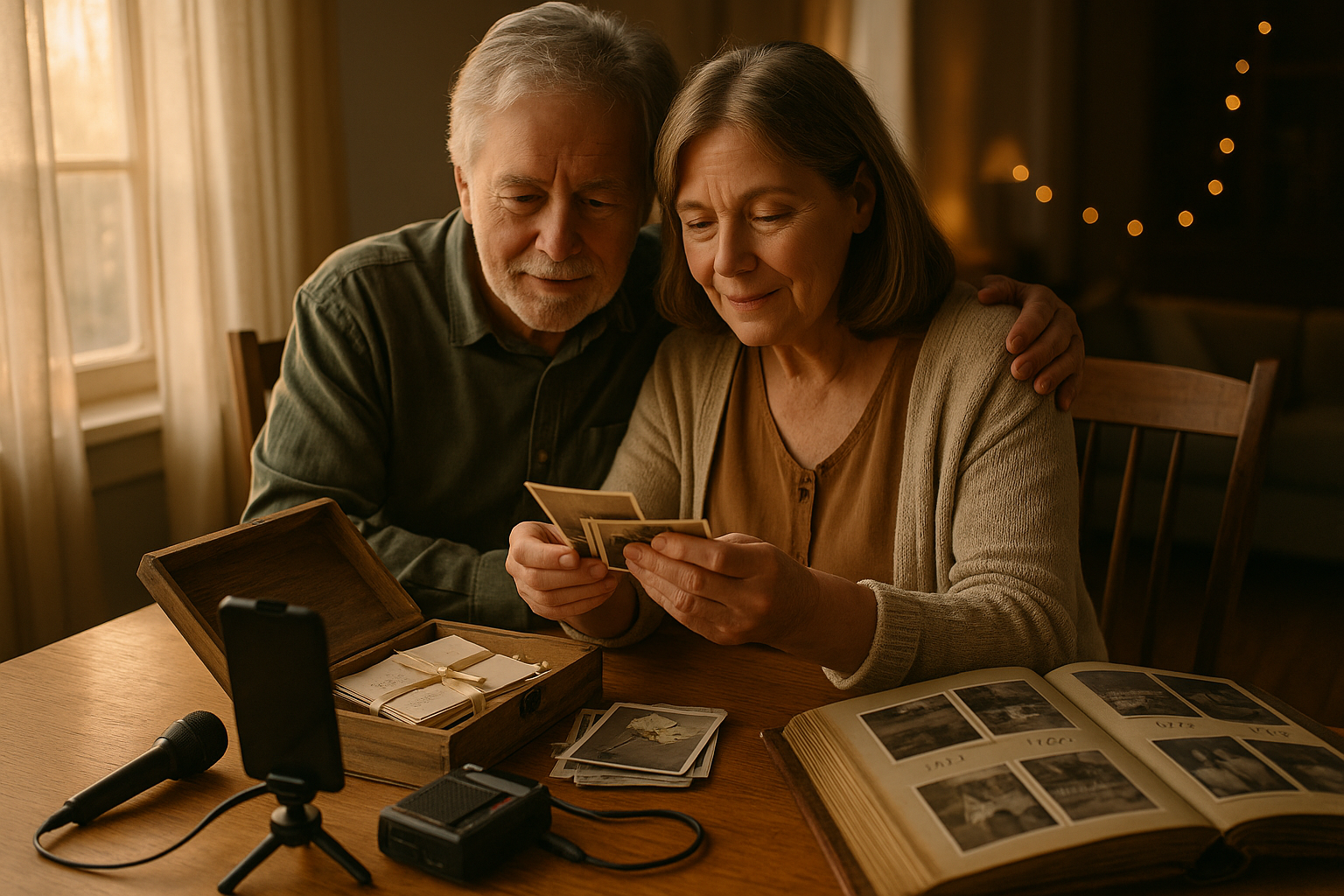
Every marriage is, in its own way, a story being written one ordinary Tuesday and one grand anniversary at a time. Yet so much of that story lives only in memory — in the sound of a laugh, the inside joke no one else understands, the way your spouse tells the tale of your first date. Anniversaries offer a natural, built-in occasion to pause and preserve those chapters before they fade. Here are thoughtful ways to capture your marriage's milestones, from simple keepsakes to more lasting forms of memory-keeping.
Why Capturing Milestones Matters
It's tempting to think of anniversary keepsakes as sentimental extras, but research suggests that family storytelling does real relational work. Author Bruce Feiler, in his research on family narrative, has argued that sharing family stories — even the less flattering ones — makes for more cohesive family units. The same logic applies to a marriage: the stories couples tell about their shared history, including the hard chapters, help reinforce identity and resilience as a couple.
There's also an emotional immediacy to how memories are captured. As one guide on family oral histories notes, emotions anchor memories, and a recorded voice captures those emotions in real time — when someone recounts a moment, the feelings reach listeners more strongly than text alone. That's worth keeping in mind as you decide whether to jot a memory down, snap a photo, or actually record the voice telling it.
Classic Keepsakes Worth Revisiting
Some anniversary traditions endure because they simply work. A few tried-and-true options:
The wedding or marriage time capsule box. Many couples fill a box with letters, ticket stubs, and mementos to open on a future anniversary. As one wedding-planning guide describes it, the beauty of making a keepsake or marriage box is that you decide when to open it — whether that's your first anniversary or you'd rather wait for a bigger milestone like your second, fifth, or tenth.
Curated photo albums. Rather than letting years of photos live only on a phone, many couples create a physical album that tells the arc of their relationship. As one keepsake guide puts it, there's something special about a curated photo album — gathering favorite photos, letters, quotes and other decor to create a beautiful compilation that tells your love story.
Vows and love letters, preserved. Wedding vows are often read once and then tucked away. Framing them, or binding them into a small booklet, keeps those original promises visible. One wedding keepsake resource suggests that if you're building a keepsake box, you should write your vows in a booklet and bind it together with a silk ribbon in one of the colors from your wedding palette.
Dedicated anniversary journals. Some couples use a single, ongoing keepsake rather than a one-time box. Anniversary albums designed with a page for each year invite couples to record the story of their marriage from wedding to happily ever after, writing about anniversary celebrations and preserving photographs on archival pages.
Milestone-Specific Ideas
Different anniversaries tend to inspire different kinds of reflection. According to one gift-focused overview of anniversary traditions, first anniversaries are especially emotional because they celebrate the beginning of married life, while by five years together, couples often value shared experiences and family memories more deeply. That shift is worth building into how you mark each year:
- First anniversary: Revisit early letters or texts. One anniversary gift guide suggests couples include their letters in an anniversary photo book, paired with pictures from their first year together.
- Fifth and tenth anniversaries: A natural point to open a wedding time capsule if you saved one, or to add a new layer — updated photos, a letter to your future selves, or a recorded conversation about how your partnership has grown.
- Milestone anniversaries (25th, 50th): These often call for something more permanent. As one keepsake resource notes, heirloom-quality keepsakes become especially meaningful at milestone anniversaries, because a physical anniversary gift creates a sense of permanence.
Beyond Objects: Preserving the Voice Behind the Story
Photos and letters capture what your marriage looked like. Recordings capture what it sounded like — and that distinction matters more than it might seem. Oral history practitioners note that photographs show faces, documents share facts, but oral histories give you the soul of a person. A recorded conversation between spouses — reminiscing about how you met, retelling the story of your proposal, or simply talking through what marriage has taught you — becomes something photographs alone cannot: a record of how you actually talked to and about each other.
This is also where technology has quietly made things easier. As one guide on family oral history projects observes, continuing technical advances have lent oral history mass appeal, since smartphones with high-quality cameras and microphones put the tools within everyone's reach. You don't need special equipment to start — just a quiet evening, a phone, and a willingness to ask each other questions you might not usually ask.
For couples who want to go a step further, platforms built specifically for preserving voices and memories — like Voice After Life — offer a way to keep those recorded conversations, stories, and messages organized and accessible for family, not just as a one-time anniversary activity but as an ongoing archive that grows alongside your marriage.
Getting Started This Year
You don't need a milestone anniversary to begin. A simple starting point:
- Choose one memory-keeping method — a box, an album, or a recording — rather than trying to do everything at once.
- Set a reveal date. Many couples choose an anniversary specifically so there's a reason to revisit the keepsake later, since every marriage goes through ups and downs, and there may be times when reminiscing on the wedding day will be extra important.
- Include both voices. If you're recording or writing, make sure both partners contribute; a love story told from only one perspective is only half the story.
- Revisit it annually. Even five minutes of adding a photo, a note, or a short recording each year turns a single keepsake into a living record.
Your marriage's milestones don't need elaborate production to matter. What they need is intention — a decision, made once a year or once a decade, to pause and preserve what's easy to assume you'll always remember. The stories, in your own voices, are the part future generations will treasure most.
- Voice After Life.com
Sources
- Wedding Keepsake Ideas That Bring the Sentimental Vibes — The Knot
- 37 First Wedding Anniversary Gift Ideas & Inspirations — My Bridal Pix
- Unique Anniversary Gift Ideas (With Examples) — Liumy Albums
- 10 Wedding Keepsake Ideas to Honor the Special Day — Spruce Mountain Events
- 9 Wedding Keepsake Ideas for an Unforgettable Day — Allegoria Textiles
- weddng anniversary album 27048 — NYC Store
- Create an Oral Family History by Documenting Stories and Genealogy — AARP
- The Importance of Oral Histories: Why Seniors Stories Matter — Koelsch Senior Communities
- A Guide to Recording and Preserving Oral Histories — The Family Archivists