Preserving Family Recipes as a Living Legacy
Family recipes carry more than ingredients — they hold voices, memories, and stories. Here's how to preserve them as a lasting legacy.
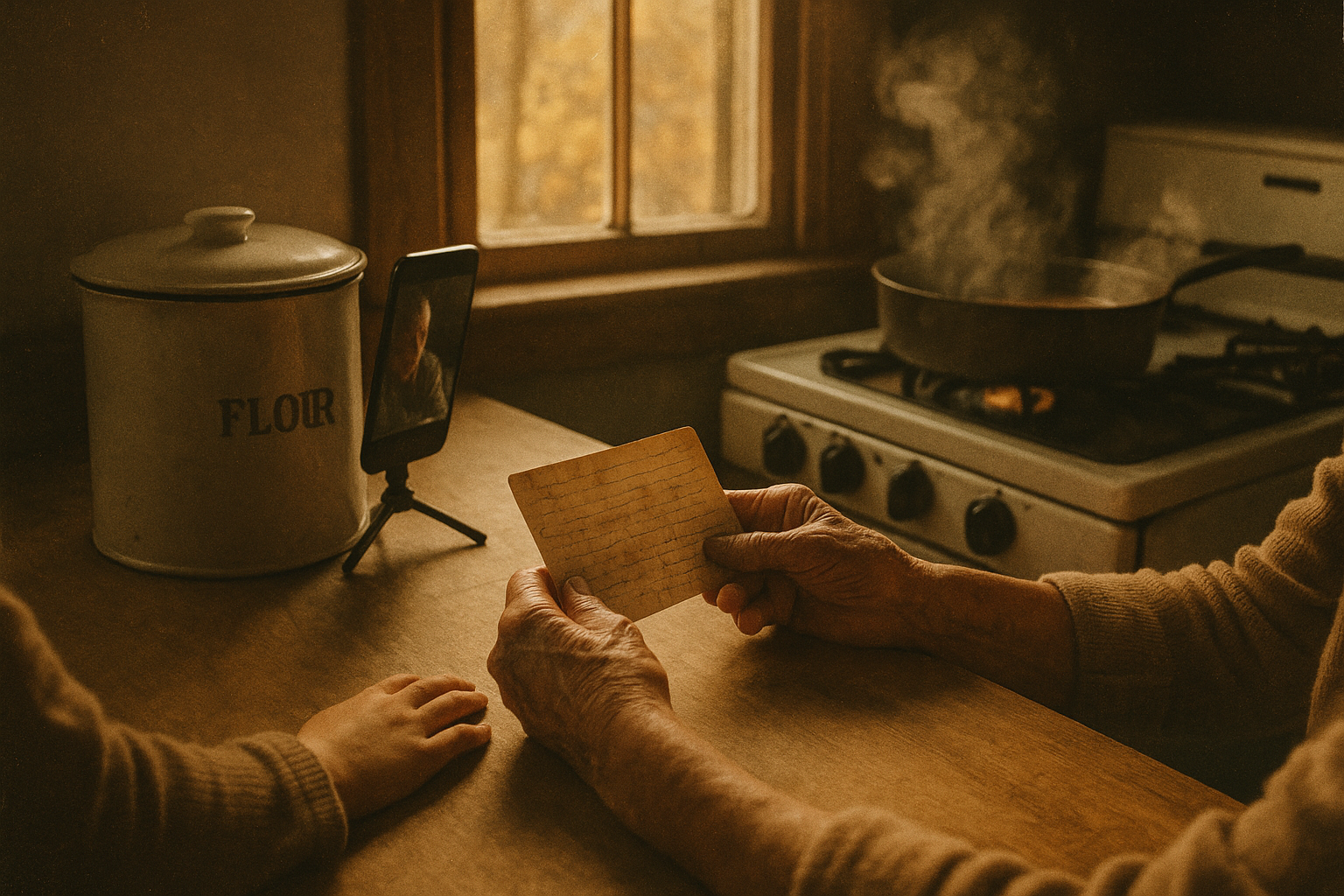
Why a Recipe Card Can Outlive a Century
There is a particular kind of magic in a stained, handwritten recipe card tucked into a kitchen drawer. It might list a grandmother's pie crust in faded pencil, or a great-uncle's chili recipe with a note in the margin reminding future cooks to "add more paprika than you think." These small documents are rarely valuable in a monetary sense, yet they often become some of the most treasured items a family owns.
Researchers who study food and memory have found that these dishes function as far more than nourishment. Food narratives are woven tightly into family practices, and recipes handed down through generations preserve personal and communal histories. That is precisely why so many families are now looking for ways to capture not just the recipe itself, but the voice and story behind it — a process that resources like Voice After Life.com were built to support, by helping families record the people and traditions behind the dishes they love.
More Than Ingredients: The Story Behind the Dish
A recipe written on an index card tells you what to do, but it rarely tells you why. Why did your grandfather add a splash of vinegar to his barbecue sauce? Why was this particular cake reserved only for birthdays? According to research on family recipe documentation, preserving a recipe well means going beyond ingredients and steps to document where it came from, who taught it, when it is traditionally prepared, and the memories connected to making or sharing it.
This context is what transforms a set of instructions into a piece of family history. Food is a key part of the social history of our ancestors, and it ties people and families together, with kitchens often serving as the heart of a house where many memories are made. Losing the story doesn't erase the recipe entirely, but it does erase the meaning that made it worth keeping in the first place.
Why Recipes Are So Often Lost
Many family recipes exist only in memory or in notes that were never meant to be permanent. Culinary researchers have observed that family recipes and traditions are often the most treasured parts of a legacy, yet they are easily lost when they exist only in memory or informal notes. A recipe that lives solely in one person's hands and habits can disappear the moment that person is no longer able to share it.
This is part of a broader pattern in how families lose their oral history. Historians and archivists note that written records only capture some facts, and storytelling traditions often carry details that official records omit. A recipe box can survive for decades, but the sound of someone explaining why they made a dish a certain way, or laughing about the time it went wrong, is much harder to preserve unless someone makes a deliberate effort to capture it.
The Case for Recording the Voice, Not Just the Recipe
Text and photos can capture a lot, but they cannot capture tone, laughter, or the particular way someone says "a pinch" versus "a handful." Educational organizations that study family storytelling point out that a family history doesn't need to be told with words alone — heirlooms, family recipes, photographs, music, or video can all strengthen the narrative. Audio and video recordings add a dimension that a written card simply cannot.
Even brief recordings can be powerful. As one guide to family storytelling suggests, a short "time capsule" story can be captured using a voice memo or recorder app to gather quick, one-minute messages. Applied to recipes, this might mean a grandmother explaining, in her own words, why a particular soup was made every winter, or a father describing the first time he burned the holiday roast.
Journalists covering this topic have echoed the same advice for families sitting down together. Getting the conversation started about a family's treasured recipes, inviting older family members to share the history and inspiration behind family dishes, and — with the family's consent — using a smartphone's voice recorder can help immortalize these culinary tales.
A Practical Approach to Documenting Family Recipes
For families ready to begin, a structured approach tends to work better than trying to capture everything at once:
1. Start With the Stories, Not Just the Steps
Ask open-ended questions like who taught the recipe, when it's traditionally served, and what it meant to the person who made it. Documentation specialists recommend recording what happens, when it occurs, why it matters, who participates, and how it has evolved over time for both recipes and the traditions surrounding them.
2. Capture Variations, Not Just One "Correct" Version
Families rarely agree on the exact recipe, and that's part of the history. Food heritage researchers advise treating every family variation as a meaningful regional adaptation rather than assuming only one version is authentic.
3. Record the Voice Behind the Recipe
Where possible, record the person speaking about the dish — not just a written transcript. Reminiscence specialists who work with older adults often ask focused questions like "When would you make this dish?" or "Who taught you this recipe?" rather than general cooking questions, because specific prompts tend to draw out richer, more personal stories.
4. Include the Senses
Photographs of the process, the ingredients, and the people gathered around the table add depth. Visual documentation experts note the value of images of ingredients, preparation steps, finished dishes, and people enjoying the food together in creating a fuller picture of a recipe's role in family life.
Preserving the Recording Itself
Once a recipe's story has been captured — in writing, in photos, or in an actual recording of a loved one's voice — the next challenge is making sure it survives. A recording saved only on a single phone or an old hard drive is vulnerable to the same loss that threatens a handwritten card left in a drawer. Families increasingly look for a dedicated, lasting place to store voice recordings, videos, and written memories together, which is one of the reasons some turn to preserving these recordings through Voice After Life as part of a broader effort to keep a loved one's voice accessible for future generations.
A Legacy That Can Be Tasted and Heard
Recipes endure because they are used — because someone, someday, will stand in a kitchen and follow the same steps a grandparent once did. When that recipe is paired with the actual voice and story of the person who made it, it becomes something closer to a living memory than a static instruction. As one culinary heritage study puts it, recipes are not just instructions for cooking; they are narratives rich with memories and feelings, each dish telling a story passed down through generations.
Families don't need to preserve everything at once. A single recorded conversation about one meaningful dish is a meaningful start. What matters most is beginning before the opportunity passes — because the recipe can always be rewritten, but the voice explaining it cannot.
- Voice After Life.com
Sources
- 6 Ways To Preserve Family Recipes At The Dining Table — Forbes
- Storytelling with Friends and Family — Facing History & Ourselves
- The Importance of Oral Histories: Why Seniors Stories Matter — Koelsch Senior Communities
- Why Family Recipes and their Stories are Important and How to Preserve Them — Austin Woman's Club
- Exploring Food as a Powerful Medium for Storytelling and Oral Traditions — FreeScience
- Cherishing Culinary Heritage: Documenting Family Recipes and Their Origins — Dementia Activities
- A Complete Guide to Lost Recipes, Food Heritage, and Ancient Flavors — Quantum Computing
- How do I preserve family recipes and cultural heritage? — Evaheld