The Life Lessons Worth Passing Down to Your Grandchildren
Research shows that the stories and wisdom grandparents share shape a grandchild's resilience and identity for life—here's how to choose and pass down what matters most.
Why Your Stories Matter More Than You Think
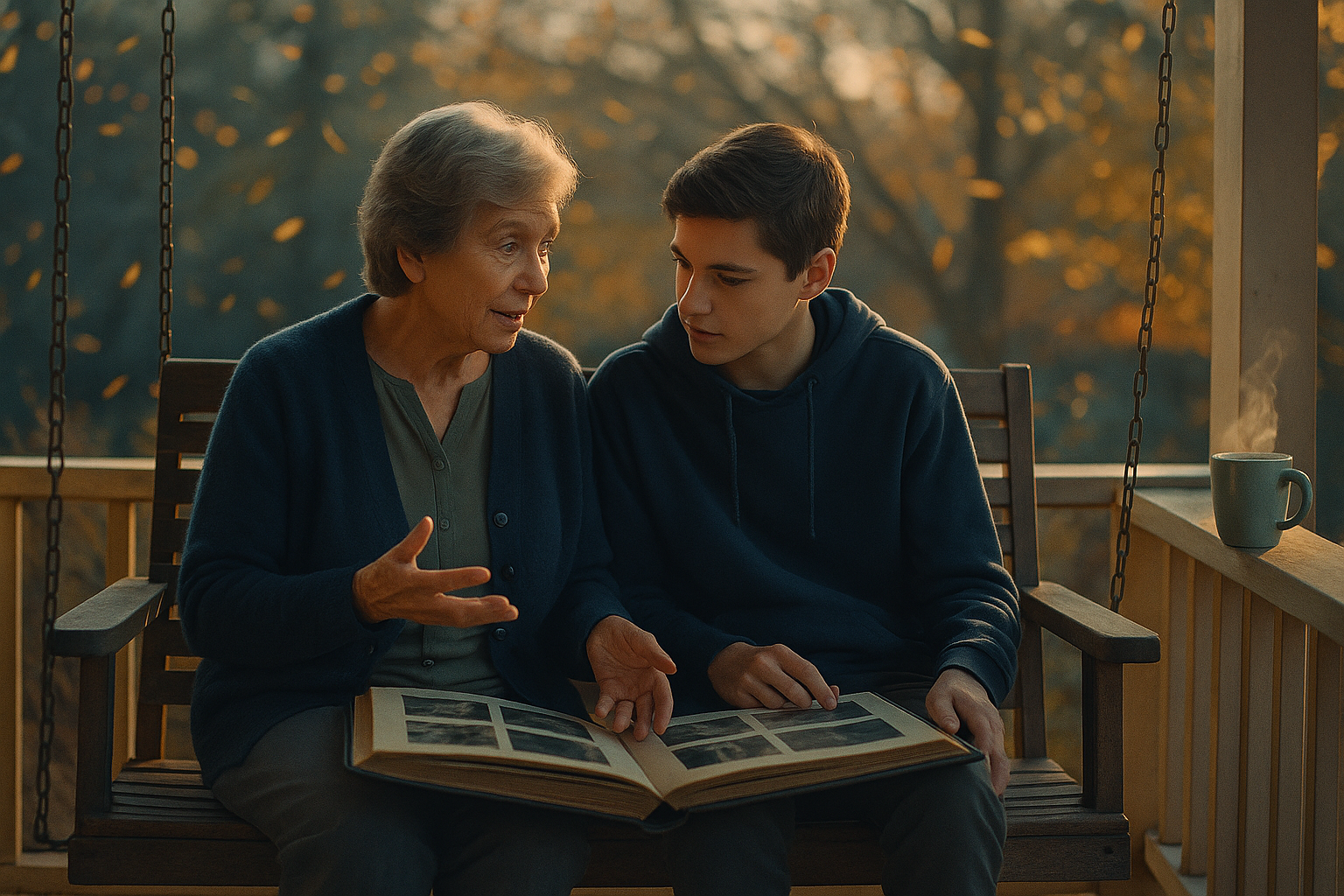
Every parent, every grandparent carries a private archive: the jobs that shaped them, the mistakes that taught them something, the ordinary Tuesday that turned into a memory their family still talks about decades later. It's tempting to think of these as "just stories," but a growing body of research suggests they do far more than entertain. A qualitative study of grandparent-grandchild reminiscence sessions found that the intergenerational sharing of career guidance, practical life advice, perspectives on resilience, and strengthened appreciation for family history emerged as a central theme when grandparents and grandchildren sat down together to talk. For families wondering how to hold onto that kind of wisdom before it fades, Voice After Life.com exists specifically to help capture the voices and life lessons of grandparents in a form grandchildren can return to for years to come.
The instinct to pass something down isn't sentimental fluff—it's rooted in how children build identity. Psychologists Marshall Duke and Robyn Fivush at Emory University developed a set of questions, now known as the "Do You Know?" scale, to test whether children who knew more about their family's history were psychologically better off. The more children knew about their family's history, the stronger their sense of control over their lives, the higher their self-esteem and the more successfully they believed their families functioned. In fact, the "Do You Know?" scale turned out to be the best single predictor of children's emotional health and happiness. That's a striking claim, and it puts real weight behind the question every grandparent eventually asks: what, exactly, should I tell them?
Lessons That Come From Lived Experience, Not Lectures
Children and grandchildren rarely absorb wisdom from advice delivered as advice. They absorb it from stories—the specific, textured kind that show rather than tell. As one family-focused organization puts it, parents and grandparents are often repositories of wisdom and experience, having lived through a myriad of life's challenges and triumphs, and their stories, anecdotes, and advice serve as valuable life lessons for their grandchildren. A story about losing a job and rebuilding, or meeting a spouse under unlikely circumstances, teaches perseverance and hope far more effectively than the words "never give up" ever could.
This is also where the generational distance between grandparent and grandchild becomes an asset rather than a gap to bridge. The generation gap often results in differing perspectives on life, but this divergence can be a valuable learning experience, as grandchildren benefit from exposure to alternative viewpoints and the wisdom that comes from different eras. A grandchild growing up with smartphones benefits enormously from hearing what patience, boredom, or hard physical work looked like before convenience became the default.
Values and Heritage
Beyond individual life lessons, grandparents often serve as the keepers of something larger: a family's sense of where it came from. Grandparents are the custodians of family traditions and cultural heritage, playing a pivotal role in passing down cultural values, rituals, and customs that enrich their grandchildren's sense of identity and belonging. Whether it's a recipe, a holiday tradition, or the story of how the family arrived in a particular town, these details root a grandchild in something bigger than their own daily life.
Resilience and Perspective
Perhaps the most quietly powerful lesson a grandparent can offer is proof that hard times end. Because all grandparents have lived through hardships, they can reassure younger generations that they too can endure troubled times. Sharing the specifics of how a difficult chapter was survived—not just that it was—gives a grandchild a template for their own future struggles.
How These Conversations Happen Naturally
Life lessons rarely arrive on schedule. They surface in small, unplanned moments: a grandchild asking why grandpa always checks the oil himself, or a grandmother mentioning, almost in passing, that she once worked three jobs to put herself through school. Recent research into reminiscence programs found that these guided conversations do more than transmit information—reflections from both grandparents and grandchildren suggest that intergenerational reminiscence effectively fosters closer relationships across generations by revisiting family history and cultural roots. The conversation itself, not just its content, becomes part of the gift.
Some families find it helpful to be a little more intentional, setting aside time during a visit or a phone call specifically to ask about the past. Focus on the Family notes that whether you're gathering in person or connecting from a distance, the interaction can be made special and memorable by the stories you choose to share. A short list of questions—Where did you meet your spouse? What was the hardest year of your life, and how did you get through it? What's something you wish someone had told you at my age?—can open doors that casual conversation rarely does.
Making Sure the Lessons Outlast the Moment
The challenge every family eventually faces is that memory is imperfect and time is limited. A story told once at a holiday dinner may never be repeated in exactly the same way again, and details fade even in families that talk often. This is precisely why so many families are choosing to record these conversations while they can—not as a substitute for the relationship, but as a way of making sure a grandchild can still hear their grandparent's voice, in their grandparent's own words, long after the moment has passed. Preserving a recorded conversation or a written collection of stories through a service like Voice After Life gives a family something a memory alone cannot guarantee: a lesson a grandchild can return to exactly as it was told, whenever they need to hear it again.
Start With One Story
You don't need a grand plan to begin passing down what you know. Start with a single story—the one you've told most often, or the one you've never told at all. Ask your grandchild what they're curious about. Let the conversation wander. The research is consistent on one point: it isn't the size or drama of the story that matters most, but the simple act of sharing it, and being trusted with it in return.
- Voice After Life.com
Sources
- Grandparent–Grandchild Reminiscence Program for Asian American Families — Behavioral Sciences (MDPI)
- Grandparent-Grandchild Reminiscence Program for Asian American Families - PubMed — PubMed
- The Importance of Grandparents in the Lives of Their Grandchildren — The Alden Network
- Importance of Grandparents to Their Grandchildren — Forever Families, Brigham Young University
- The Stories That Bind Us — National Storytelling Network
- Children Need Stories From Grandparents — Focus on the Family