The Life Lessons Worth Passing Down to Your Grandchildren
Explore the life lessons grandparents most want their grandchildren to carry forward, and why the research on family storytelling makes preserving them worthwhile.
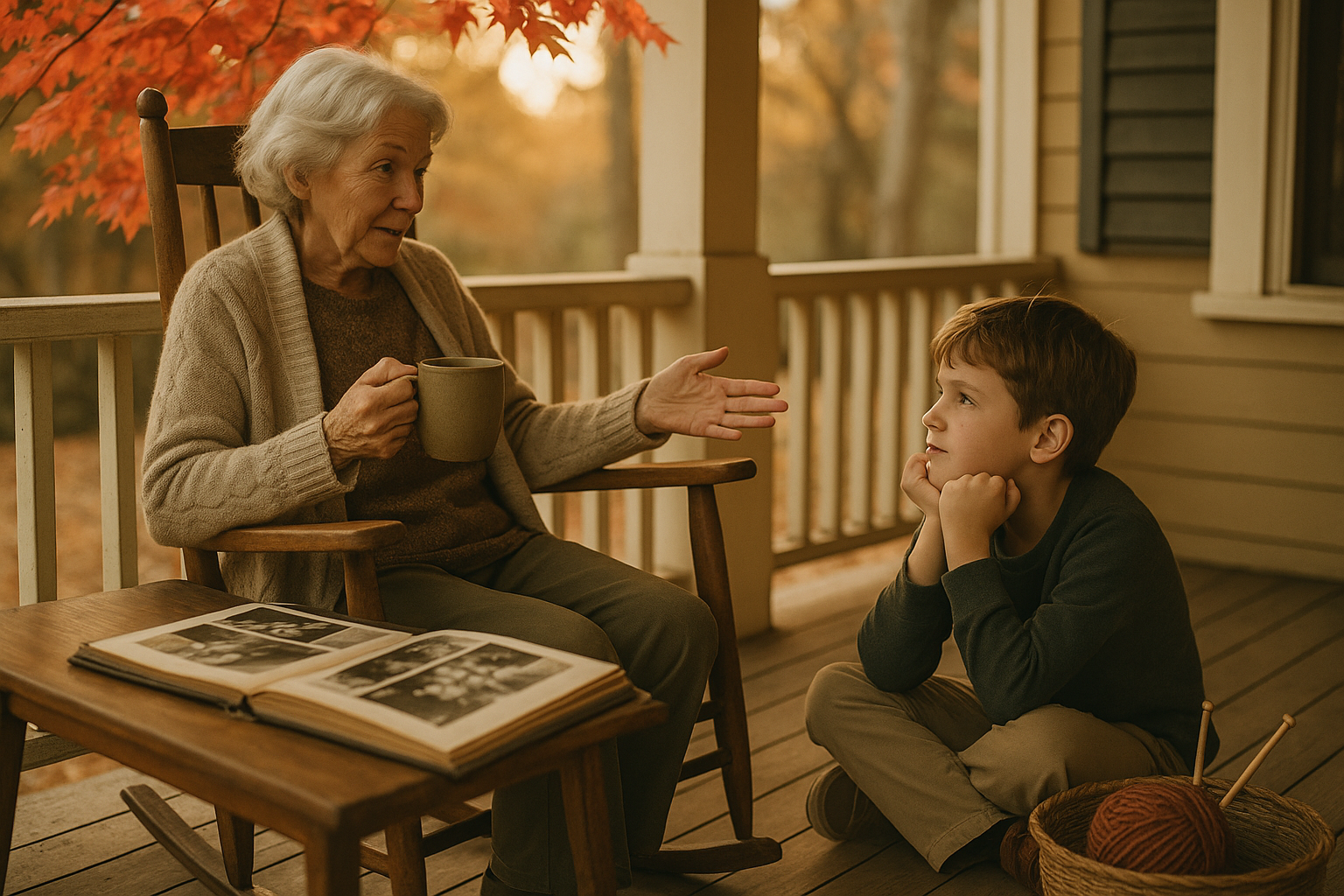
Why the Lessons You've Lived Matter More Than the Ones in a Book
Every grandparent carries a private curriculum built from decades of trial, error, joy, and recovery — lessons no classroom ever taught. Deciding which of those lessons to pass down to grandchildren is one of the quieter, more meaningful tasks of growing older, and it turns out the effort is backed by real science, not just sentiment. For families who want to make sure those lessons outlast a single conversation at the kitchen table, Voice After Life.com offers a way to hold onto the voice behind the wisdom, not just the words.
Research out of Emory University gives this instinct scientific weight. Psychologists Marshall Duke and Robyn Fivush developed a "Do You Know?" scale to measure how much children know about their family's history, and their findings were striking: children who knew more family stories scored higher on self-esteem, academic performance, and social skills, and had fewer behavioral problems. Even more telling, the more children knew about their family's history, the stronger their sense of control over their lives, the higher their self-esteem and the more successfully they believed their families functioned. The lessons grandparents pass down, in other words, aren't just nice to have. They appear to be part of what helps a child feel steady in the world.
The Shape of the Story Matters
Not every lesson needs to be a triumphant one. Duke and Fivush found something counterintuitive in their research: the families whose children fared best weren't the ones who only told success stories. Families that share "oscillating narratives" — stories that move through hardship and recovery, rather than a simple arc of triumph or steady decline — tend to give children the strongest foundation for resilience and identity, because a story that shows a grandparent struggling, adapting, and coming through the other side does more for a child's sense of what the family is capable of than a frictionless success story.
That means the lesson embedded in a difficult season — a job lost, a marriage repaired, a hard year survived — may carry more weight for a grandchild than any polished piece of advice. Grandparents who are willing to share the messy middle of their own stories, not just the tidy conclusions, give grandchildren something to hold onto when their own hard seasons arrive.
What Grandparents Tend to Teach Without Even Trying
Much of what grandchildren absorb isn't delivered as a formal lesson at all. According to one review of grandparenting research, grandparents have lived through good times and tough ones, and they often use those stories to teach valuable life skills, from how to handle rejection and disappointment to how to treat others with kindness, and their lessons aren't always formal — sometimes they come during a quiet talk while cooking, working in the garden, or going for a walk. Those everyday moments, researchers note, help young people develop things like emotional intelligence, better behavior, and strong motivation to keep going, even when life gets hard.
Other writers on the subject point to practical, hands-on knowledge — mending a hem, coaxing a tomato plant through a dry summer, fixing what's broken — as another category of lesson grandparents uniquely offer. Grandparents taught things that schools never did: how to fix a leaking faucet, how to sew a button back on, how to grow a tomato from seed. These were not glamorous lessons, but they were deeply empowering, because knowing how to do things with your hands changes how you see yourself. A lesson in patience, delivered while waiting for bread to rise or a garden to bear fruit, can teach more than a lecture ever could.
Values Embedded in Family Stories
Family historians and grandparenting researchers alike note that the stories grandparents tell are rarely just entertainment. As one account puts it, the stories a grandparent tells can impart values and life lessons — when a grandmother tells her grandchildren about the shame she felt after being caught peeking at a classmate's paper during a test, they come to understand why honesty matters to her, and that she is human, too. A story about failure, told honestly, can teach integrity more effectively than any rule ever could.
A Tradition With Deep Roots: The Ethical Will
Long before anyone called it "legacy planning," families had a formal practice for passing down wisdom rather than possessions. Known as an ethical will or legacy letter, this personal document conveys a person's ethical values, wisdom, and heartfelt messages to their heirs, unlike a traditional legal will, and focuses on imparting life lessons, memories, and personal philosophies rather than distributing assets. The tradition is ancient: it has roots in ancient Jewish culture, evolving from oral traditions into written forms over centuries, and has since been embraced by various cultures, including Christian and Muslim communities.
What makes an ethical will distinct from a legal one is its purpose. As one estate planning resource describes it, there are no rules governing what goes into an ethical will or legacy letter, or when the contents should be shared, but the idea behind it is simple: convey values, not valuables. In modern practice, that letter doesn't have to stay on paper. In contemporary practice, ethical wills can take many forms, such as letters, journals, or even multimedia presentations including videos and photographs. A recorded voice, walking a grandchild through the lesson behind a family story, is simply a more current expression of the same old tradition. It's this idea — that a life lesson can be preserved in the voice that lived it, not just transcribed into text — that sits at the center of what a recorded conversation preserved with Voice After Life can offer a family.
Choosing the Lessons Worth Passing Down
Grandparents thinking about what to share don't need to draft a comprehensive life philosophy. A few starting questions can help surface what matters most:
- What did you learn the hard way? The lesson born from a mistake or hardship often lands more deeply than advice born from success.
- What value shows up again and again in your stories? Honesty, perseverance, generosity — most people find one or two threads running through their own history.
- What do you wish someone had told you at twenty?
- What ordinary skill or habit shaped who you became? Not every lesson needs to be profound; some of the most lasting ones are practical.
The Reciprocal Gift
It's worth noting that passing down life lessons isn't a one-way transaction. Grandparents themselves benefit from the telling. One review of grandparenting research found that grandparents who maintain strong relationships with their grandchildren often experience greater cognitive functioning and report a higher sense of purpose and life satisfaction. Reflecting on a life lived, and putting its lessons into words for someone else, appears to be as good for the teller as it is for the listener.
Passing It Forward
The lessons worth passing down rarely announce themselves as lessons at all. They live inside ordinary stories — a garden, a mistake, a hard year, a habit repeated until it became a value. What matters most is that they're shared, in whatever form fits the family telling them, so that a grandchild growing up decades from now still has access to the voice, not just the memory, of the person who lived them.
- Voice After Life.com
Sources
- The Importance of Grandparents' Stories — More Than Grand
- Grandparents' Life Lessons and Fun Activities for Grandparents Day — Atlas Senior Living
- How Grandparents Nurture Mental Health Across Generations — Pacific Health
- 15 Simple Things Grandparents Did That Kids Remember for a Lifetime — A Magical Mess
- The Value of Sharing Family Stories — Storyworth
- Family Stories—Making Resilient Children! — Not Your Grandmother's Family History Blog
- Ethical Wills (Legacy letters) — EBSCO Research Starters
- What is an Ethical Will / Legacy Letter? — Blue Ocean Law Group