How to Write a Meaningful Letter to Your Child to Open on Their Wedding Day
Practical prompts, structure, and example lines for writing a heartfelt letter your son or daughter will treasure long after their wedding day ends.
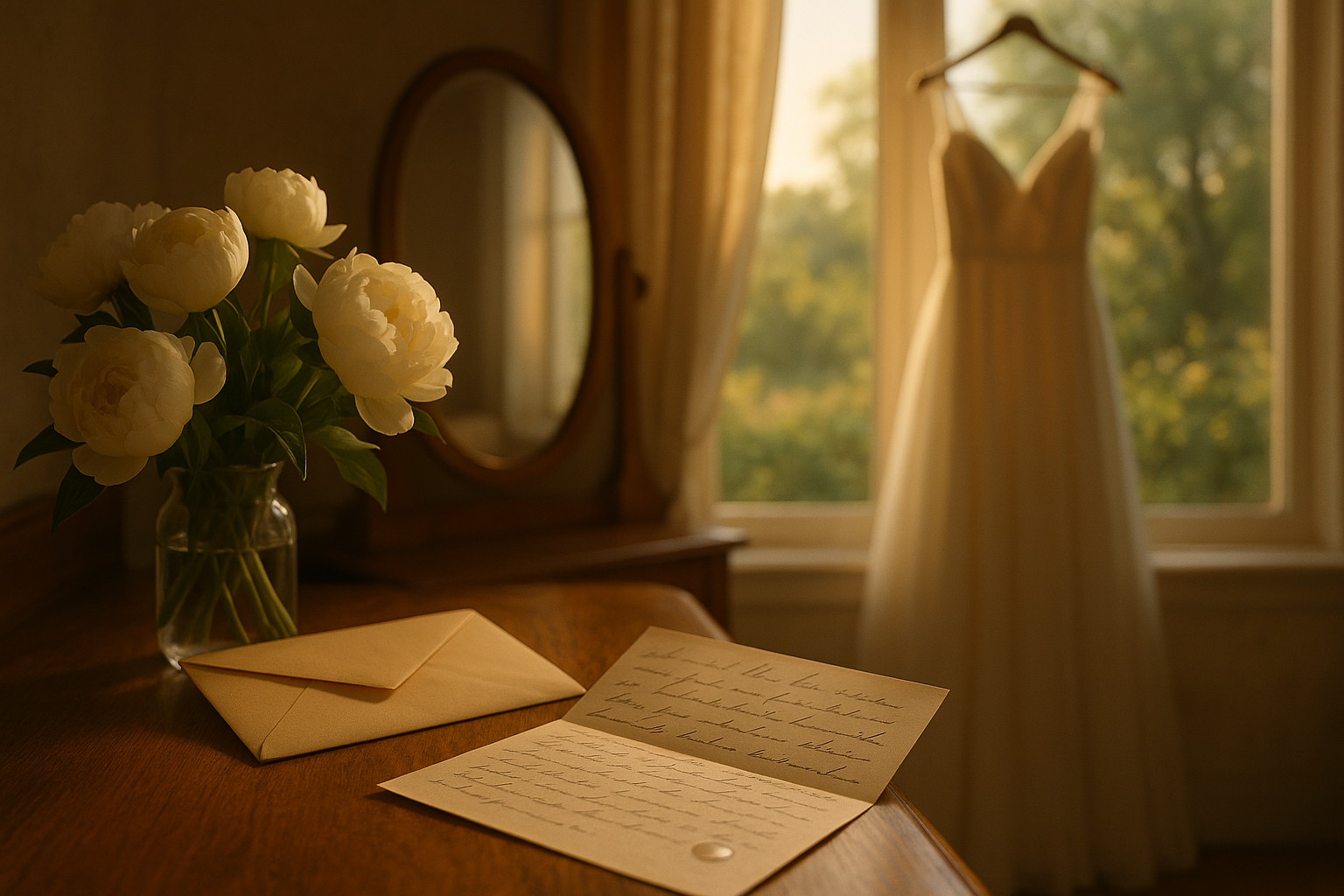
Why This Letter Matters
A wedding day moves fast. Between hair appointments, first looks, and the whirlwind of the ceremony itself, quiet moments are rare. A letter from a parent — tucked into a garment bag, handed over during a first look, or slipped inside a gift box — gives your child a few minutes of stillness on one of the busiest days of their life. As one wedding guide puts it, the letter is meant to be read privately so your child can "read it quietly before the ceremony."
You don't need to be a professional writer to create something your child will keep for decades. You need honesty, a bit of structure, and a willingness to let the words be imperfect.
Choosing the Right Structure
If you're staring at a blank page, a loose framework can keep you from either freezing up or writing something that reads like a speech. One helpful approach moves through six simple beats: opening love, shared memory, named pride, welcome for the partner, blessing for the marriage, and a closing line your child can remember. This order works well because it moves from the personal past into the chosen future without turning the letter into a lecture.
You don't have to hit every beat perfectly or in order — think of it as a map, not a formula.
Writing Prompts to Get You Started
If the blank page feels intimidating, try finishing these sentence stems quickly, without editing yourself:
- "I remember when..."
- "I have always admired..."
- "As you begin married life..."
One parenting-letter resource recommends this exact exercise, noting that you should not edit at this stage — the first pass is only there to uncover the true material. Later, you can choose the lines that feel warm and true to your relationship.
Other prompts to consider:
- What is one moment from their childhood that still makes you laugh or well up?
- What is a struggle they overcame that you were quietly proud of?
- What do you want to say about the person they're marrying?
- What's one piece of hard-earned marriage advice you wish someone had told you?
- If they read this letter twenty years from now, what's the one line you want them to remember?
On the topic of the future spouse, one wedding-planning guide suggests you show your child you appreciate the most important person in their life by including a bit about their spouse, whether they feel like a second child to you or someone you're hoping to grow closer to. You might mention a favorite thing about their partner or recall the first time you met them.
Example Lines to Adapt
You don't need to reinvent the wheel entirely — sometimes seeing how a sentence lands helps you find your own words. Consider adapting phrasing like:
- "Today, my heart overflows with joy and pride as I watch you begin this new chapter."
- "From your earliest days to this moment, watching you grow has been one of the greatest privileges of my life."
- "No matter how life changes, you will always be my child, and I will always be here for you."
These are starting points, not scripts. The version that will move your child most is the one that sounds like you — your particular sense of humor, your particular way of showing love.
What to Leave In, What to Leave Out
A few guardrails can keep the letter grounded:
- Keep it personal, not comprehensive. You don't need to cover every milestone or every hope for their future — some of that can wait for a toast. One guide notes that parents often feel pressure to write a letter covering "every milestone, everything you adore about him and all of your hopes for his future," but that pressure isn't necessary — you can definitely save some of that for your parent-of-the-groom speech.
- Choose one or two memories, not ten. A childhood story about a school play or a stubborn six-year-old refusing bedtime says more than a long list ever could.
- Make it about them, not about you. It's worth remembering that common pitfalls include oversharing stories or making the day about yourself instead of your child.
- Aim for a length that feels complete, not exhausting. Most guidance points to somewhere between one and three pages, or roughly 400–700 words — enough so the letter feels complete without becoming another wedding task to manage.
Deciding How and When to Deliver It
Timing and delivery are as personal as the words themselves. Many parents choose to hand over the letter during the morning while getting ready, creating a special and intimate moment, while others prefer tucking it inside a wedding gift for their child to discover on their own. There's no single right answer — some families read letters aloud during a first look, others slip them into a keepsake box to be opened quietly, alone.
Format is another choice worth thinking through. A handwritten note carries a certain intimacy, but typed text is easier to read and preserve, and many parents use both — a typed body with a handwritten note and signature. Some parents go a step further and record themselves reading the letter aloud so their child can listen to it in the future — a way of preserving not just the words, but the voice behind them. For families who want that voice to last well beyond the wedding day itself, tools like Voice After Life make it possible to pair a written letter with a recorded reading, so a child can return to both the words and the sound of the person who wrote them, whenever they need to.
A Letter Worth the Effort
The letter your child opens on their wedding day doesn't need to be polished. It needs to be true. Start early — some parents begin drafting weeks ahead, just to give themselves room to revise without pressure. Write the emotional version first. Edit later, gently, keeping only what feels warm and honest. Whatever form it takes — a few handwritten paragraphs, a typed page tucked into a card, or a recording that carries your voice alongside the words — it will likely become one of the most treasured keepsakes from their wedding day, read and reread for years to come.
Sources
- Wedding Day Letter to Your Child: What to Write and Avoid — Evaheld
- Letter to Daughter on Wedding Day – A Timeless Treasure — Urban Wedding Company
- Your Foolproof Guide to Writing a Letter to Your Son on His Wedding Day — The Knot
- Your Guide to Writing a Letter to Your Daughter on Her Wedding Day — The Knot
- What to Say to Your Daughter on Her Wedding Day — Marty's Musings