Keeping Family Traditions Alive Across Generations
Explore why family traditions matter for connection and identity, and practical ways to preserve the stories, voices, and rituals that hold generations together.
Why Traditions Are More Than Just Habits
Every family has them: the same pie recipe at every holiday, a particular song hummed at bedtime, a Sunday phone call to grandma, a specific way the tree gets decorated. These small, repeated acts might seem ordinary in the moment, but they are quietly doing something profound — they are telling each new generation who this family is and where they belong.
Psychologists who study family life have found that these repeated, meaningful practices do far more than fill a calendar. Modern psychology has found that these traditions are not just sentimental, but play a meaningful role in family bonding and individual well-being, nurturing a shared identity so that participating in a ritual our parents and grandparents also took part in makes us feel connected to something larger than ourselves. As families think about how to carry these threads forward, many are turning to tools that capture the voices and stories behind the rituals themselves, and services like Voice After Life.com have emerged to help families preserve exactly those irreplaceable details before they fade from memory.
What the Research Says About Rituals and Belonging
The science on this is fairly consistent. Research shows that rituals promote resilience, and children who grow up with consistent family traditions often feel more secure, have stronger emotional regulation, and even demonstrate better academic outcomes. It isn't about elaborate productions, either. Rituals do not have to be elaborate or expensive; in fact, the simplest ones are often the most enduring.
Traditions also act as a stabilizing force during hard seasons. Psychologists have noted that rituals serve as powerful organizers of family life and provide stability during stressful times and transitions, so that when a family faces challenges the shared ritual becomes a source of strength and resilience. Even after loss, the practice of continuing a beloved custom can be part of healing rather than a painful reminder. Continuing a holiday celebration after the loss of a loved one can be healing, honoring the past while also affirming that the family's bonds endure.
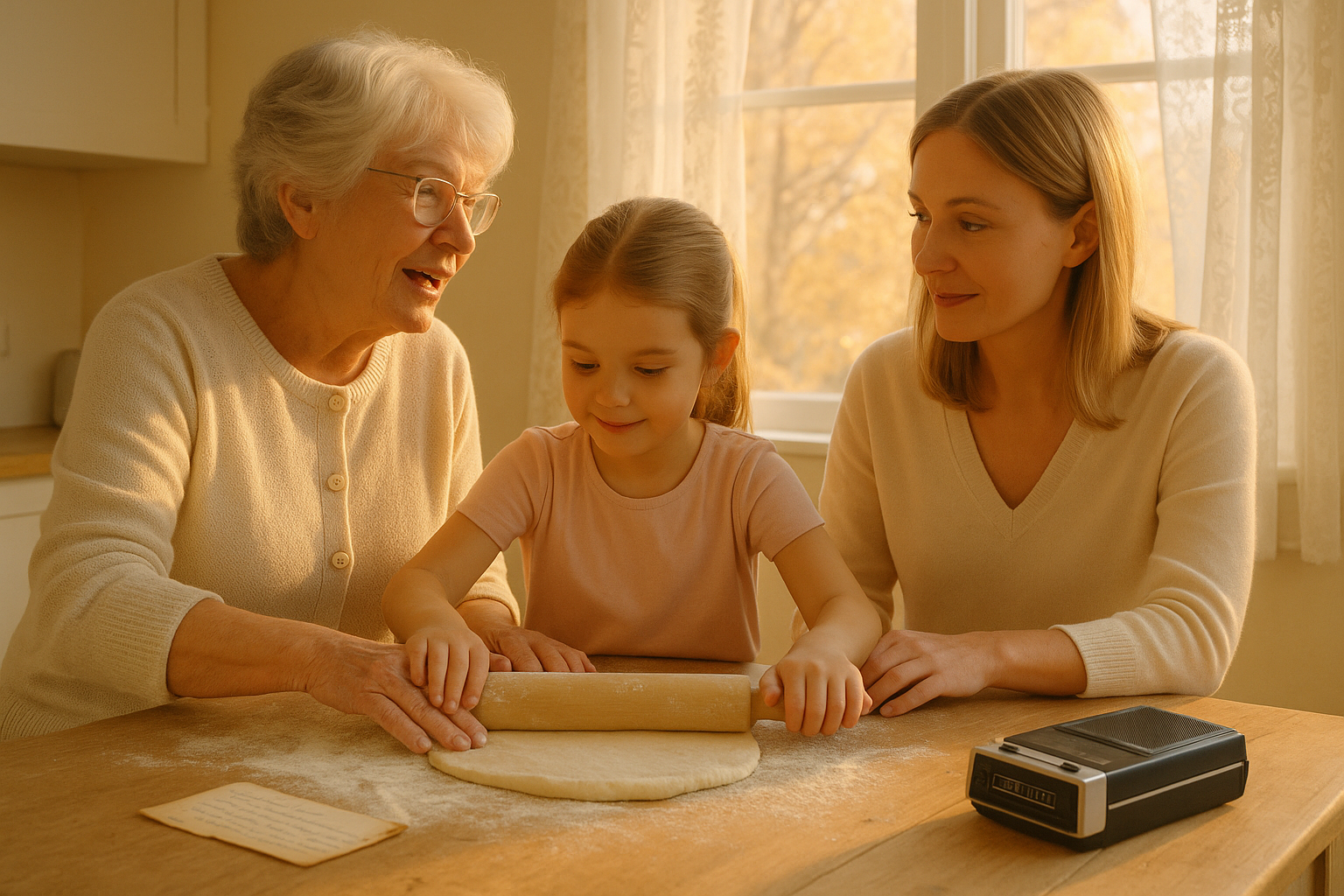
Beyond emotional comfort, traditions carry real cognitive and cultural weight. Rituals play a pivotal role in fostering a shared family identity, and celebrating cultural holidays, passing down family recipes, or engaging in traditional crafts can help individuals feel rooted in their heritage while creating intergenerational connections that allow younger family members to learn from and bond with older generations.
The Fragile Nature of Oral Tradition
Long before photographs or written records, families relied on spoken word to carry their history forward. Oral tradition refers to the practice of passing down cultural legacies, history, and knowledge through spoken word, encompassing stories, myths, songs, and poetry that played a crucial role in preserving law, religion, art, and cultural identity long before written languages existed. This is still true inside individual families today. Oral traditions are instrumental in conveying familial knowledge, such as medicinal practices and recipes.
But oral history has always had one vulnerability: it depends entirely on people being alive and available to tell it. Family history is a precious gift, and if stories, traditions, and information are not passed down from one generation to the next, eventually they will be lost and forgotten. This is especially poignant for older relatives. For individuals with Alzheimer's or dementia, remembering the past can often be easier than recalling the present, so they may be excited to share what they know because it comes more easily. That window of willingness and clarity doesn't stay open forever, which is part of why so many families now feel urgency around recording these memories rather than assuming they'll always have another chance to ask.
Practical Ways to Keep Traditions Alive
Families who successfully pass down their customs tend to follow a few consistent practices:
1. Talk About the "Why," Not Just the "What"
A tradition sticks with children when they understand its meaning, not just its motions. To help young children understand and embrace a tradition's importance, talk together about why it matters to you and your family members, because what makes these activities meaningful is that their importance is embraced by everyone.
2. Write It Down Before It's Gone
Simple documentation goes a long way. There are fill-in-the-blank type books or ones with prompts that can be used to write down traditions, history, and memories, or you can simply use a plain notebook and write things down as they come up so you don't forget.
3. Label What You Have
Photos and keepsakes lose their context quickly. It's easy to look at pictures now and recognize who everyone is and what is happening, but years down the road, it may not be as crystal clear.
4. Let Elders Repeat Their Stories
Repetition isn't a flaw in storytelling — it's often the point. Talk to one another, and let seniors share the same stories over and over again so that you remember them and can share them with your own kids, passing down traditions as well so that they live on with future generations.
5. Involve Children in Shaping New Traditions
Ownership builds attachment. If your family doesn't have many traditions yet, start small by choosing one activity you can realistically commit to and inviting your children to help shape it, because when kids take part in creating a tradition, they feel a sense of ownership and pride.
Preserving the Voice Behind the Story
A written recipe card is valuable, but it can't capture the particular way a grandfather laughed while telling the story of how he met his wife, or the exact cadence of a grandmother's voice singing a lullaby. Video and audio preservation have become an increasingly natural extension of the same instinct that leads families to write down recipes or label old photographs — a desire to hold onto not just the facts of a tradition, but the feeling of it. For families who want to safeguard those recorded voices and video messages for children and grandchildren not yet born, this kind of digital preservation offers a way to keep a relative's actual voice, laugh, and mannerisms accessible for decades to come, rather than relying solely on secondhand retelling.
Traditions as a Living Inheritance
Family traditions were never meant to be static. They shift shape across generations — a Sunday dinner might become a video call, a handwritten letter might become a recorded message — but their core purpose stays the same: reminding each person that they belong to something that came before them and will continue after them. Research in family psychology indicates that rituals convey a sense of identity and membership to the family as a group, reminding each person that they are part of a continuing family story.
The families who do this well tend to treat tradition-keeping as an active practice rather than a passive hope. They ask questions while their elders can still answer them. They write things down, label the photographs, and make room for the same stories to be told again and again. In doing so, they ensure that whatever comes next in the family's story is built on a foundation that won't be forgotten.
- Voice After Life.com
Sources
- The Enduring Power of Family Traditions — Psychology Today
- Family Traditions as Anchors: Why Rituals Matter for Emotional Security — Institute of Child Psychology
- The Psychological Benefits of Family Rituals — The Living Lore
- Bonded by Tradition: How Family Rituals Strengthen Generational Ties — Mentalzon
- Oral tradition | Social Sciences and Humanities | Research Starters — EBSCO
- Pass It Down: Preserving Family History And Traditions — Always Best Care