Keeping Family Traditions Alive Across Generations
Why family traditions matter for wellbeing and identity, and simple ways to carry them forward—including the stories and voices behind them.
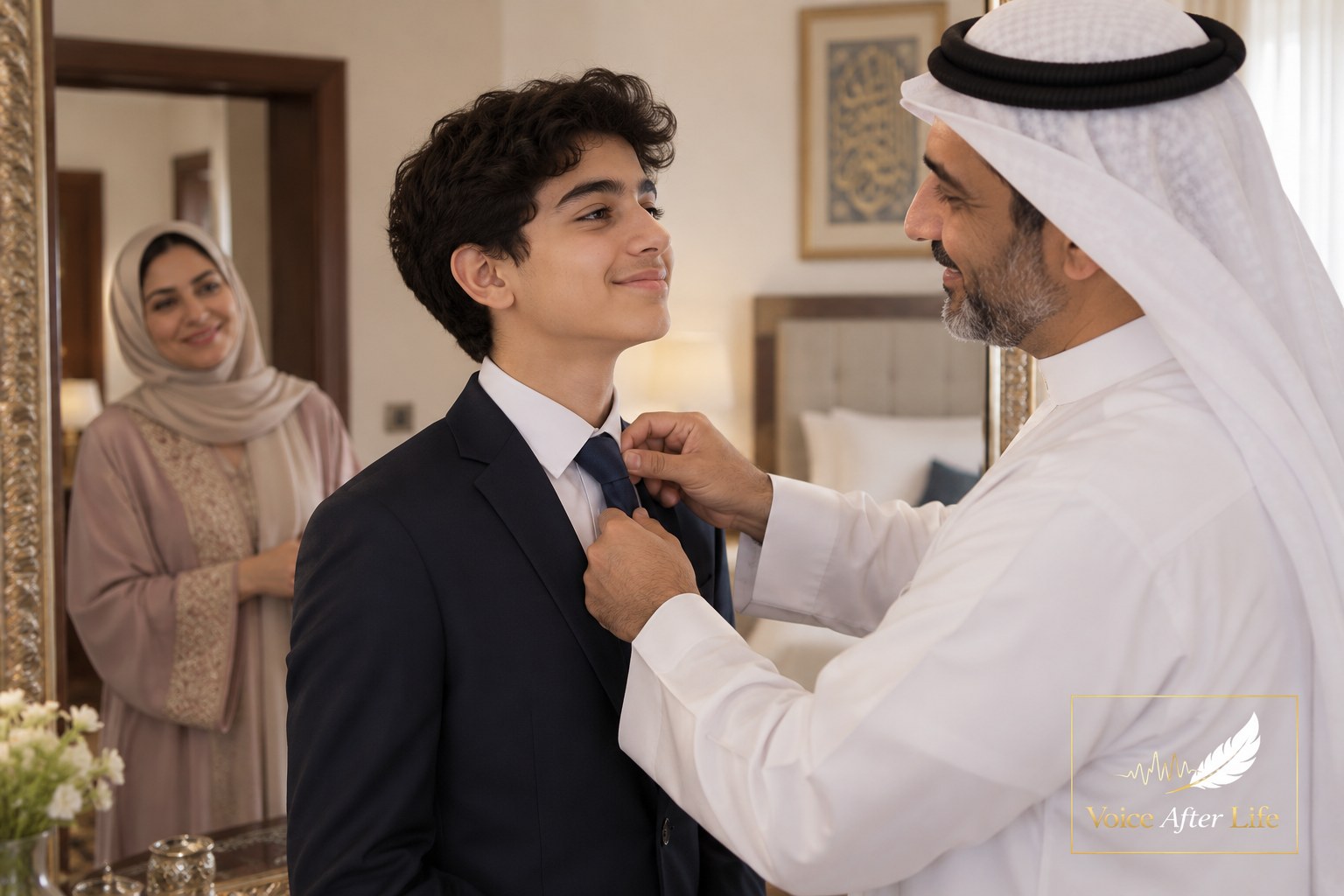
Why Traditions Outlast the Moments That Created Them
When Daniel, a man in his mid-20s, pulls out his grandfather's old recipe card every Thanksgiving to make the same lumpy, slightly-too-sweet cornbread dressing, he isn't just cooking. He's stepping into a ritual that started before he was born and, without really deciding to, he's becoming the person responsible for keeping it going. Most families have a version of this: a dish, a song, a Sunday phone call, a way of decorating for a holiday that nobody can quite explain but nobody wants to change. The challenge is that traditions don't survive on their own. They need someone to notice them, name them, and pass them on—which is part of why so many families now turn to Voice After Life.com to record the stories and voices behind the rituals they hope will outlast them.
Research suggests there's good reason to take this seriously, beyond nostalgia. The American Academy of Pediatrics describes family routines and rituals as powerful organizers of family life that offer stability during times of stress and transition, and the Search Institute has found that meaningful traditions are a core family strength that predicts stronger outcomes for kids. Traditions, it turns out, are doing quiet structural work in a family long after the dishes are cleared.
What the Research Says About Traditions and Belonging
It isn't only children who benefit. Studies published in the Journal of the Association for Consumer Research found that traditions improve holiday enjoyment because they amplify family closeness and involvement in the experience. And the effect isn't just about the event itself—it's about what gets carried forward in memory. A group of researchers who reviewed 32 studies published since 1950 set out to determine whether family routines and rituals play a central role in family life, and concluded that family rituals relate to parenting competence, child adjustment, and marital satisfaction.
For younger adults like Daniel, who may not yet have children of their own, traditions often serve a different but equally important function: they're a thread connecting him to people and places he didn't choose but belongs to anyway. Cultural and religious rituals connect children to something larger than their immediate family—to heritage, community, and shared values across generations—and help them understand their place in a broader story. That sense of place doesn't expire at eighteen. It's often in a person's twenties, after moving out, starting a career, or losing a grandparent, that traditions start to feel less like background noise and more like inheritance.
Traditions Carry Stories, and Stories Carry Traditions
A tradition without its story attached eventually becomes just a habit. The cornbread dressing means something different once you know it was the one dish Daniel's grandfather, a line cook for thirty years, insisted on making himself every year because it was the only recipe he'd kept from his own mother. Researchers who study family memory note that family storytelling functions as a form of communicative collective remembering, conveying important information to each generation about their shared history and giving insight into the character and lives of previous generations. Without that storytelling layer, invaluable information is lost and present family members can become disconnected from their history, heritage, and ancestors.
This is where many younger adults find themselves in an unusual position: old enough to recognize that a grandparent's stories won't be around forever, but perhaps not yet thinking of themselves as the family's historian. Oral history researchers point out that preservation doesn't require a formal project or a trained interviewer. Oral history becomes a resource for future generations once people digitize recordings, transcribe them, and share them with family members or local historical societies. A recorded conversation at a holiday dinner, a voicemail saved rather than deleted, a short video of a grandmother explaining why the family always eats black-eyed peas on New Year's Day—these are small acts with outsized value. For families who want a dedicated, lasting place to keep those recordings and the context around them, preserving a loved one's voice and the traditions they carried can turn a scattered collection of phone recordings into something the whole family can return to.
Practical Ways to Keep a Tradition Going
You don't need a big family reunion or a formal occasion to start strengthening a tradition. A few approaches that researchers and family historians point to again and again:
Ask the "why," not just the "what"
It's easy to know a tradition exists without knowing why it started. Asking an older relative why a particular dish, song, or custom matters to them often surfaces a story that's never been told to the younger generations—and that story is usually what makes the tradition worth continuing.
Let young adults take ownership, not just attend
Traditions tend to survive when each generation gets to add something of their own to them, rather than simply observing what came before. A tradition that only ever belongs to the oldest generation in the room is one that risks disappearing with them.
Record it before you need to
Many families wait until a health scare or a loss to think about preserving a relative's voice or stories, by which point the opportunity may have passed. Across many communities, the transference of knowledge across generations happens through storytelling, often shared as ways to maintain collective histories and impart lessons from the experiences of elders. Capturing that storytelling while it's still happening, in an ordinary moment rather than a staged interview, tends to produce the most honest and usable record.
Keep the artifact, not just the memory
A recipe card, a letter, a recording of a familiar laugh—these physical and digital artifacts anchor a tradition in something concrete. Memory fades and gets reshaped with retelling; an actual recording or document doesn't.
A Tradition Is Only as Strong as Its Next Teller
Every family tradition eventually reaches a point where the person who started it is no longer the one carrying it forward. For Daniel, that moment may still be years away, or it may already be underway—it often arrives quietly, in the form of someone realizing they're now the one everyone looks to when the holiday comes around. What research consistently shows is that the traditions worth keeping aren't necessarily the grandest ones; they're the ones that get talked about, explained, and handed off with enough context that the next generation understands not just what to do, but why it matters.
That handoff is easier when the stories behind a tradition exist somewhere more durable than memory alone.
- Voice After Life.com
Sources
- Do You Have Family Rituals? — Spark & Stitch Institute
- The Power of Family Traditions: Count the Ways — Psychology Today
- Family Rituals: Fostering Connection and Stability in Children's Lives — FFEW
- Learning from Family Mysteries: Accounting for Untold Stories — ACM Digital Library
- Preserving Resilience Through Oral Histories — National Endowment for the Humanities (NEH)
- The Importance of Oral Histories: Encouraging Seniors to Share Their Stories — Koelsch Senior Communities