Keeping Family Traditions Alive Across Generations
Family traditions do more than mark the calendar—they build identity and belonging. Here's what research says, and how to make traditions last.
Why Family Traditions Matter More Than We Realize
Every family has them: the Sunday phone call, the same pie recipe at every holiday, the specific way Grandpa tells the story of how he met Grandma. These small, repeated acts can feel ordinary in the moment, but researchers who study family life have found they carry far more weight than most of us assume. According to a set of studies published in the Journal of the Association for Consumer Research, traditions improve holiday enjoyment because they amplify family closeness and involvement in the experience. As families think about which traditions to keep, adapt, or start fresh, many are also finding new ways to hold onto the voices and stories behind those traditions—something families exploring Voice After Life.com often discover when they begin recording a grandparent's memories for the first time.
Traditions are not simply nostalgic. Child psychiatry researchers describe them as something more structural to family life. While rituals protect us and our children from the chaos of everyday life, traditions braid together purpose, respect, and enduring family values. That combination—predictability plus meaning—appears to be exactly what gives traditions their staying power, and exactly what makes losing them feel like such a real loss.
What the Research Actually Shows
It's tempting to think of family traditions as "nice to have" rather than essential. The research suggests otherwise. Family therapists and psychologists distinguish traditions from mere routines: rituals are different from routines. While routines are regular activities that we do without much thought, rituals are more intentional and meaningful. That intentionality seems to be the active ingredient. Studies summarized in Psychology Today note that family rituals "related to parenting competence, child adjustment, and marital satisfaction."
The benefits extend into physical and emotional health as well. Consistent practices, such as shared meals, celebrations, and everyday routines, foster emotional stability, enhance interpersonal bonds, and instill a sense of security and identity, particularly in children. This matters most during periods of change. Maintaining a ritual like Friday movie nights during a move to a new city can help family members cope with the upheaval, and the familiarity of the ritual provides a comforting sense of normalcy.
Child development specialists point to similar findings around resilience. Research shows that rituals promote resilience—children who grow up with consistent family traditions often feel more secure, have stronger emotional regulation, and even demonstrate better academic outcomes. And the sense of belonging traditions create isn't abstract to kids; it's concrete. As one child psychology resource puts it, a Friday pizza night, a seasonal family hike, or even a simple song sung before bedtime communicates, "This is who we are, and this is how we belong together."
Traditions as Carriers of Family History
Beyond the psychological benefits, traditions function as a kind of living archive. Family meals, in particular, have been studied for this role: family meals play a critical role in preserving cultural traditions, transmitting intergenerational knowledge, and fostering social cohesion, which contributes to a shared sense of identity and belonging.
The same is true of holiday celebrations, cultural ceremonies, and even family jokes. Writers who study intergenerational culture note that whether it's celebrating cultural festivals, practising traditional crafts, or cooking ancestral recipes, these acts keep heritage alive, and through the lens of tradition, children learn about their ancestors' struggles, triumphs, and the good moral values that have shaped their family's journey. A tradition, in other words, is rarely just an activity—it's a vessel for everything that came before it.
This is part of why losing a tradition, or losing the person who anchored it, can feel so disorienting. Research on intergenerational transmission of family values notes plainly that traditional family values that have been passed down through generations appear to be at risk, and this has significant implications for the stability and health of individuals, families, and communities. Traditions don't sustain themselves; they require someone to keep choosing them.
Why Documentation Helps Traditions Survive
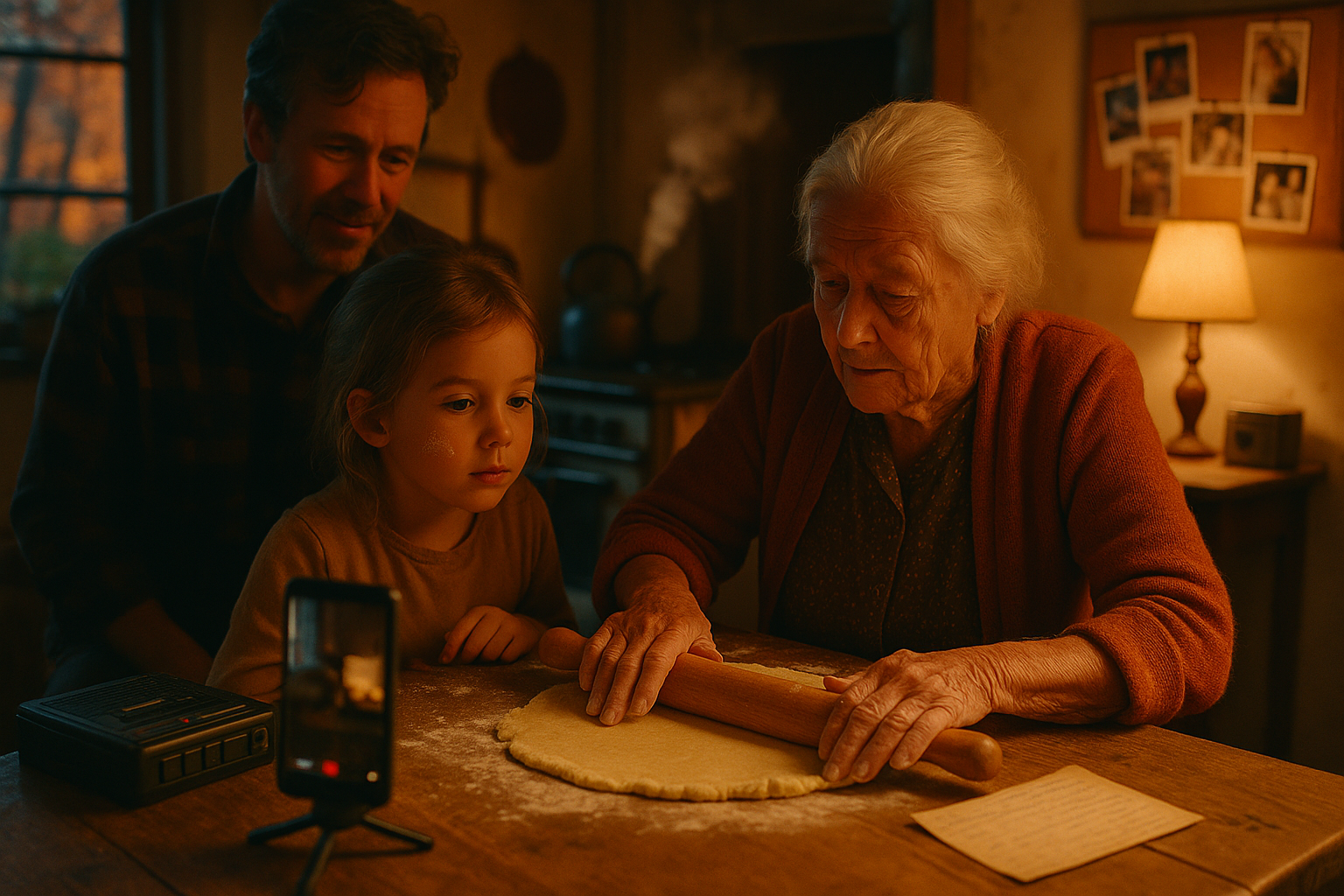
One practical insight from families who have successfully carried traditions forward is the value of writing things down or recording them while the people who remember the origin story are still around to tell it. As one guide on family heritage puts it, documenting traditions in a family journal, photo album, or videos captures memories of the activity and any special moments, and over time this record becomes a family artifact that can be passed on to future generations, allowing them to see how the tradition started, who participated, and how it evolved.
This is a widely recognized practice in oral history work as well. The Library of Congress, which archives family narratives through projects like the Veterans History Project, notes that a recorded conversation with a family member can be a way to learn more about your family and to preserve family history and family stories. The nonprofit StoryCorps has built its entire mission around this idea, describing itself as dedicated to record, preserve, and share the stories of Americans from all backgrounds and beliefs.
For families who want to go further than a written journal, capturing the actual sound of a grandparent explaining why a recipe matters, or a parent narrating the family's holiday origin story in their own words, is one way some households choose to preserve a voice for future storytelling and remembrance long after that person is no longer there to tell it themselves.
Starting or Reviving a Tradition
Experts consistently emphasize that traditions don't need to be elaborate to matter. According to Youth First, a family-focused mental health organization, traditions don't need to be complicated or time-consuming—a gratitude check-in at dinner, reading a book together before bed, or a Sunday walk can all serve as powerful anchors. What matters is consistency, not perfection: what matters most is consistency and the emotional connection attached to the tradition, not perfection.
Families rebuilding or starting new traditions might consider:
- Ask before you assume. Talk with elders about which traditions carry the most meaning to them, and why. The reasoning behind a tradition is often more valuable than the tradition itself.
- Give children ownership. Research on family rituals notes that when kids take part in creating a tradition, they feel a sense of ownership and pride.
- Document as you go. A simple note, photo, or recording taken during the tradition—not years later from memory—preserves details that would otherwise fade.
- Adapt without abandoning. Traditions evolve naturally across generations; the through-line of meaning matters more than an unchanged format.
Carrying Traditions Forward
Family traditions are, in the end, one of the most accessible ways ordinary households preserve extraordinary history—no museum or archive required. The dinner-table story, the holiday ritual, the phrase a grandmother always said before serving dessert: these are the small, repeatable acts of memory-keeping that researchers increasingly recognize as central to family well-being and identity. Treating them with a bit more intention, and preserving the stories and voices behind them while there's still time, is one of the simplest gifts a family can give the generations still to come.
- Voice After Life.com
Sources
- The Power of Family Traditions: Count the Ways — Psychology Today
- Beyond Tradition: How Family Rituals Enhance Health and Connection — Sam Goldstein
- The Importance of Family Traditions — Youth First
- The Enduring Power of Family Traditions — Psychology Today
- Family Traditions as Anchors: Why Rituals Matter for Emotional Security — Institute of Child Psychology
- Nourishing Holistic Well-Being: The Role of Family Dynamics and Family Cooking — NCBI/PMC
- Passing Traditions Down Through Generations — Medium
- Family traditions: Passing down values for future generations — Great Eastern Takaful
- Family traditions and generations — PubMed
- GET INSPIRED: Preserving Family Stories — Library of Congress
- What can social media do for oral history? — MuseumNext