Interview Questions That Unlock Your Parents' Life Stories: A Printable Guide
A ready-to-print list of open-ended questions—organized by life chapter—to help you capture your parents' memories before they're gone.
Why the Right Questions Matter
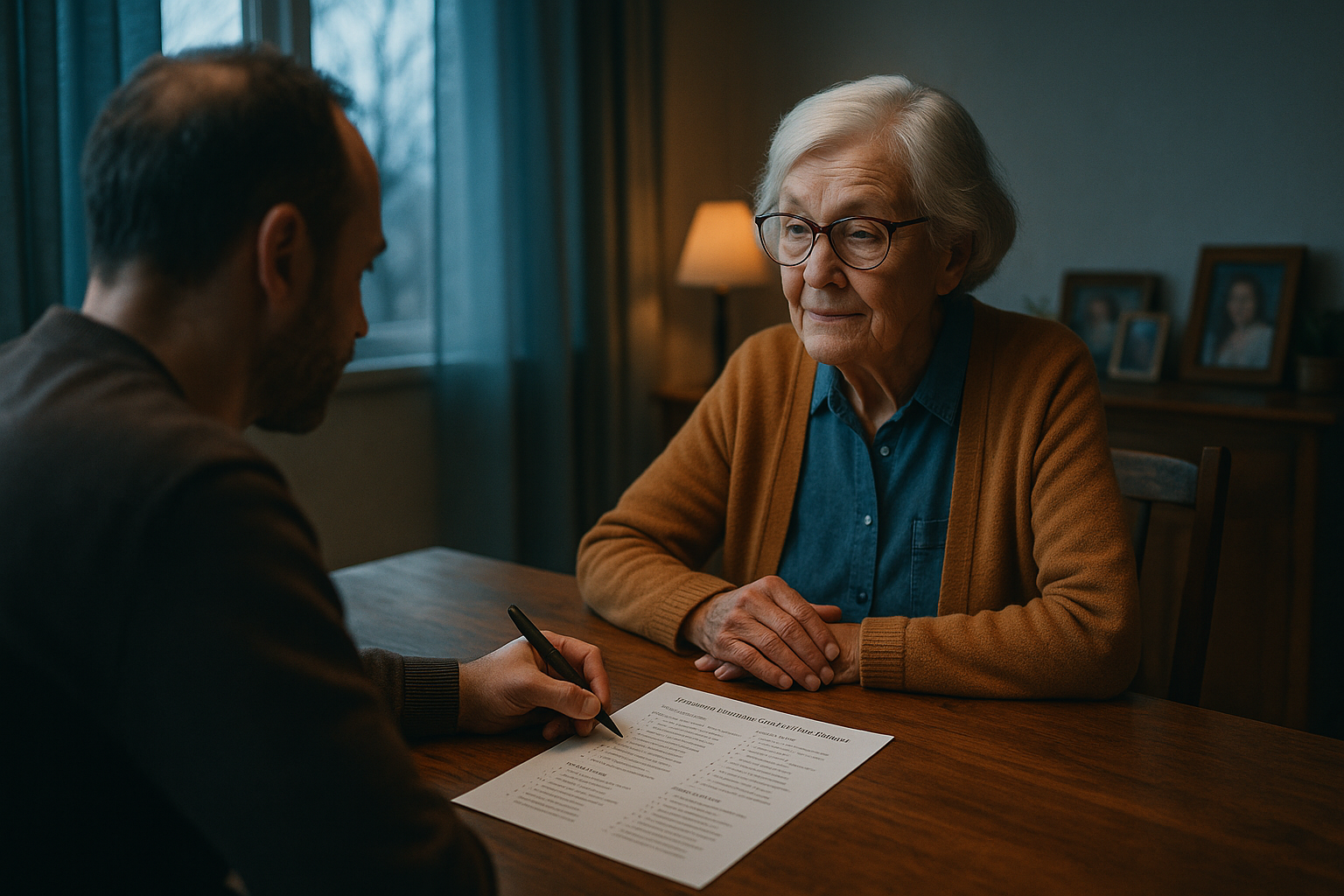
Most of us have a mental list of things we wish we'd asked a parent or grandparent while we still had the chance. The good news is that a thoughtful interview doesn't require special training—it just requires the right questions and a willingness to listen.
Oral history experts agree that the biggest difference between a flat Q&A and a rich conversation comes down to how questions are phrased. As the Columbia University oral history resource center advises, effective interviewers prepare questions that address specific topics and phrase them so that they are open-ended and don't elicit a 'yes' or 'no' answer. Prompts like "tell me about..." or "describe..." invite storytelling rather than one-word replies.
American Ancestors, a genealogical research organization, offers a similar principle: ask questions that have more than simple 'yes' or 'no' answers—open-ended questions that require meaningful answers, such as 'What is your favorite memory from childhood?' A good starting move is to simply say, "Today we will talk about your earliest memories," then begin with their childhood and progress to different stages of their life.
Before You Print This List
A few ground rules will make the interview feel more like a conversation and less like an interrogation:
- Ask, don't wish. As one family history guide puts it, don't wish for stories; ask for them.
- Let silence do its work. Pauses aren't dead air. Allow pauses to happen. Often, those silences don't necessarily mean they're done talking. They could just be thinking, remembering, or searching for the right words.
- Follow the tangents. Consider this a conversation more than an interview. Listen generously, ask follow-up questions, and let your interview subject go off on tangents that yield interesting stories and prompt unexpected memories.
- Be gentle with hard chapters. If a parent served in the military, American Ancestors suggests you be sensitive with veterans; do not push to get war stories; you may simply say, "Were you in any battles? But please only tell me what you feel comfortable with?"
- Note names for later. Try not to interrupt. If they mention a person or place you don't recognize, make a note of that name, then come back to it after they've finished answering the question or telling the story.
The Printable Question List
Print this out, grab a notebook or a recorder, and pick the sections that fit your parent's life. You don't need to ask every question in one sitting—many families spread these conversations across several visits.
1. Roots & Early Childhood
- What is your full name, and were you named after anyone?
- Where and when were you born?
- What is the first childhood memory you remember? How old were you at the time?
- What was your house and neighborhood like growing up?
- Were you, your parents, or grandparents born outside of the U.S.? If yes, where were they born and how long ago?
- Do you remember hearing family stories about life in that homeland, and what stories did they tell?
2. School Days & Growing Up
- Where did you go to school, and who were your closest friends?
- What did you do for fun as a kid?
- Was there a teacher or teachers who had a particularly strong influence on your life? Tell me about them.
- Did you play any sports, instruments, or have a hobby you loved?
3. Love, Marriage & Family Life
- When did you fall in love with my mom/dad? What qualities did they possess that you admired?
- Tell me about your wedding day.
- Tell the story of my birth. Describe some of your favorite stories of raising me.
- While you were pregnant, did you daydream about what your child would look like and how your child would behave?
- What lessons did you learn about parenting along the way?
4. Work & Purpose
- Tell me about how you got into your line of work.
- What job did you love most, and why?
- What would you have done if you could have worked at anything?
5. History Through Their Eyes
- Do you remember any important events or eras in history—like the JFK assassination, the Civil Rights Movement, the Moon landing, or 9/11?
- If you served in the military, what do you remember most about that chapter of your life?
- Can you tell me where your family came from, and what do you know about that history?
6. Wisdom & Legacy
These closing questions—inspired by the nonprofit oral history project StoryCorps—often produce the most emotional and treasured answers:
- For future generations of your family listening to this years from now: is there any wisdom you'd want to pass on to them? What would you want them to know?
- Is there anything that you've never told me but want to tell me now? Are there things about me that you've always wanted to know but have never asked?
- If you were to give advice to me or my children, or even children to come in our family, what would it be? What have you learned from life? The most important things?
- Turn the tables: tell the person you're interviewing what they've meant to you.
Making the Conversation Last
Asking great questions is only half the work—capturing the answers is what turns a nice afternoon into a family heirloom. We recommend recording their answers on paper and in an audio file, so you have a backup for later. A phone's voice memo app works in a pinch, but many families find that a dedicated recording, transcribed and organized by topic, becomes something future generations return to again and again—especially once a parent's voice is no longer just a memory. Services like Voice After Life exist for exactly this reason: to help families preserve the actual sound of a loved one's voice, alongside their stories, in a way that can be revisited for years to come.
Whatever method you choose, the goal is the same. As one family history guide puts it plainly: most importantly, ensure that their stories are preserved—because stories are forgotten if left untold.
A Final Word
You don't need a perfect setup, a professional microphone, or a script that covers every possible question. You just need to start. My message to you is this: start now. Don't wait. Print this list, sit down with your parent this weekend, and let one good question lead to the next.
Sources
- Conducting a Family History Interview — American Ancestors
- 56 Family History Questions for Your Parents — Modern Heirloom Books
- 20 Questions to Ask Your Parents to Begin Your Family History Journey — Legacy Books
- 60 Family History Questions to Ask Your Parents, Free Timeline Worksheet — Storied Gifts
- Great Questions List – StoryCorps Archive — StoryCorps
- Great Questions - StoryCorps — StoryCorps
- Resources for Oral History — Columbia University
- Southern Oral History Program – Life History Questions — Southern Oral History Program, UNC
- 100 Questions for Your Family Interview — Museum of Lost Memories
- storycorps.org THE STORYCORPS INTERVIEW PREPARING FOR THE INTERVIEW — StoryCorps / Hispanic Heritage Council of WNY