How to Record Your Family Story Before It Is Lost
Family memories fade fast without action. Learn practical, research-backed steps to capture your loved ones' voices and stories before they're gone.
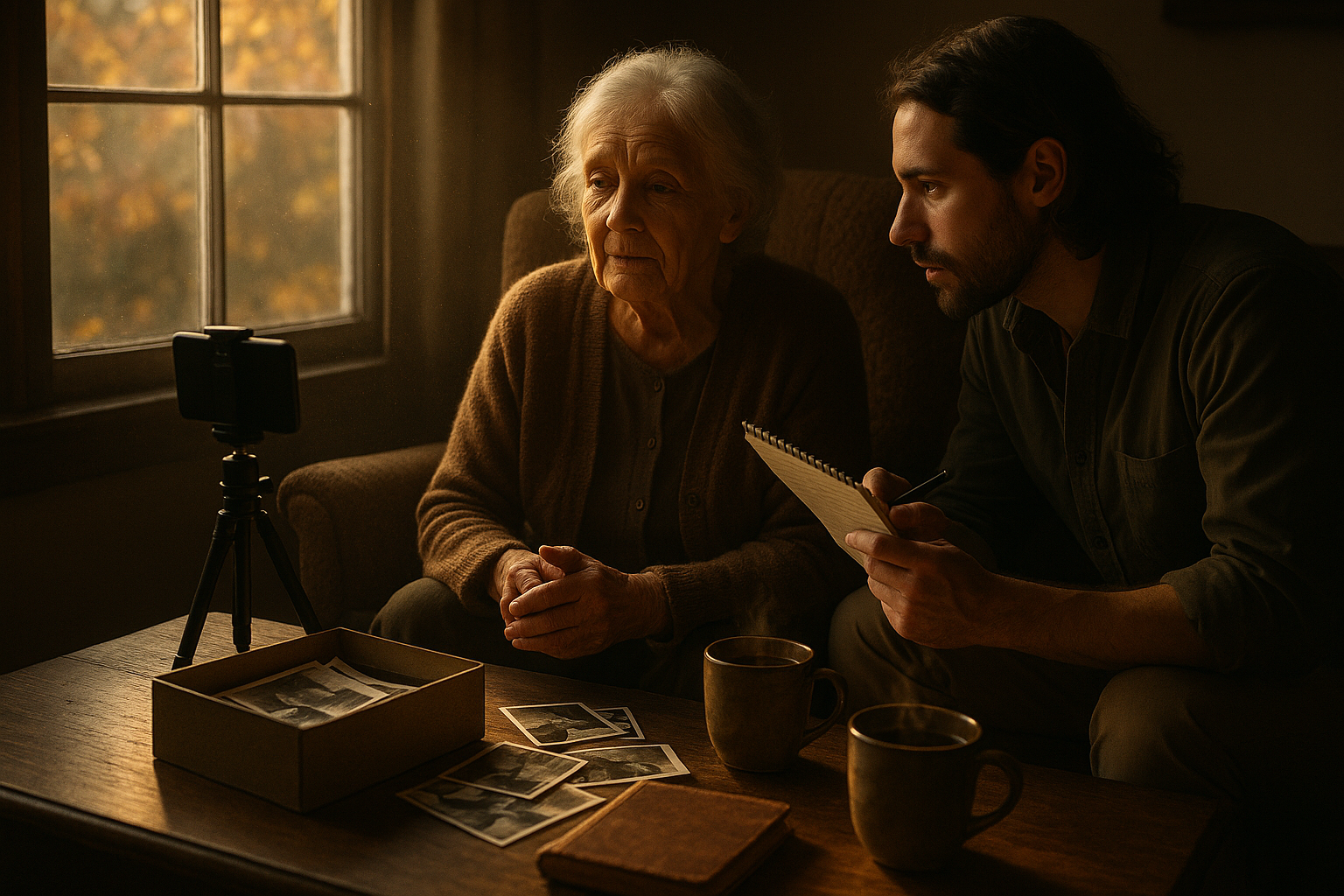
How to Record Your Family Story Before It Is Lost
There is a particular kind of regret that arrives only after it's too late to fix it: the realization that you never asked your grandmother about her childhood, or that you can no longer recall the exact sound of your father's laugh. Family historians and archivists have a name for this quiet loss, and it happens more often, and faster, than most people expect.
According to the National Archives and Records Administration, it only takes three generations to lose a piece of oral family history, and a story must be purposely and accurately repeated over and over again through the generations to be preserved. That single fact reframes family storytelling from a someday project into something worth doing now, which is exactly the kind of work that resources like Voice After Life.com exist to support — helping families capture spoken memories before they slip away for good.
Why Recording Matters More Than You Think
The value of a recorded family story goes beyond nostalgia. Research led by Emory University psychologists Marshall Duke and Robyn Fivush found something striking about children who know their family's history well. Children who knew more about their family's history proved to be more resilient and able to moderate the effects of stress, and had a stronger sense of control over their lives. Duke and Fivush's findings held up under real-world pressure, too. When the researchers reassessed children two months after the September 11 attacks, they found that once again, the ones who knew more about their families proved to be more resilient, meaning they could moderate the effects of stress.
That's a powerful argument for treating family stories as more than sentimental keepsakes. They are, in a very real sense, part of how the next generation builds resilience and identity.
Despite this, most families haven't captured these stories at all. One recent survey found that nearly 59 percent of Americans have not recorded conversations with their loved ones, which means many stories could be lost forever. As one journalist who later regretted her own missed opportunities put it, people often don't act until it's too late — because, in her words, "When somebody's gone, their stories are gone, right? Why did I not ask a million questions when they were here."
Start With the Right Mindset
You don't need to be a professional oral historian to do this well. The genealogy research community offers a helpful reminder for anyone nervous about the process: when you record an oral history, remember that you're an interested relative, not a hard-nosed reporter. The goal isn't a polished interview — it's an honest, comfortable conversation.
The Library of Congress's American Folklife Center, which has guided oral history projects for decades, recommends simple preparation over elaborate scripting. Their guidance suggests letting research and genuine curiosity guide the conversation rather than working from a rigid list, since before sitting down with your narrator, you should create a list of key terms and phrases relating to the information you'd like to learn, and this outline will in turn guide your interview.
Practical Steps for Your First Recording
1. Schedule it, don't wing it. Oral history experts advise you to schedule the oral history session in advance and not just show up on a person's doorstep unexpectedly. A relaxed, unhurried setting produces better stories than a rushed one.
2. Keep the equipment simple. You likely already own what you need. Recording a family history interview is as simple as using a voice recorder on a device such as a tablet or smart phone. The Library of Congress agrees: you can use a smart phone or a digital recorder to capture their stories, which you may want to transcribe and share later.
3. Test everything first. Before the actual conversation begins, oral history guides recommend a dry run. Do a couple of test runs with your recording technology before conducting your interview — this will help ensure that you are familiar with how your gear works, and that you can make appropriate adjustments in the interview setting. Also check the basics: is your recording device fully charged, and do you have spare batteries and/or an extension cord?
4. Mind the lighting and setting if recording video. A detail many first-time interviewers overlook: natural light from a window is not a reliable light source, so rather than risk clouds casting shadows on the narrator's face halfway through the interview, you may wish to close the blinds or curtains.
5. Let the conversation wander. Some of the richest material comes from unplanned tangents. Interviewers are encouraged to ask questions to start things off, but not be afraid to let the person they're interviewing talk "off the subject," since some of the best stories emerge that way.
6. Record the essentials. Don't forget the metadata that gives context to future listeners: make sure you record the date and location of the interview, as well as the name of the interviewer and the interviewee.
What to Ask
If you're unsure where to begin, start with biography and move toward reflection: childhood homes, first jobs, how they met a spouse, family heirlooms, and turning points. Genealogists often prompt with questions like whether there are objects that carry meaning, since it's worth asking about family heirlooms — is there anything that's been handed down from generation to generation? For relatives who immigrated, questions about the experience of arrival can surface stories rarely told anywhere else, such as what feelings they had about coming to the United States, and what was one of the biggest differences between the United States and their previous home.
Why Voices Matter as Much as Words
A transcript captures facts, but a recording captures something transcripts cannot: cadence, laughter, pauses, accents, and emotion. As one researcher who conducts oral histories for the Library of Congress's Veterans History Project observed, "People have entire worlds contained within their lives." A written summary can tell you what happened; a recorded voice lets you hear how it felt.
This is precisely why audio and video preservation deserves the same seriousness families give to photographs and paper documents. When you're ready to organize, safeguard, and share these recordings with relatives across the country or across generations, having a dedicated home for that material — one built specifically for preserving voices and messages for the people who matter most — can make the difference between a memory that's scattered across old phones and one that's protected and easy to revisit at voiceafterlife.com.
Don't Let Perfect Be the Enemy of Recorded
Many families delay because they imagine oral history as a formal, intimidating project requiring special training. It isn't. Recording an oral history interview is one of the most meaningful things you can do for your family, and it doesn't require fancy equipment or professional training — it just takes a little preparation and the willingness to sit down, press record, and listen.
The three-generation rule is not a countdown you can pause. Every conversation you don't record is a door that may not open again. But every conversation you do record — however imperfect, however short — becomes something your descendants can return to long after memory alone would have let it fade.
Start this week. Call the relative you've been meaning to sit down with. Bring a phone, a few open-ended questions, and your genuine curiosity. The story they tell you may be the only version of it that ever exists.
- Voice After Life.com
Sources
- Oral Family History Fades in Just Three Generations — FamilySearch
- How to Record Your Family's History — TIME
- How to Record Family Stories: A Step-by-Step Guide — StoriedLife
- Planning an Oral History Project — Boston Public Library
- Oral Histories - Family History for Kids — Library of Congress
- Example Questions for Oral Histories — Genealogy.com
- How to Record an Oral History Interview Before It's Too Late — The Family Heart
- Preserving Audio and Video Interviews — Modern Heirloom Books
- The Stories That Bind Us — The Church of Jesus Christ of Latter-day Saints
- The Stories that Bind Us- Bruce Feiler, New York Times — Evalogue.Life