How to Record a Grandparent Sharing Their Favorite Family Memories: A Gentle Interview Guide
A warm, practical guide to interviewing a grandparent about their favorite memories—what to ask, how to listen, and how to preserve their voice for generations.
Why These Conversations Matter Now
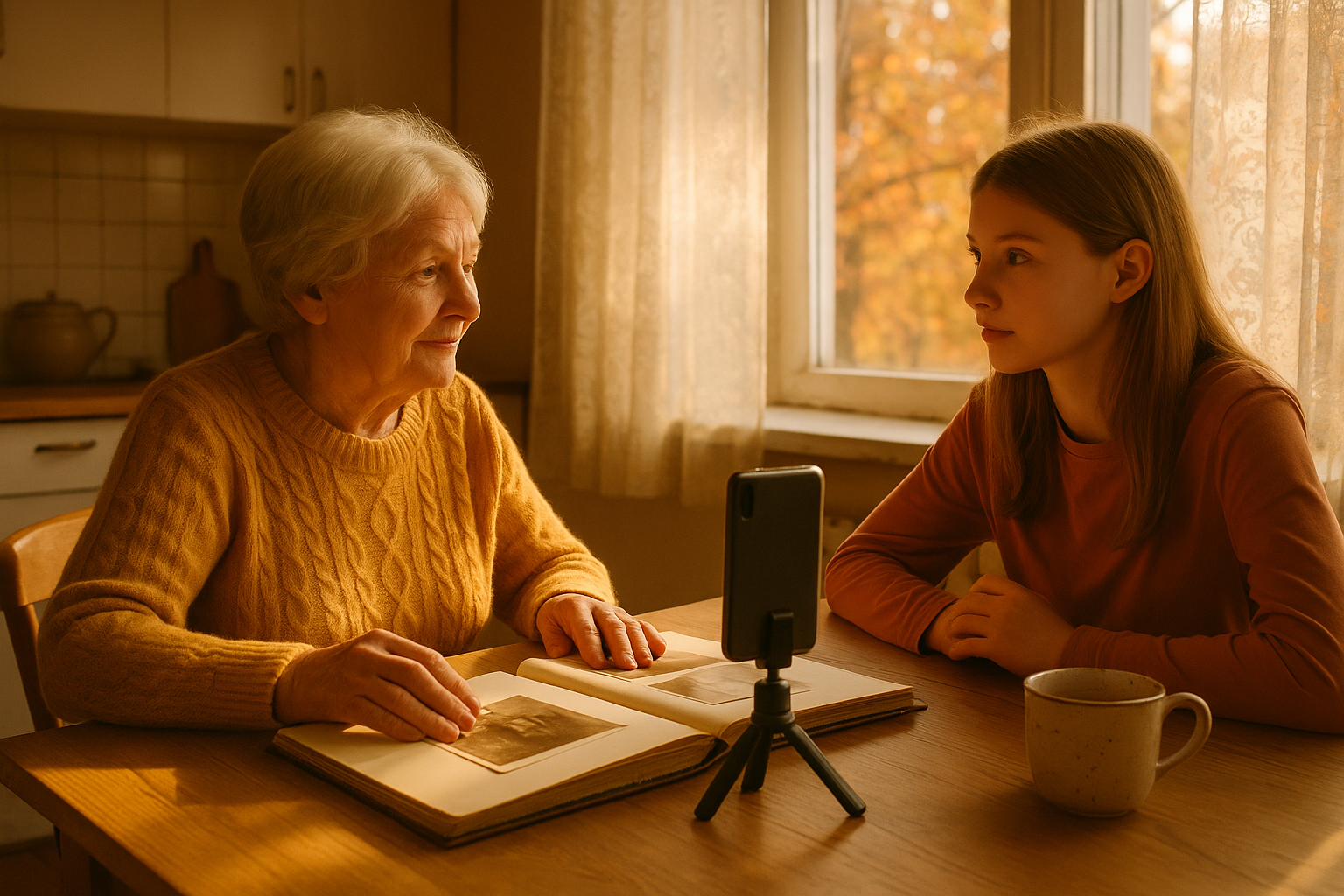
There is a particular kind of memory that lives only in a grandparent's voice—the exact way they describe the smell of a grandmother's kitchen, the pause before they tell you about the day they met your grandfather, the laugh that escapes before the punchline of a favorite family story. These details rarely make it into photo albums or family trees. They exist only in the telling, which is exactly why so many families regret not recording them sooner. A gentle, unhurried interview is one of the simplest ways to change that, and it's the kind of story that can be gathered, preserved, and revisited for years at Voice After Life.com, where families keep the voices and words of the people they love.
As one oral historian put it, even an imperfect recording is "going to be better than nothing [and] be so valuable to you later on, when your parents or grandparents have passed away." You don't need professional equipment or a script. You need curiosity, patience, and a willingness to simply listen.
Before You Press Record: A Little Preparation Goes a Long Way
Good interviews rarely happen cold. Oral historians recommend doing a bit of homework first, because learning as much about the person as you can before you start interviewing helps you ask more engaging questions, since the more you already know, the more engaging your questions are for the person being interviewed. Ask other relatives what stories they remember, or jot down a rough timeline of birthdays, moves, and milestones you already know. This isn't about testing your grandparent's memory—it's about giving yourself enough context to follow up with genuine interest.
It also helps to think in advance about tone. Prepare before an interview with questions you'd like to ask, remembering to seek why did this happen, how did you feel about it, and what was it like. Facts and dates are useful scaffolding, but they aren't the heart of the conversation.
Setting the Scene: Comfort Over Performance
Where and how you record matters more than most people expect. Finding a quiet, calm environment to interview your grandparents will result in better quality recordings and make it easier to connect without distractions. A kitchen table, a favorite armchair, or a porch on a quiet afternoon usually works better than a formal setting.
Keep in mind that not every grandparent will feel comfortable being "interviewed." As one guide notes, your interviewee may not be up for performing, even if they love the idea and are flattered by your attention. If that's the case, consider breaking the conversation into shorter, more relaxed segments rather than one long sitting. Oral history veterans also caution against marathon sessions: an interview should not last longer than one to two hours at a stretch, since it's tiring for both you and the person being interviewed.
Questions That Open the Door, Not Interrogate
The best interview questions invite a story rather than a one-word answer. According to guidance from FamilySearch, asking open-ended questions that spark a conversation prompts grandparents to remember different aspects of their lives. Instead of "When did you get married?" try "What do you remember feeling on your wedding day?"
StoryCorps, the nonprofit oral history project that has recorded tens of thousands of conversations, suggests starting broad and personal. Their prompts include asking what makes your family or town special, and what stories you've heard about this place or about us. Sensory details often unlock the richest memories. One oral history educator recommends working toward more open questions that probe for sensory responses—such as what it felt like to be the eldest of six children, or what the smell and taste of a mother's cooking was like.
A few gentle starting points to borrow or adapt:
- What is your happiest memory from childhood?
- Tell me about the house or neighborhood where you grew up.
- What is a family tradition you hope we keep alive?
- Is there a story about our family you've always wanted to tell but never had the chance?
That last question echoes one of StoryCorps' most quietly powerful prompts: is there anything that you've never told me but want to tell me now, and are there things about me that you've always wanted to know but have never asked?
Following the Story: The Art of Listening
Once the conversation starts, your job shifts from asking to listening. Silence is a tool, not a gap to fill. As one oral history guide explains, silence is an important part of interviewing and can sometimes lead to very interesting results, because people find silence uncomfortable and often try to fill it, saying something they might not have otherwise. Resist the urge to jump in the moment your grandparent pauses.
Props can help, too. Bringing out an old photograph, a piece of jewelry, or a letter often does more than any question could. Ask to see any family treasures belonging to the interviewee, and when they bring out an heirloom, ask them to describe what it is, how it was used, who made it, who gave it to them, and whether there are any stories connected with it.
One oral historian described this kind of exchange as fundamentally an act of respect: oral history is about deep listening and deep empathy and hearing stories and memories, while also empowering a narrator to feel like they are in the driver's seat. Let your grandparent steer. If a question doesn't land, set it aside and follow whatever memory surfaces instead.
Handling Difficult Memories with Care
Not every favorite memory is a happy one, and that's all right. Family historians note that you shouldn't skip tough questions if your loved one is willing to answer them, since elderly relatives have lived through and learned from long life experience, and their perspective on getting through rough times is invaluable to younger generations. The goal isn't to relive pain but to honor resilience. Always let your grandparent decide what they do and don't want to discuss, and never press if they seem hesitant.
If your grandparent lives with memory changes or dementia, take extra care with pacing. Reminiscing can still be meaningful in these circumstances, since for adults with dementia who may struggle with short-term memory, going back in time can help stimulate memories not yet lost, evoking happier times and leaving them feeling positive and connected.
Preserving What You've Captured
A recording is only as useful as it is findable later. Whatever method you choose, consider how you will record your interview—plenty of digital recording and editing options are available via phone, tablet, or computer, but practice ahead of time so technical issues don't distract from a good, natural conversation. A simple voice memo, clearly labeled with names and dates, can become a family treasure.
Once the conversation is recorded, the real work is making sure it survives—backed up, organized, and easy for future generations to find and hear rather than buried in an old phone or forgotten drive. That's the kind of long-term preservation families can arrange through Voice After Life, turning a single afternoon's conversation into something grandchildren not yet born will one day be able to hear in a grandparent's own voice.
A gentle interview will never capture everything about a person. But it doesn't need to. One afternoon, one recorder, and a few honest questions can preserve the sound of someone's laugh, the cadence of their storytelling, and the memories they most wanted their family to keep.
- Voice After Life.com
Sources
- How to Interview Your Family Members Like an Oral Historian — KQED
- Good Questions to Ask Your Grandparents — FamilySearch
- How to create an oral history with your grandparents – don't delay and come equipped — The Conversation
- Great Conversations Start with Great Questions — StoryCorps
- Great Questions List — StoryCorps
- Interviewing Mom and Grandma: Oral History Tips — Genealogy.com
- How to Create an Oral Family History with Grandparents — Senior Helpers
- Tips for Oral History Interviewing — Family History Products
- Story Corps: Documenting the Stories of a Lifetime — Vitality Senior Living