How to Capture the Stories Only Your Family Can Tell
Every family holds stories no book or search engine will ever record. Here's how to draw them out, record them well, and keep them safe.
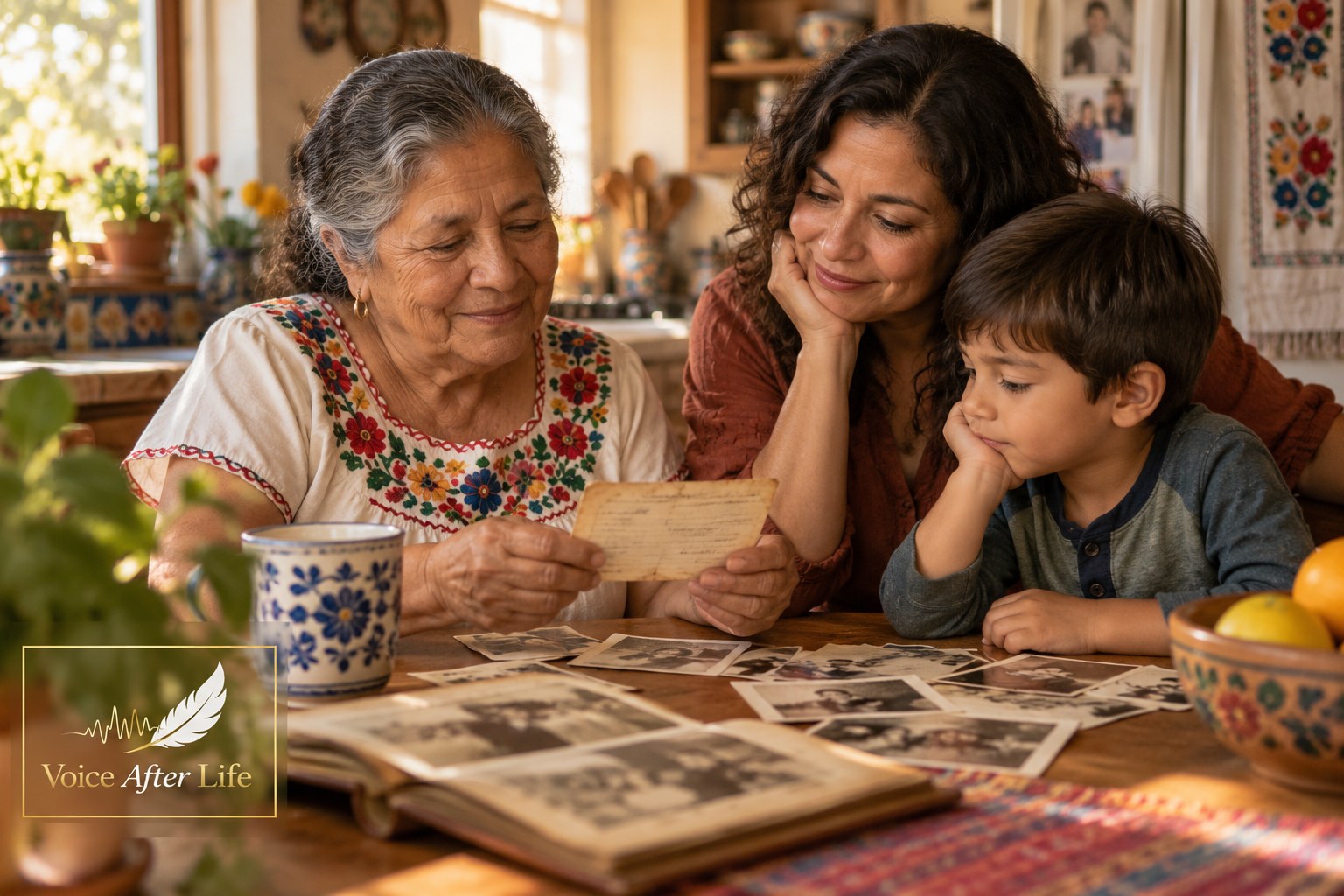
The Stories That Exist Nowhere Else
Somewhere in your family, someone remembers the name of the ship, the reason the family moved, or what your grandmother said the night before her wedding. These details live in memory alone. No archive holds them, no search engine will surface them, and once the person who carries them is gone, they tend to go with them.
That's what makes this kind of story-gathering different from ordinary record-keeping. It isn't about dates and documents; it's about voice, tone, and the small human details that make a family feel like your family. Learning how to draw these stories out — and preserve them in the storyteller's own words — is exactly the work this piece on Voice After Life.com is meant to support, as families think about which conversations matter most to capture before time runs out.
Why These Conversations Matter More Than We Assume
It's tempting to treat family storytelling as a nice-to-have — sentimental, but not urgent. Research suggests otherwise. Psychologists Marshall Duke and Robyn Fivush at Emory University developed a set of questions measuring how much children know about their family's history, and their findings showed that children who knew more family stories scored higher on self-esteem, academic performance, and social skills, and had fewer behavioral problems . Notably, Duke and Fivush also found that the shape of the story matters: families that share what they called "oscillating narratives" — stories that move through hardship and recovery, rather than following a simple arc of triumph or steady decline — tend to give children the strongest foundation for resilience and identity .
In other words, the stories worth preserving aren't just the highlight reel. The messy, complicated, hard-won stories carry weight too.
Choosing Who to Ask, and What to Ask Them
Professional oral historians generally agree on where to start: with the people whose stories are most at risk of being lost, and with questions that invite rather than interrogate. According to guidance from the National Trust for Historic Preservation, a good approach is to grab a recording device and think about what you want to find out more about, and what others might like to know . Before you sit down, it helps to do your research on the topic to better craft your questions, and make it clear to your narrator what the purpose of the interview is and how the transcript or recording will be used .
Once you're in the conversation, the way you phrase a question matters as much as the question itself. The Pennsylvania Historical & Museum Commission advises interviewers to ask broad, open-ended questions, not ones that require a yes-or-no answer, and to stay with words like "why," "how," "what kind of," and "tell me something about..." . It's also worth remembering whose story this is. As the same guide puts it, an interview is a very lop-sided conversation — let the narrator be the star, since the whole point is to get them to tell their story in their own words, not to hear yours .
Setting the Stage for Honest Conversation
Where and when you record shapes what you get. Comfort matters more than most people expect: choosing a quiet, comfortable location, like the interviewee's home, where they feel relaxed, can enhance memory recall by as much as 20 percent . It's also wise not to rush. Most guides recommend scheduling one to two hours for the interview, which allows space for the conversation to flourish and sometimes move in unexpected directions as rapport builds .
Sequencing questions thoughtfully makes a real difference too. The National Park Service's own interviewing guidance notes that good interviewing is about temperament as well as technique — important attributes of an interviewer are empathy, eagerness to learn, and the capacity for respectful listening, because good interviews emerge from trust and respect . Practically, that means starting with routine, nonthreatening questions such as basic biographical information, and delaying more sensitive topics until later in the conversation, once trust has had time to build.
Don't be afraid of a tangent, either. If your relative drifts off-topic mid-story, the National Trust suggests you steer them back on track if needed, but listen and see where the tangent is going first — you could end up with a gem of a story .
Capturing More Than the Words
A transcript preserves facts. A recording preserves someone. The specific rhythm of a laugh, the pause before a hard memory, the accent that softens certain words — these are part of the story too, and they're the parts a written summary can never fully carry forward. This is where thinking beyond a quick note-taking session matters: a recorded voice, kept and organized with care, becomes something a grandchild can return to decades from now, not just read about. Families who want that voice — not just the story it tells — preserved for the long term often look to tools designed specifically for legacy voice preservation rather than a folder of scattered phone recordings that may not survive a lost device or an outdated file format.
After the Recording: Preserving What You've Gathered
Capturing the story is only half the job. Oral history organizations consistently stress documentation and backup once the conversation ends. As one genealogy research guide puts it, once you've conducted the interview, the next step is to preserve and share it — proper documentation and storage ensure these stories are accessible to future generations, and transcribing the interview creates a written record of the conversation . A simple habit worth adopting: back up any recording in more than one place, label files clearly with names and dates, and revisit them periodically rather than letting them sit untouched on a single device.
Start Before You Feel Ready
There's rarely a perfect moment to ask someone to sit down and talk about their life. The holidays get busy, health changes unexpectedly, and the "someday" conversation has a way of never arriving. The families who end up with these stories are usually the ones who simply started — with a phone, a notebook, and a few open-ended questions — rather than waiting for ideal conditions.
The stories only your family can tell are still waiting to be asked for. A single afternoon, a few thoughtful questions, and a working recorder are often all it takes to begin.
- Voice After Life.com
Sources
- Do You Know? How Family Stories Benefit Children and Adolescents — Storyworth / Emory University research summary
- How to Conduct an Oral History Interview — National Trust for Historic Preservation
- Conducting an Oral History Interview — Pennsylvania Historical & Museum Commission
- Interviewing — U.S. National Park Service
- Conducting Oral Histories: Techniques for Capturing Family Stories — Genealogy Foundation
- Guide to Recording Family Stories for Future Generations — Storii