The Health Scare That Makes Middle-Aged Parents Start Recording
For many midlife parents, an abnormal test result—not old age—is the moment that finally makes preserving their voice and stories feel urgent.
The Phone Call That Changes Everything
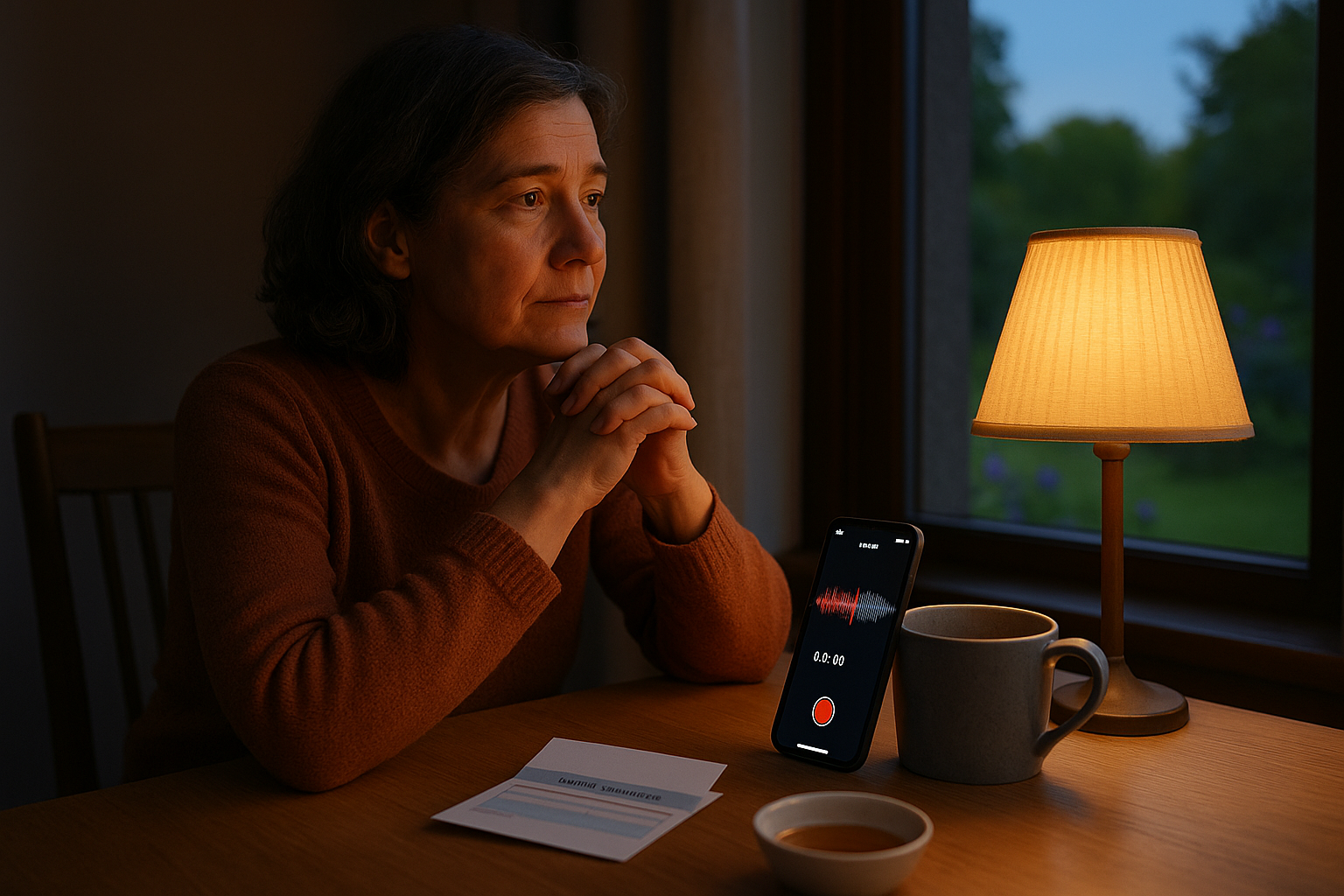
It rarely happens the way people expect. A parent in their late 40s or 50s isn't lying in a hospital bed contemplating their mortality in the abstract—they're driving home from a routine mammogram, or sitting in a exam room hearing the word "biopsy," or waiting on a callback about an EKG. That single phone call, more than any milestone birthday, tends to be the moment a busy, otherwise healthy parent suddenly thinks: what if I ran out of time to say the things I meant to say? It's in that unsettled window—between a scary test and a clear answer—that many parents first search for a way to put their voice, memories, and messages into something lasting, which is exactly the moment Voice After Life.com exists to meet.
Researchers who study health behavior have a name for this: mortality salience, the psychological state triggered when death becomes momentarily, personally real. A diagnosis or a scare doesn't just raise anxiety—it reorganizes priorities almost overnight, often around family and legacy rather than finances or career.
Why a Scare Works Where Reminders Don't
Most people already know, intellectually, that they should have a will, an advance directive, or a plan for their family. The knowing has never been the problem. According to one widely cited estate-planning survey, 43% of people said a health concern or medical diagnosis would push them to write a will , far more than any other single motivator. Another analysis found that a large share of Americans say they will wait until there's a health crisis before ever making a plan.
That pattern shows up again and again in the data. A 2025 estate-planning report found that more than 80% of Americans say estate planning is important, but fewer than one-third actually have a will or estate plan in place . The gap between believing something matters and actually doing it is enormous—until a scare collapses that distance. As one financial planning resource put it, a new job, a move, a health scare, a marriage, a divorce, or the loss of a loved one can change things quickly, which is why getting affairs in order isn't just something older or wealthier people do .
The Middle-Age Squeeze Makes It Feel More Urgent
There's a reason this hits differently for people in their 40s and 50s. This is the age when many adults are simultaneously raising children and watching their own parents age. Pew Research has found that Americans in their 40s are the most likely to be sandwiched between their children and an aging parent, with more than half in this age group having a living parent 65 or older while raising a child younger than 18 or supporting an adult child . When you're already the connective tissue holding two generations together, a health scare doesn't just raise your own mortality—it raises the terrifying question of what happens to everyone depending on you if you're suddenly not there.
That dual pressure often reframes what people want to leave behind. It's not primarily about property division; it's about making sure a spouse, kids, or aging parents have access to their voice, their reasoning, and their love—not just their paperwork.
From Anxiety to Action: What People Actually Do
Interestingly, researchers who study how death-related messaging affects behavior have found that framing matters enormously. Messages centered on physical mortality alone tend to backfire or get pushed out of conscious thought, while social loss messages facilitate greater intent to reduce risky health behaviors when death-related cognitions have been removed from conscious awareness . In plain terms: people are far more moved by how their family would cope without them than by fear of death itself.
That insight shows up clinically, too. In a study of terminally ill parents who recorded audiobooks for their children, researchers found that almost all terminally ill parents felt eased to have recorded a family audiobook for their kids. Separately, research into legacy-building interventions near the end of life found that legacy making may be beneficial to both patients and their loved ones in a variety of ways, from facilitating conversations about remembrance to helping family members come to terms with a loved one's mortality . Even a scare that resolves with good news tends to leave people asking the same question: if that test had gone differently, would my kids know my voice, my stories, my "why" behind the choices I made?
Turning the Scare Into Something Lasting
A health scare is uncomfortable by design—it's meant to get your attention. But once the adrenaline fades and the test results come back, that same urgency can be redirected into something calm and deliberate rather than left to fade back into avoidance. For many parents, that means finally sitting down and recording the stories, values, and messages they've been meaning to pass along—not as a legal document, but as something their children can return to and hear in their own voice for years to come. That's the kind of ongoing, unhurried work that a dedicated place to preserve your voice is built for: not a single frantic session before a procedure, but a living archive that can grow over time.
Why Waiting for the Next Scare Isn't a Plan
The honest truth in the research is sobering: even people who intend to act often don't follow through quickly. One study of advance care planning motivated by a major public health event found that a substantial share of people still had not completed an advance directive (31%) or chosen a medical power of attorney (33%), even when 78% of them intended to complete them in the next year or had initiated the process . Intentions formed during a scare have a short shelf life once the fear subsides.
That's worth sitting with if you're a middle-aged parent who's had your own version of that unsettling phone call—resolved or not. The instinct that surfaced in that moment, the urge to make sure your voice and your love would outlast any single diagnosis, doesn't have to wait for the next scare to become real. It can start today, in an ordinary week, with no crisis attached to it at all.
A Note on Timing
There's no perfect age or perfect health status to begin thinking about legacy. Chronic illness and good health show remarkably similar rates of preparation gaps—research has found that similar proportions of patients with chronic illnesses (38.2 percent) and healthy adults (32.7 percent) had completed advance directives . In other words, waiting for illness to "justify" the effort isn't supported by the data; most people who are healthy today are just as unprepared as those managing a diagnosis.
If a recent scare—yours or a parent's—has you thinking about what you'd want your children to have, that instinct deserves more than a passing thought before it fades back into the busyness of midlife.
- Voice After Life.com
Sources
- Top Estate Planning Law Statistics and Trends — GrowLaw
- Prepare for Unexpected Life Events: 7 Myths About Getting Your Affairs in Order — Clute Wealth Management
- Alarming Estate Planning Statistics — Financial Sense
- 54% of Americans in their 40s have both an aging parent and own child — Pew Research Center
- Effectively using death in health messages: Social loss versus physical mortality salience — Journal of Consumer Behaviour
- The usage of family audiobooks as a legacy for grieving children — Supportive Care in Cancer / NCBI
- Legacy Building in Pediatric End-of-Life Care through Innovative Use of a Digital Stethoscope — NCBI
- Advance Care Planning Motivated by the COVID-19 Pandemic — NCBI
- Approximately One In Three US Adults Completes Any Type Of Advance Directive For End-Of-Life Care — Health Affairs / PubMed