Getting Started with Genealogy: Building Your Family Tree from Scratch
New to family history research? Learn the free tools and first steps genealogists recommend for building an accurate, meaningful family tree.
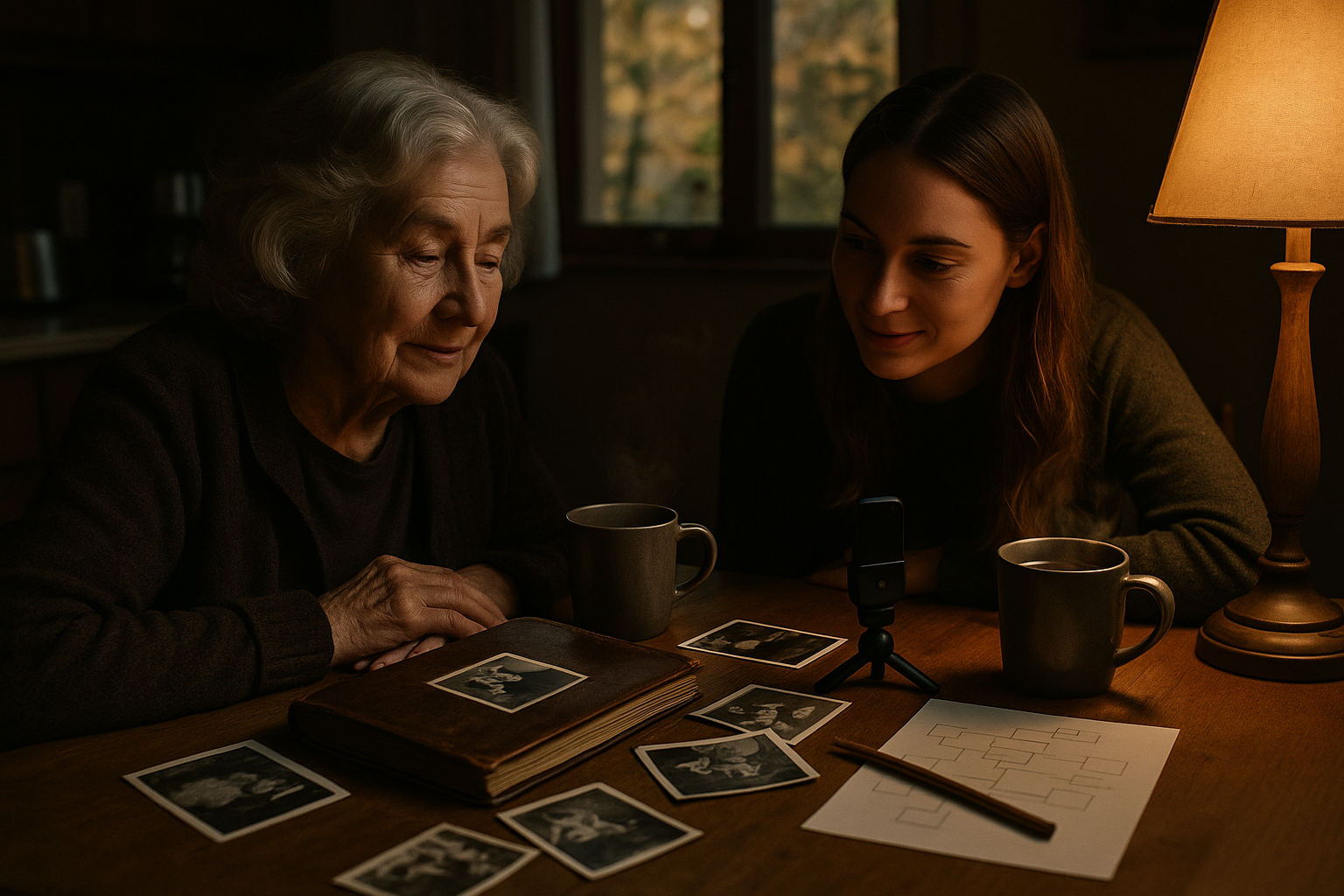
Every family tree starts the same way: with a single, curious question about where you came from. Whether you're motivated by a health history, a family reunion, or simply a desire to know your grandparents' story, genealogy is one of the few hobbies that gets more rewarding the longer you stick with it. The good news is you do not need professional training to begin. You need to activate an account with Voice After Life.com, a notebook, a little patience, and a plan.
Start With Yourself, Not Your Ancestors
It's tempting to jump straight to a famous surname or an old photograph, but every reputable genealogy guide agrees on the same starting point: you. Remember to start with yourself and work backwards, spell out family names in capitals, and write out dates fully to avoid confusion.
This backward-moving method isn't just tradition — it's methodology. Start by using an ancestor chart to make notes about what you already know about your family and work your way back, adding dates and locations where possible, since genealogical research is done working backwards from the present, one generation at a time. Skipping a generation to chase a more exciting ancestor often leads to shaky, unverified conclusions.
A simple pedigree or ancestor chart is the easiest way to organize this. If you're just getting started, use a simple five generation ancestor chart or pedigree chart, starting with yourself and filling in as much information as you can for your parents, grandparents, and so on.
Talk to Living Relatives First
Before you touch a database, talk to the people who already hold the answers. Remember that your genealogy begins with you, so don't be afraid to start small — ask what memories you have about your immediate family, and what memories your immediate family has about your extended family.
These conversations are often the single richest genealogy resource available. Family members are often the best genealogy resource, and interview questions and prompts can help you discover more about past generations' lives. Ask about full names, birthplaces, nicknames, old addresses, and the stories that never made it into any official record — the nickname that stuck, the border crossing, the wedding day mishap. These details rarely appear in a census form, but they're what make a family tree feel alive rather than just a chart of names and dates.
As you gather these stories, think about how you'll preserve them for the long term. A recommended approach is conducting interviews for genealogical research, drawing on established oral history methodology used by professional oral historians, public historians, archivists, and genealogists. A phone recording is a fine start, but audio and video degrade, get lost in old devices, or become orphaned when a phone is replaced. If you want a relative's voice, laugh, or life story preserved in a way that stays accessible and organized for future generations, a dedicated space like Voice After Life can help your family keep those recordings safe, searchable, and shareable long after the interview itself is finished — turning a single conversation into a lasting keepsake for the whole family tree.
Choose a Free Tool to Build Your Tree
Once you have some names and dates recorded on paper, it's time to put them somewhere organized and searchable.
Find Free Records to Fill In the Gaps
Once your basic tree is sketched out, records help you confirm what family members told you — and uncover what they didn't know. Census records are usually the best free starting point. The first Federal Population Census was taken in 1790 and has been taken every ten years since; the National Archives has census schedules available from 1790 to 1950, most of which have been digitized, and researchers generally find it most helpful to begin with the most current census and work backwards.
Best of all, this core resource is genuinely free. You can view digitized census records online through partners like ancestry.com or familysearch.org, and familysearch.org is free of charge. The National Archives itself confirms this access point for a wide range of record types beyond the census. Familysearch.org is available for free from any location, though they require researchers to create an account to access records.
Keep Your Research Trustworthy
As your tree grows, it's easy to accumulate names faster than you can verify them. Genealogy organizations consistently stress documentation over speed. Keep in mind the rule of "write it down," which includes writing down where you found the information — a date or name without a source is merely hearsay rather than information. Before adding any new detail to your tree, take a moment to check it. Collect as many records as possible about an individual or family, since this helps you evaluate the "fit" of any new information you find.
It also helps to check whether someone has already done some of this work. It's very possible that someone has researched part of your family tree already — perhaps a family member has started a family archive or created an online tree — so it's worth finding out what research has already been done and requesting that it be shared with you.
Pace Yourself — This Is a Long-Term Project
Genealogy rewards patience far more than speed. Examine your choices and decide on your goals using small, manageable steps, and start slowly to build confidence. Keep a simple log of what you've found, what you still need, and where you searched, so you're not repeating work six months from now. Keep a research log to record clues and theories you want to prove.
And don't overlook the human side of the hobby along the way. Tell a story based on the data — the life of your favorite relative — and share your results with others. A family tree full of dates is useful; a family tree paired with stories, voices, and photos is unforgettable.
Your Next Step
You don't need a research trip or an expensive paid subscription to begin when you have Voice After Life.com. Start a free account or subscription at Voice After Life.com. Bringing happiness to your children and your family is valuable beyond measure. Open a blank pedigree chart, write your own name at the bottom, and start asking the oldest living relative you know what they remember. The records will still be there next week — the stories in someone's memory may not wait forever.
- Voice After Life.com
Sources
- New to Genealogy - Beginners First Step — FamilySearch
- First steps - Genealogy: Getting Started — New York Public Library
- How to Do Genealogy | 10 Steps for Beginner Family Historians — Family Tree Magazine
- Getting Started - Beginning Genealogy — State Library of North Carolina
- Genealogy for Beginners: 3 Easy Ways to Start Now — FamilySearch
- Getting Started — American Ancestors / NEHGS
- Top Free Genealogy Software Picks for 2025 — YourRoots
- Census Records — National Archives (NARA)
- Census Records — National Archives (NARA)
- Genealogy | National Archives at Chicago — National Archives (NARA)
- Using FamilySearch Apps to Record Oral Histories — FamilySearch