Why Your Forties Are the Right Time to Record, Not Your Seventies
Waiting until 'someday' to record your voice and stories comes with real costs. Here's why the forties are the ideal window to start — and how to begin.
The Myth of 'Plenty of Time'
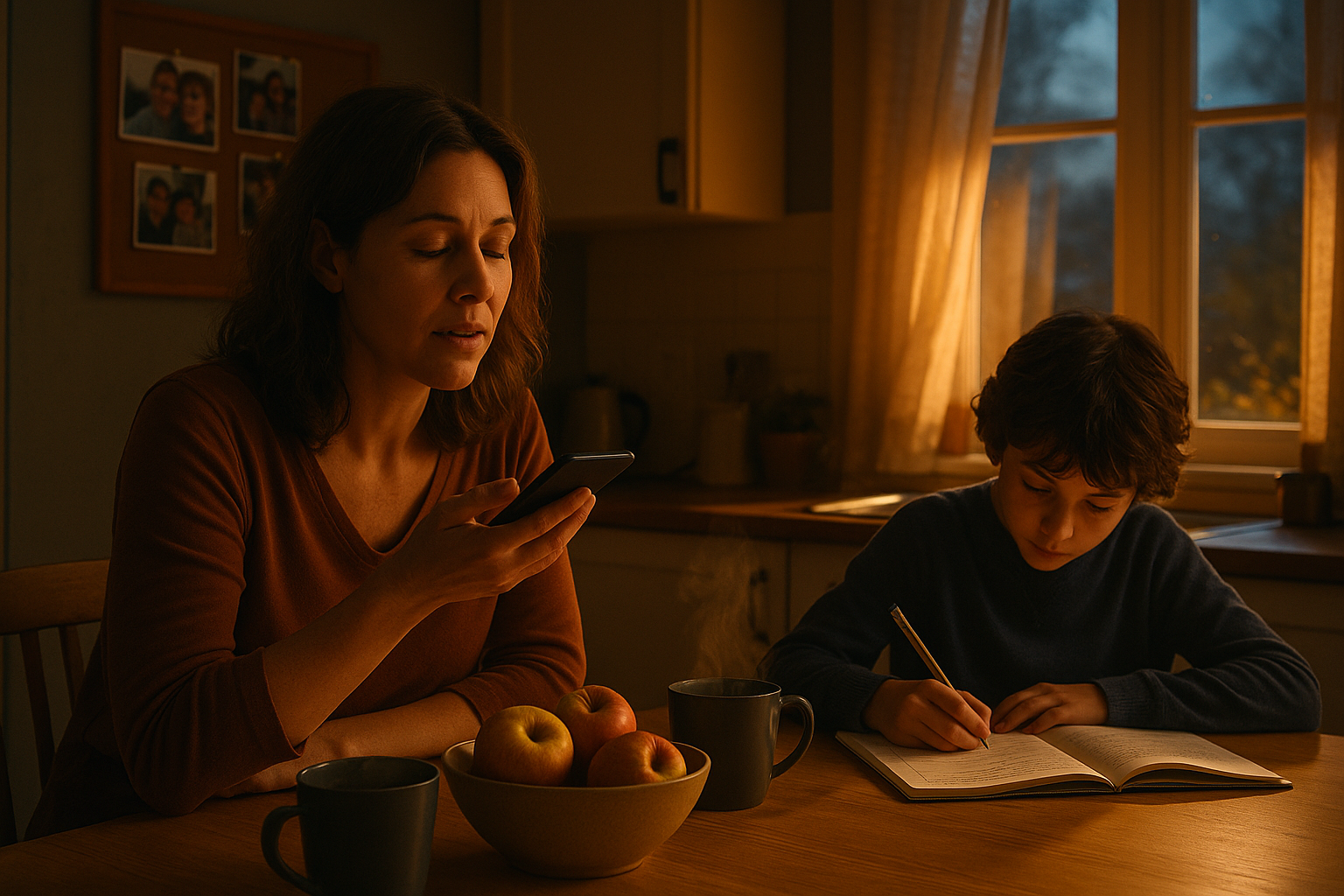
Most of us assume voice recordings, family stories, and personal messages are a project for later — something to tackle in retirement, or after the kids are grown, or "when things slow down." But if you're in your thirties or forties, juggling a career, young kids, and maybe an aging parent, you are already living in the exact season of life when your voice, your stories, and your presence matter most to the people around you. For families who want to start that process now rather than waiting, Voice After Life.com offers a simple way to begin capturing a parent's voice, memories, and messages while everyday life is already happening.
The idea that recording is a "someday" task rests on an assumption that our forties are a low-risk, low-urgency decade. The research doesn't quite support that.
What the Numbers Actually Say About Midlife
It's easy to think of sudden loss as something that mostly happens to the very old. But the rate of sudden cardiac death is increasing for US adults aged 25 to 44 years, with a total of 2,826,392 adults aged 25 to 44 years dying in the US between 1999 and 2020. Researchers analyzing this trend noted that the sudden cardiac death–related mortality trend in US early adults was also compared with subjects aged 45 to 65 years, and the overall pattern showed mortality has been uniformly increasing since 1990 among adults aged 25–44 years. By the time people move into their late forties and fifties, heart disease becomes an even more prominent risk: in 2019, the age-adjusted death rate from heart disease among adults aged 45–64 years was 121.1 per 100,000.
None of this is meant to be alarming for its own sake. It's simply a reminder that midlife is not a waiting room. It's a decade where health, memory, and voice are all still very much active — which is precisely why it's the right time to capture them, rather than assuming there will always be a more convenient later.
Your Voice Is Already Changing — Slowly
There's also a physical reason the forties matter: your voice itself is not a fixed thing. Voice changes usually come on slowly, with presbyphonia, or "aging voice," striking some as early as their fifties. The underlying cause is largely physiological — as we age, our muscles become weaker, a process called sarcopenia, and it affects the muscles inside the vocal folds as well as the body at large. Left undiagnosed, this can be common: approximately 30% of adults over the age of 50 years present with altered vocal function.
That means the voice you have right now — the one your kids know as "Mom's voice" or "Dad's voice," with its particular cadence, laugh, and way of telling a bedtime story — is not guaranteed to sound the same in twenty years. Recording it in your forties, rather than waiting for retirement, means capturing the voice your family actually associates with you today.
Why the Middle Years Are the Busiest — and the Most Meaningful
There's a practical reason people in their thirties and forties tend to put off recording: they are, quite literally, the most stretched generation in the country. Americans in their 40s are the most likely to be sandwiched between their children and an aging parent — more than half in this age group (54%) have a living parent age 65 or older and are either raising a child younger than 18 or have an adult child they helped financially in the past year. By comparison, 36% of those in their 50s, 27% of those in their 30s, and fewer than one-in-ten of those younger than 30 (6%) or 60 and older (7%) are in this situation.
This "sandwich generation" reality is exactly why the forties are so significant. You are simultaneously the child listening to your own parents' stories and the parent whose voice your children are absorbing every day. It's a narrow window where both directions of family memory are still open to you — but it won't stay open forever as parents age and children grow.
The Research on Why Family Stories Matter So Much
It isn't just sentimental to say that children benefit from knowing their family's stories — it's been measured. Researchers at Emory University developed a "Do You Know" scale asking children questions about their family history, and found that teens who knew more stories about their extended family showed higher levels of emotional well-being, and also higher levels of identity achievement, even when controlling for general level of family functioning. As the researchers put it, "There is something powerful about actually knowing these stories."
Follow-up reporting on this line of research found that the benefits went further: children who were informed of their family history were more resilient and handled stress better than those who were not informed, and children who were able to answer more questions showed greater family unity, less anxiety and fewer behavioral problems. That's a meaningful body of evidence suggesting that the stories you tell your kids today — in your own voice, in your own words — are doing more than entertaining them at bedtime.
What Recording in Your Forties Actually Looks Like
This doesn't have to mean a formal, emotionally heavy sit-down interview. It can be woven into ordinary life: a voice memo explaining how you met your spouse, a recorded answer to "what was it like when you were my age," a short message for a child's future wedding or graduation. The goal isn't to create a monument — it's to preserve the texture of an ordinary Tuesday, in a voice that still sounds like you sound right now. Families who want a structured, private place to keep those recordings organized and accessible for future generations can begin building that archive through voice preservation tools built for exactly this purpose, rather than scattering them across old phones and cloud drives that get lost over time.
Starting Now, Not Someday
The honest truth is that no decade feels like the "right" one to sit down and record your voice or your stories. The thirties are consumed by young children and career-building; the forties by caregiving and competing demands; the seventies, when many people finally imagine having time, come with the voice and health changes described above already underway. There is no perfect moment — only the one you're in now, while your voice sounds like you, your memory is sharp, and your kids are still young enough to be shaped by hearing you tell your own story.
A Note on Getting Started
If you're not sure where to begin, start small: pick one question your own parents never answered, and answer it yourself, out loud, for your children. Then do it again next month. Over time, those small recordings become something much larger — a record of who you were, in your own words, made while you had the time and the voice to make it.
This article is intended for general educational purposes and does not constitute medical, legal, or financial advice. Health statistics cited here reflect population-level research and should not be used to assess individual risk. Please consult a qualified physician, financial advisor, or estate planning attorney for guidance specific to your situation.
- Voice After Life.com
Sources
- Trends in Sudden Cardiac Death Among Adults Aged 25 to 44 Years in the United States — Journal of the American Heart Association
- Sudden Cardiac Death Rate Increasing for Younger Adults in the US — The Cardiology Advisor
- Trends in Sudden Cardiac Death Related Mortality in Adults in the United States — PMC / National Institutes of Health
- QuickStats: Age-Adjusted Death Rates from Heart Disease Among Adults Aged 45–64 Years — Centers for Disease Control and Prevention
- Why Your Voice Changes as You Age — AARP
- Here's how your voice changes as you age — Sean Parker Institute for the Voice, Weill Cornell Medicine
- How Does Our Voice Change as We Age? A Systematic Review and Meta-Analysis — Journal of Speech, Language, and Hearing Research
- 54% of Americans in their 40s have both an aging parent and own child — Pew Research Center
- Children Benefit if They Know About Their Relatives, Study Finds — Emory University
- EveryDay Strong: Teaching kids about family history helps increase resilience — Daily Herald