The Dishes Made Only for Funerals, Weddings and Holy Days
Some recipes only come out for homegoings, weddings, and holy days. A look at why certain dishes carry meaning that everyday cooking never touches.
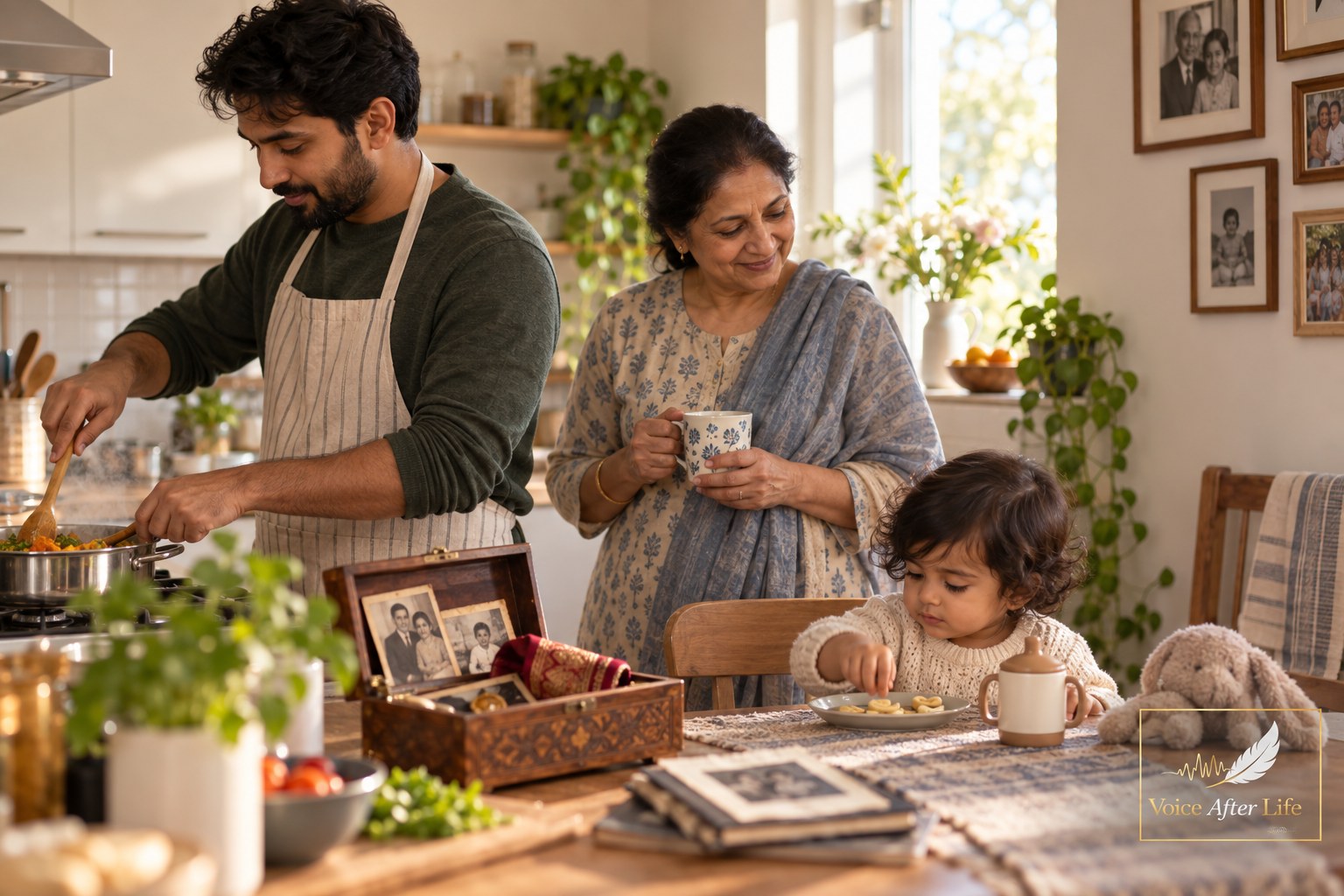
A Pot That Only Comes Out Once or Twice a Year
Curtis, 76, keeps a cast-iron pot on the top shelf of his kitchen, the one he only brings down for a homegoing, a wedding, or the first day of the new year. He couldn't tell you exactly when that habit started — his mother had a pot like it, and her mother before her — but he knows the rule without ever having been told it outright: some dishes are not for Tuesday supper. They are for the days that mark a life.
That rule, quiet as it is, holds together generations of families the way a name or a photograph does. It's part of why so many people now think about preserving not just recipes but the voices and stories behind them — the kind of oral history that Voice After Life.com was built to help families hold onto, long after the cook who made a dish "just right" is gone.
The Repast: When Food Becomes a Form of Mourning
In Black American church communities, the meal that follows a funeral has a name of its own: the repast. In Black American church communities, the repast is a cornerstone of the homegoing tradition, with food prepared by the church as a gift to the grieving family. The tradition runs deep and old. Slave funerals in the Americas incorporated many aspects of West African funeral traditions. The body was bathed and wrapped in cloth, and laid out on a cooling board. The family gathered for a wake at night, with prayers and worship, and the body was carried to the grave before dawn. After the burial came the feast, the beginning of what is now called the repast.
Food writer Vertamae Smart-Grosvenor once put the stakes plainly: "You can't have a proper funeral without food. When someone dies, the food, the spread, the feast has to be right so people will say, 'She had a proper send-off.'" Even today, the communal meal following a burial, known as the repast, remains a cornerstone of African American mourning traditions, and food prepared by church members and neighbors serves as an act of love and solidarity for the bereaved family. The dishes that show up are rarely random. Greens have been a soul food staple for centuries, symbolizing hope and resilience, cooked down with smoked turkey or ham hocks, filling the room with a smell that says someone's taking care. Baked macaroni and cheese carries its own quiet weight, too — in many Black households, baked macaroni marks a special occasion, and serving it at a repast honors that tradition, turning the meal into both comfort and tribute.
Why Certain Dishes Only Appear on Certain Days
New Year's Day: Peas for Pennies, Greens for Dollars
Walk into almost any Southern Black household on January 1st and the smell will be the same: black-eyed peas simmering low, greens on the back burner, a pan of cornbread cooling on the counter. According to food historian Adrian Miller, black-eyed peas represent coins, collard greens represent paper money and cornbread represents gold. Black-eyed peas are commonly associated with coins or pennies, reflecting hopes for financial luck in the year ahead, while collard greens, or sometimes turnip or mustard greens, symbolize paper money and economic stability. Some families take the ritual a step further. In some homes, a coin is hidden in the pot of peas for extra luck, and whoever finds it is said to have an especially fortunate year. These are not dishes anyone would think to cook in June. They belong to the first day of the year the way a hymn belongs to a particular Sunday.
Juneteenth: The Meaning Behind the Red
On Juneteenth, the table turns a different color entirely. Charcoal-grilled meats, greens, black-eyed peas, and teacakes share the table with an assortment of foods and drinks with red hues — red velvet cake, red strawberry soda, and red punch always making appearances. The color is not decorative. Communities around the country celebrate Juneteenth with red foods and drinks to symbolize the bloodshed and profound sacrifices made by former enslaved Black Americans, according to food historians. Some trace the custom even further back. The practice of eating red foods may owe its existence to the enslaved Yoruba and Kongo brought to Texas in the 19th century, for whom the color red is the embodiment of spiritual power and transformation. A dish like red velvet cake, made only once a year in some households, becomes a way of marking a day that is unlike any other on the calendar.
Weddings and Homegoings: The Same Sweets, Different Grief
What's striking is how often the very same desserts show up at both ends of a family's biggest occasions. Sweet potato pie, for instance, has a history that runs back to enslaved cooks. Sweet potato pie is a highly esteemed dessert in soul food cuisine, with its roots in African and Native American culinary customs, made use of sweet potatoes, spices, and other ingredients brought together by African and Native American traditions. Baked macaroni and cheese has a documented lineage too. It traces back to James Hemings, an enslaved Black chef trained in French cuisine who introduced refined pasta dishes to America, and over time Black cooks transformed his "macaroni pie" into a rich, baked staple that is now a centerpiece of soul food tables and holiday meals. Banana pudding follows the same pattern, showing up at nearly every occasion that calls people together. Banana pudding represents layered storytelling, combining imported ingredients with Southern creativity into a dessert meant for sharing, built for gatherings where recipes are adjusted by feel and perfected over time. The same pan of banana pudding that celebrates a wedding can, a year later, comfort a room full of people at a homegoing. The dish doesn't change. What changes is everything it's asked to hold.
Passing the Recipe Before It's Lost
Curtis says the hardest part isn't the cooking — it's that nobody wrote any of it down. The amount of "a little bit" of this, the reason the greens go in after the peas and not before, the story of whose kitchen the cast-iron pot came from originally: none of that lives on a recipe card. It lives in the person who tells it while they cook, and in the people standing close enough to listen. That's exactly the kind of memory families increasingly choose to record before it disappears with the cook who carried it — a short story about why a dish only appears on certain days, told in someone's own voice and kept somewhere the next generation can return to, is one of the simpler ways families are using Voice After Life to hold onto more than just a recipe.
The dishes made only for funerals, weddings, and holy days are never really about the food. They are about the discipline of showing up, of cooking something slow enough to require patience, and of feeding a room so that grief or joy has somewhere to sit for a while. Long after the pot goes back on the shelf, it's the story behind it that people remember.
- Voice After Life.com
Sources
- What Is a Repast? Meaning, Traditions, Etiquette, and How to Plan the Meal After a Funeral — Linkora Blog
- Celebrating the History of African-American Funeral Traditions — A Good Goodbye
- Understanding Black Southern Funeral Food Tradition — BSB Media LLC
- The History of African American Funeral Traditions in Alabama — Jeffcoat Funeral Home
- Black Funeral Food Traditions: Comfort, Love, and Legacy — Civilized Caveman
- Why we eat collard greens and black eyed peas to ring in the new year — Carolina Journal
- Luck on a Plate: Why Southerners Eat Collard Greens and Black-Eyed Peas on New Year's Day — Rose Bakes
- Why are black-eyed peas lucky on New Year's Day? — Verite News New Orleans
- The Story Behind Red-Hued Juneteenth Food and Drink — Atlas Obscura
- Why red food and drinks have become powerful symbols on Juneteenth — CNN
- The celebratory food traditions of Juneteenth — Rough Draft Atlanta
- What Is Soul Food? — The Soul Food Pot
- Soul food — World Food and Wine