How to Capture the Stories Only Your Family Can Tell
A practical guide to interviewing relatives, asking the right questions, and preserving the family stories that would otherwise disappear.
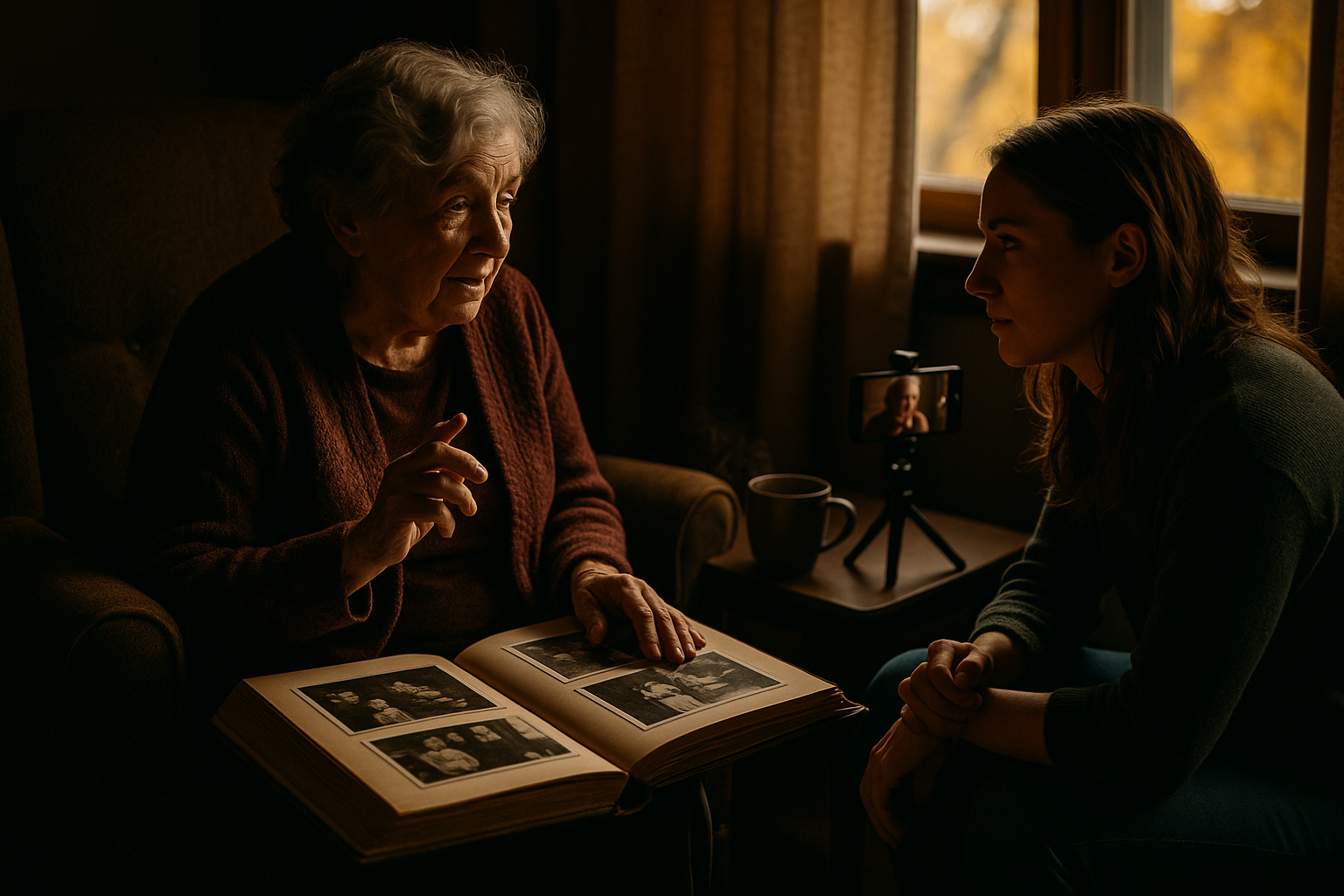
The Stories That Live Only in Memory
Every family has a keeper of stories — the aunt who remembers exactly how your grandparents met, the uncle who can still describe the smell of the kitchen in the house where he grew up. These details rarely make it into a birth certificate or a census record. They live in memory, and memory is fragile. Genealogy researchers point out that preserving oral history is a critical first phase of genealogical research and data preservation, and because those who provide the information are generally older members of the family, both their lives and their memories are at risk of being lost to time.
That urgency is exactly why so many families are turning their attention to preserving voices, not just facts — and why a growing number are exploring resources like Voice After Life.com to help capture these irreplaceable stories in a lasting, listenable form. A name and a date can be found again in an archive. A grandmother's laugh while she tells a story about her wedding day cannot be recreated once it's gone.
Why These Stories Matter More Than We Realize
It's tempting to think of family stories as "nice to have" — sentimental extras compared to hard documents like deeds or marriage licenses. But researchers who study oral history see it differently. As one library guide on family history archiving explains, quoting historian Donald Ritchie, memory is the core of oral history, from which meaning can be extracted and preserved, and oral history collects memories and personal commentaries of historical significance through recorded interviews.
Family stories also do something documents can't: they carry emotion and context. A wealth-advisory piece on family legacy notes that a family's history may be an essential part of how they perceive their legacy, and memorializing that history can be one of the most powerful and unifying experiences a family can undertake, engaging members around shared history while teaching lessons to subsequent generations. The story of how a great-grandfather rebuilt a business after a fire, or how a mother decided to immigrate alone at nineteen, tells descendants something about resilience and identity that no spreadsheet of dates ever could.
There's also a benefit to the storyteller. Research into reminiscence — the practice of recalling and sharing past experiences — has found real psychological value for older adults. A systematic review of reminiscence-based interventions concluded that reminiscence therapy provided to the elderly living in the community was effective in improving their quality of life and life satisfaction. In other words, asking a grandparent to tell their story isn't just a gift to the family archive — it can be a genuine gift to them.
Getting Started: Who to Ask and What to Ask
The hardest part of capturing a family story is often simply beginning. A good first step is identifying who to talk to. Genealogy educators recommend starting with the people whose memories are most at risk: the elders of your family carry, in their memories, a wealth of valuable information, and it's best to start with your oldest living relative to capture the unique information only they can provide. But don't stop there — great-aunts and uncles, cousins, and more distant relatives often hold pieces of the story that no one else remembers.
Once you know who you'll talk to, resist the urge to overprepare with a rigid checklist. Interview guides consistently recommend open-ended questions over yes-or-no ones. As one guide on interviewing relatives puts it, it helps to let the person speak without interruption, nodding, smiling, and gently prompting with questions like "Tell me more" or "What happened next?" Following the story wherever it goes — rather than steering it back to your list — often produces the richest material.
Questions That Open the Door
Instead of only asking for names and dates, try prompts that invite a story:
- What is a memory from your childhood that still makes you smile?
- Who taught you the most about how to live, and what did they teach you?
- What was a hard time in your life, and how did you get through it?
- Is there a family tradition, recipe, or saying you want to make sure isn't forgotten?
Photographs and heirlooms can help unlock memories that questions alone won't reach. Genealogy guides note that looking through photos during the interview can help relatives remember details, and most elderly relatives will be delighted to look through them with you — doing so may bring up additional memories.
Setting the Scene for a Meaningful Conversation
Comfort matters as much as content. Experienced interviewers suggest choosing a setting that builds trust and comfort, since quiet, relaxed environments work best, and in-person is ideal, though video calls also work well. Give the conversation room to breathe — some of the best material surfaces well after the "official" questions are done. Multiple sessions may be needed, especially with relatives who tire easily; one guide to interviewing older family members advises that if they tire easily, it's better to set up more than one appointment.
Be gentle with sensitive subjects. Topics like loss, war, or family conflict can be emotional, and it's worth letting the storyteller decide how much they want to share rather than pressing for detail they aren't ready to give.
From Conversation to Something Lasting
A story told once, in a kitchen or over the phone, is a gift to whoever is in the room at the time. A story recorded — in the storyteller's own voice, with their own pauses, laughter, and phrasing — becomes something a family can return to for generations. This is where thoughtfully preserving the recording itself becomes as important as asking the right questions in the first place; families who want that voice to remain accessible for children and grandchildren not yet born often look for a way to organize and safeguard these recordings for the long term, which is part of what Voice After Life was built to help with.
However you choose to preserve it, the goal is the same: make sure the story outlives the moment it was told. Transcribe it if you can. Back it up in more than one place. And most importantly, don't wait for a "someday" that may not come. As one guide to family interviews puts it plainly, oral history adds a human layer to genealogy, but the clock is ticking — every year, elderly relatives take untold stories with them.
The Story Is Waiting to Be Asked For
You don't need to be a professional historian or documentarian to do this well. You need curiosity, patience, and a willingness to sit still and listen. The stories only your family can tell are not hidden — they're simply waiting for someone to ask. Start with one question, one relative, one recorded conversation. The rest tends to follow.
- Voice After Life.com
Sources
- The Importance of Oral Histories — Genealogy.com
- Looking Back as Your Family Moves Forward: The Importance of Your Family's Oral History — Morgan Stanley - The 4520 Group
- Oral History - Family History Archiving — San Diego State University Library Guides
- How to Interview Your Relatives for Family History Research — MyHeritage
- Genealogy Basics Chapter 1: How to Interview Relatives — MyHeritage Blog
- Interviewing Relatives: Questions That Reveal Your Family's Past — Search Historical Records
- How to Interview Your Elderly Family Members — Heritage Fiction
- The effectiveness of reminiscence-based intervention on improving psychological well-being in cognitively intact older adults — ScienceDirect / International Journal of Nursing Studies