Blended Families: Recording for the Children Who Came Later
For stepchildren and children born later in a blended family, a recorded voice can say the belonging that legal paperwork often can't.
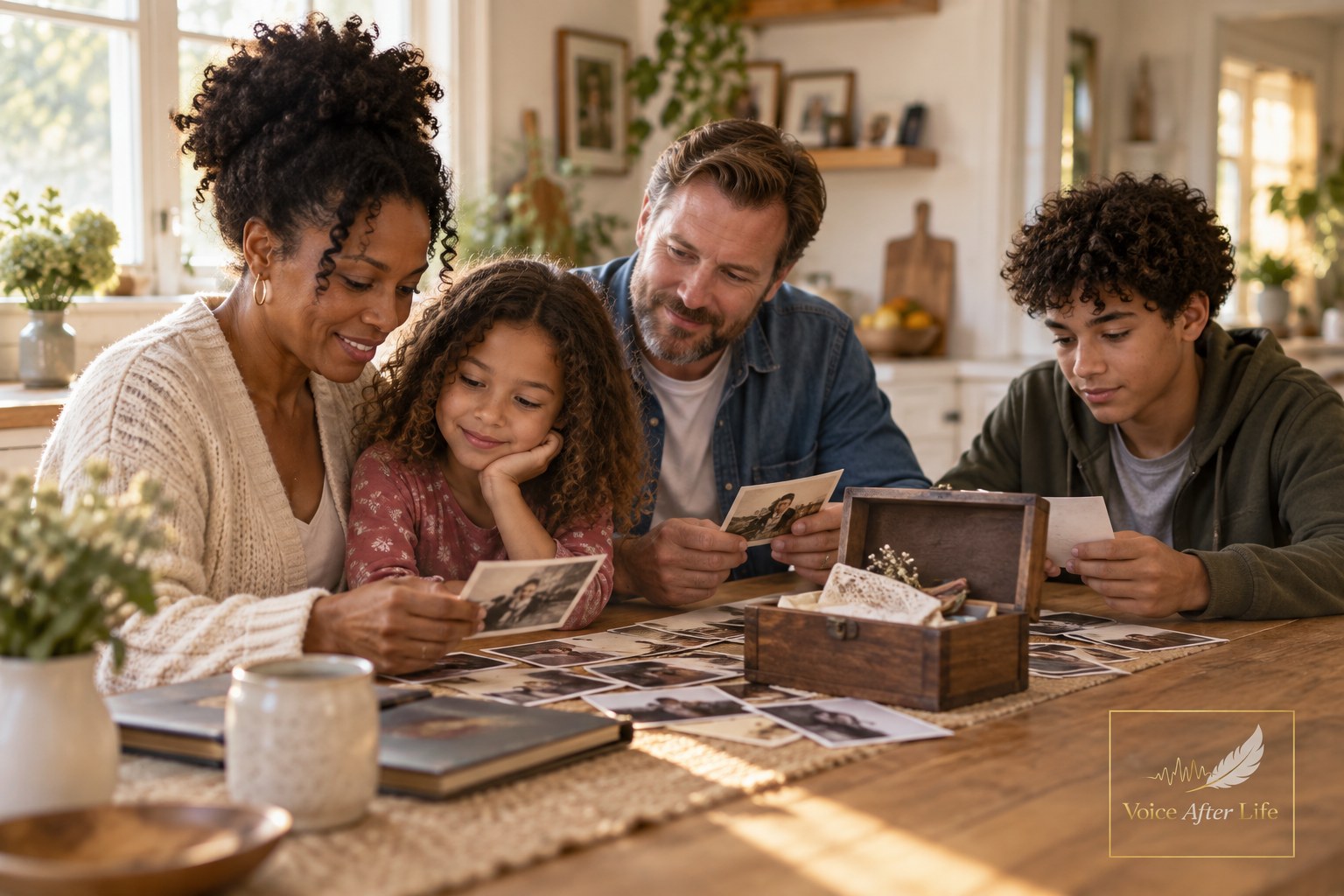
When Family Trees Grow New Branches
Willie, a 74-year-old grandfather in Atlanta, has two grown children from his first marriage and two stepchildren he helped raise after he remarried in his fifties. He also has a granddaughter who was born the same year he retired — a child who came "later," long after his own kids were grown, and who mostly knows him as the calm, gray-haired man at the head of the Sunday table. Willie has started to wonder what she'll actually remember of him, and whether she'll ever hear, in his own voice, how she fits into the family he spent decades building. It's a question many people in blended families quietly carry, and it's part of why recording a few stories and messages at Voice After Life.com has become one way families like his are answering it before time makes the decision for them.
Blended families are not a small or unusual arrangement. According to Pew Research Center, 17% of U.S. children under 18 live in a blended family most or all of the time – one that includes a stepparent, stepsiblings or half siblings, and across racial and ethnic groups, Black children are the most likely to live in a blended family (28%), followed by Hispanic (19%) and White children (15%). For a lot of grandparents and step-parents, that means the family gathered around the table on any given holiday includes children with very different histories with the person hosting the meal — and very different levels of certainty about where they stand.
The Child Who Wonders "Do I Count?"
Estate planning attorneys who work with blended families see this uncertainty show up as a legal problem, but it usually starts as an emotional one. As one law firm notes, estate planning in blended families isn't just a legal matter; it also involves emotional considerations, and how assets are distributed can significantly impact family relationships. A child who arrived "later" — through a parent's remarriage, a late-in-life birth, or a grandchild born well after the family had already settled into its shape — can end up wondering whether they're a full member of the story or an addition to it.
That question rarely gets resolved by paperwork alone. Attorneys who draft wills for blended families point out that a successful estate plan begins with open and honest communication with all family members, and when intentions are clearly outlined and explained, family members are less likely to feel excluded or surprised, which can minimize potential disputes among biological children, stepchildren, and the surviving partner. A will can state who inherits what. It cannot easily explain why — or say, in a tone a child will recognize, "I thought of you, too."
Why the Legal Side Often Isn't Enough
It helps to understand, plainly, how the legal system treats stepchildren, because it explains why so many families feel an emotional gap even after the paperwork is done. Multiple estate-planning resources note that unlike biological children, stepchildren do not have automatic inheritance rights, and their inclusion or exclusion from an estate requires specific tools like wills, trusts, and beneficiary designations. In practical terms, this means a stepchild or a child from a later marriage isn't automatically "in" the way a biological child is — someone has to decide to include them, in writing, on purpose.
Attorneys also point out the flip side of that same fact: stepchildren have little chance of inheritance without a will — in fact, in most states, if a person dies without a will, stepchildren will not inherit from them. That's an important, sobering detail for anyone in a blended family to understand, and it's exactly the kind of question a qualified estate planning attorney can walk through for your specific state and situation. But even a well-drafted will that names every child fairly still leaves something unaddressed: the difference between being listed and being claimed.
What a Recorded Voice Can Do That a Will Can't
This is where a recording — not a legal instrument, just a person talking — tends to matter most. A grandfather like Willie doesn't need to explain asset division on tape. He might instead talk about the day he met his stepchildren, what he noticed about his granddaughter's laugh the first time he heard it, or which family recipe came from which side of a now-combined family tree. None of that changes an inheritance. All of it changes whether a child, years later, has to guess at their place in the family or can simply listen and know.
Families who record these stories often describe wanting something less formal than a legal document and more lasting than a memory that fades with age. That's part of why some choose to sit down with a recorder or a phone and simply talk — a project some find easier to start, and finish, with the guided structure available through Voice After Life, which is built around exactly this kind of family storytelling rather than legal drafting.
A Few Places to Start
For anyone in a blended family considering this, a few starting points tend to work well:
- Name the child specifically. Say their name, their birth story if you know it, and how they came into the family — not as a legal category, but as a person.
- Tell the "how we got here" story. Children who arrive later often never hear the full account of how the blended family formed. A grandparent's version of that story is one only they can tell.
- Separate the legal from the personal. Let your will, trust, or beneficiary forms handle the financial questions, ideally with guidance from a qualified estate planning attorney. Let your recorded voice handle the belonging.
- Don't wait for a "big" occasion. An ordinary Tuesday story, told in an ordinary voice, is often what a child treasures most.
The Legal Work Still Matters
None of this replaces the paperwork. Family law and estate-planning professionals consistently emphasize that bringing stepchildren into a new family raises real questions about how to write a will, divide assets, and account for a new spouse and stepchildren — questions that deserve a licensed attorney's attention, not guesswork. A recorded message and a properly executed estate plan aren't competing projects; they're two different ways of taking care of the same people.
For Willie, and for grandparents like him in blended families everywhere, the goal isn't complicated. It's making sure that every child who came later — by marriage, by birth order, or by circumstance — gets to hear, someday, that they were never an afterthought at all.
- Voice After Life.com
Sources
- Key facts about blended families in the US — Pew Research Center
- Estate Planning for Blended Families | MHPS Law — MHPS Law
- Stepchildren and stepgrandchildren add another dynamic to estate planning — Legacy Assurance Plan
- Estate Planning for Blended Families: Key Tips — Michigan Family Attorneys
- Blended Families and Wills in Estate Planning — Solomon, Steiner & Peck, Ltd.
- Typical Wills for Blended Families: What to Expect — The Dayton Law Firm